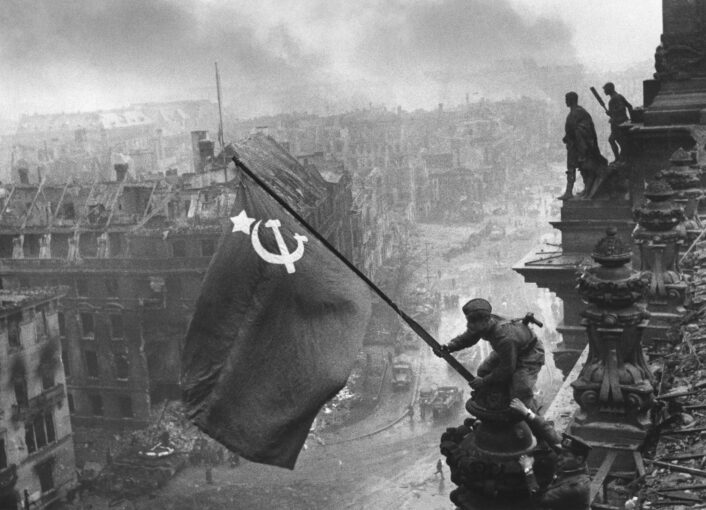
Yevgeny Khaldei’s photograph of a Soviet flag over the Reichstag, taken on 2 May 1945 after earlier flag raisings. This arranged and subsequently retouched image became a symbol of victory. Restoration by Adam Cuerden; public domain via Wikimedia Commons.

Berlin, 1945: A City at the End of the War

The photograph shows a flag above the Reichstag. The city beneath it is the harder subject. By the time Yevgeny Khaldei arranged his famous image on 2 May 1945, Berlin had endured bombing, encirclement and fighting through its streets. The photograph gives the ending a single gesture. The battle had given the people inside it thousands of smaller, less conclusive moments.
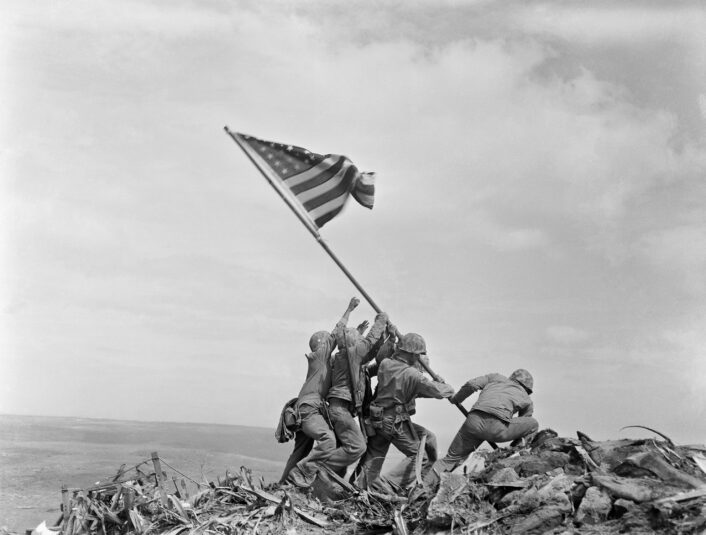
The second flag raising on Mount Suribachi, photographed by Joe Rosenthal on 23 February 1945. Public domain via Wikimedia Commons. The battle continued for weeks after this moment.

Iwo Jima: The Battle Beyond the Flag

On 23 February 1945, while a flag was being raised on Mount Suribachi, Hershel “Woody” Williams was working towards Japanese pillboxes with a flamethrower. The photograph on the summit would become the island’s enduring image. Williams’s task belonged to the other Iwo Jima: the close, dangerous work that continued beyond the reach of that picture.

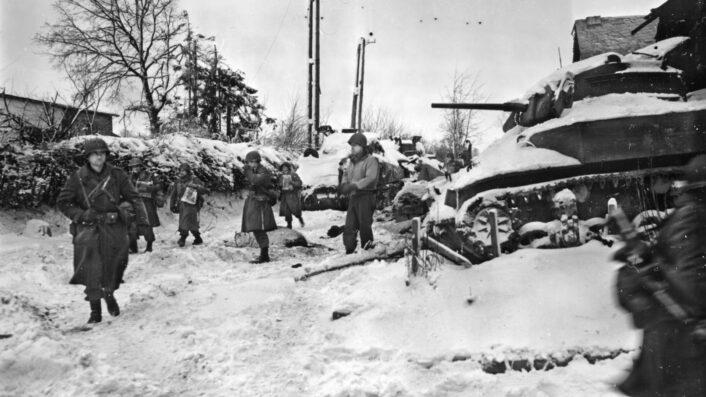
U.S. infantry pass a destroyed Stuart tank during the advance towards St. Vith, January 1945. U.S. Army photograph; public domain via Wikimedia Commons.

The Battle of the Bulge: Roads Through the Winter

A junction was a small place to set against a grand strategy. Yet in December 1944, villages and road crossings in the Ardennes repeatedly consumed the hours on which Germany’s offensive depended. The plan pointed towards Antwerp. The fighting kept returning to a road that would not open, a bridge that could not be used, or a position whose defenders had refused to disappear.

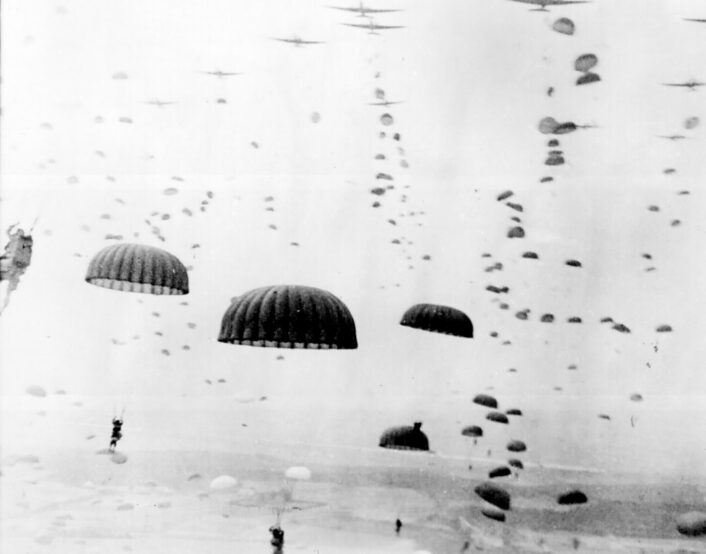
Paratroops descend during Allied airborne operations in the Netherlands, September 1944. U.S. Army photograph; public domain. The image shows the wider operation, not a verified view of Arnhem bridge.

Arnhem: The Bridge at the End of the Road

By 23 September 1944, Sergeant Dennis Smith’s account from Arnhem had narrowed to the essentials: shelling, rain, exhaustion and the need for relief. Six days earlier, aircraft had delivered an army into the Netherlands with the promise of speed. Now the men around Oosterbeek were measuring time by what they could still endure.

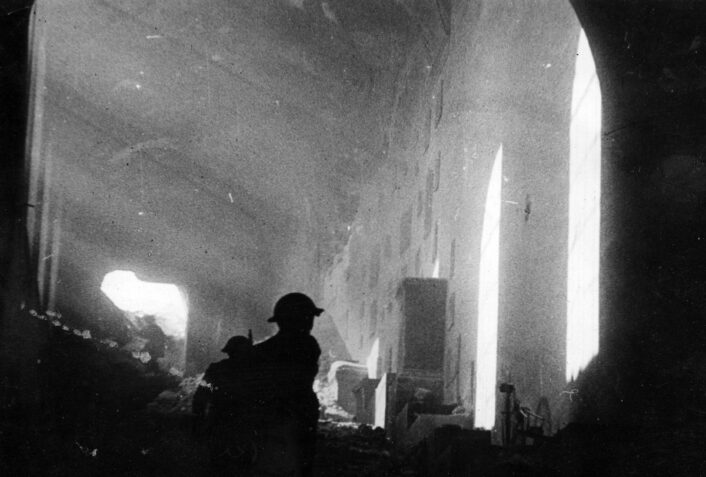
Polish soldiers among the ruins of the Monte Cassino monastery after its capture. Photographer unknown; public domain via Wikimedia Commons.

Monte Cassino: The Mountain Above the Road to Rome

In January 1944, American infantry tried to cross a river below Cassino. In February, bombers destroyed the monastery above it. In March, the town itself was devastated. Only in May did the defensive system finally give way. Those were not four repetitions of one battle: each attempt changed the ground, the armies and the choices available to the next.

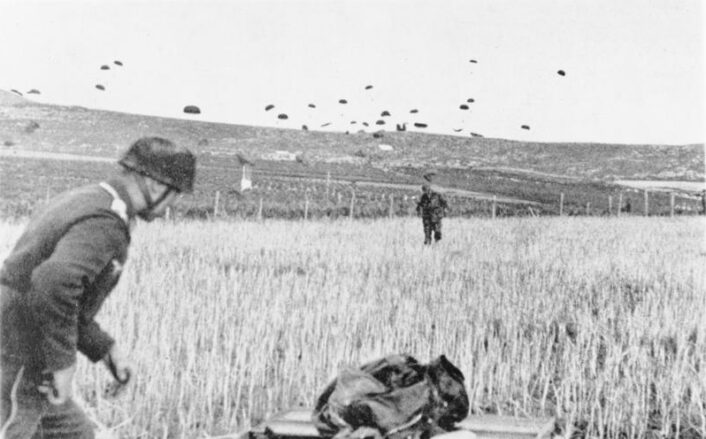
German parachute landings on Crete, May 1941. Bundesarchiv, Bild 141-0864, photographer unknown; CC BY-SA 3.0 DE. Image reproduced without alteration.

Crete, 1941: The Airfield That Turned the Battle

“I was scared stiff,” Sapper John Haines remembered in an account preserved by NZ History. Private Ivan Divehall remembered excitement. The same parachutes could produce both reactions. On the morning of 20 May 1941, German troops descended over Crete, and the men watching them had only moments to turn astonishment into action. The invasion would be decided by airfields and command decisions, but it began as a profoundly personal encounter with an unfamiliar way of war.

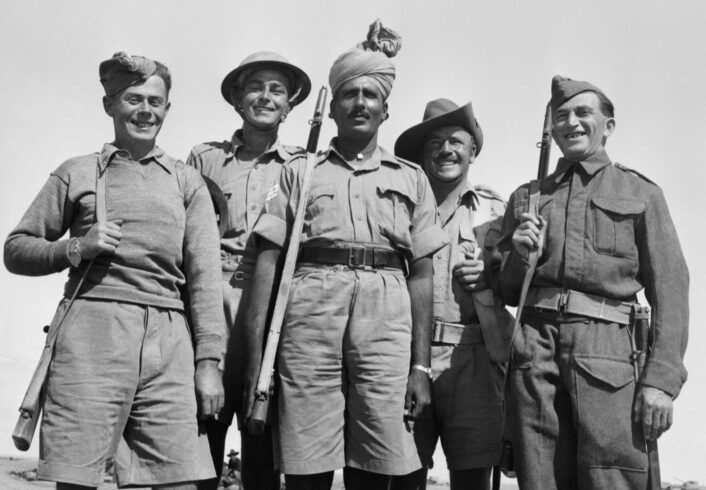
Allied soldiers at Tobruk, representing Polish, British, Indian, Australian and Czechoslovak forces. Wartime group photograph; public domain via Wikimedia Commons.

Tobruk, 1941: The Port That Would Not Fall

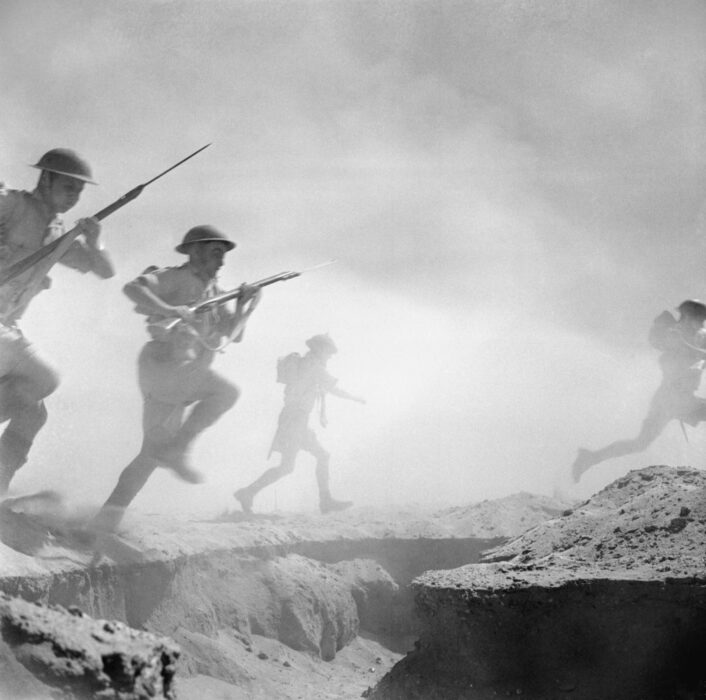
A trench in the Tobruk perimeter did not look much like the sweeping desert war of popular memory. Its occupants were below the horizon, watching ground they might have to patrol after dark. Behind them lay a harbour. Beyond the perimeter lay an enemy whose advance had carried him past the town, but who still could not use its docks. Holding this unglamorous place imposed a cost on every mile of that advance.

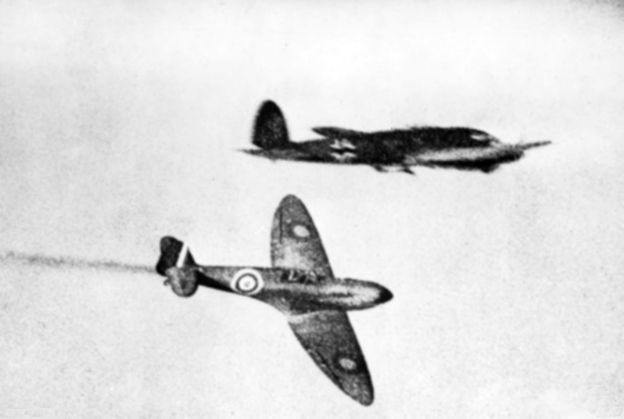
A Spitfire and a German Heinkel He 111 during the Battle of Britain. Australian armed forces photograph; public domain via Wikimedia Commons.

The Battle of Britain: The System Behind the Spitfire

Geoffrey Wellum remembered the telephone. Before the engine noise and the climb, before the enemy aircraft and the decision to fire, there was the waiting for it to ring. The young Spitfire pilot’s recollection shifts the Battle of Britain away from its familiar silhouette in the sky and back towards an airfield where men did not yet know what the next few minutes would require.

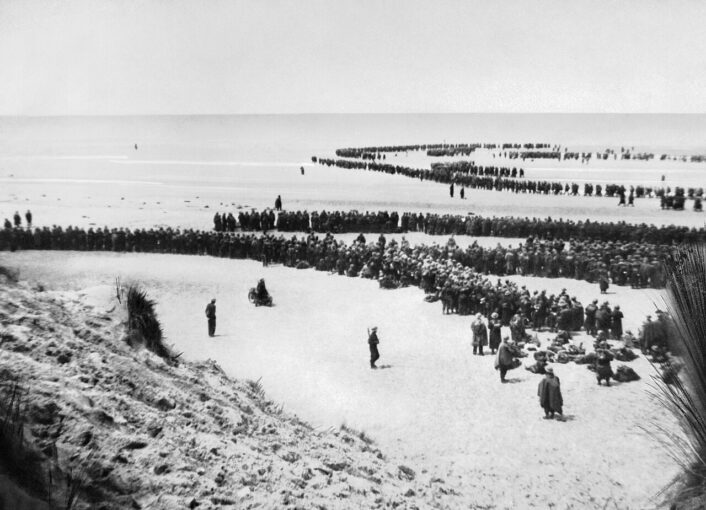
British troops wait on the beach at Dunkirk, May 1940. Wartime photograph, IWM NYP 68075; public domain via Wikimedia Commons.

Dunkirk, 1940: The Army at the Water’s Edge

At a crossroads in Belgium, the convoy disappeared. Harry Leigh-Dugmore had been told to follow the vehicle ahead; when the military police waved him on, there was nothing to follow. He was twenty, a lance-corporal, and suddenly responsible for eight other men, a truck and a Bren carrier. The road to Dunkirk began, for his small party, with the discovery that nobody knew where to go.