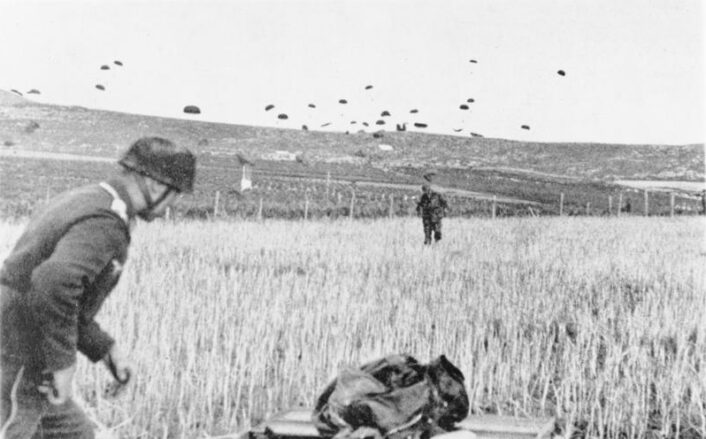
German parachute landings on Crete, May 1941. Bundesarchiv, Bild 141-0864, photographer unknown; CC BY-SA 3.0 DE. Image reproduced without alteration.

Crete, 1941: The Airfield That Turned the Battle

“I was scared stiff,” Sapper John Haines remembered in an account preserved by NZ History. Private Ivan Divehall remembered excitement. The same parachutes could produce both reactions. On the morning of 20 May 1941, German troops descended over Crete, and the men watching them had only moments to turn astonishment into action. The invasion would be decided by airfields and command decisions, but it began as a profoundly personal encounter with an unfamiliar way of war.

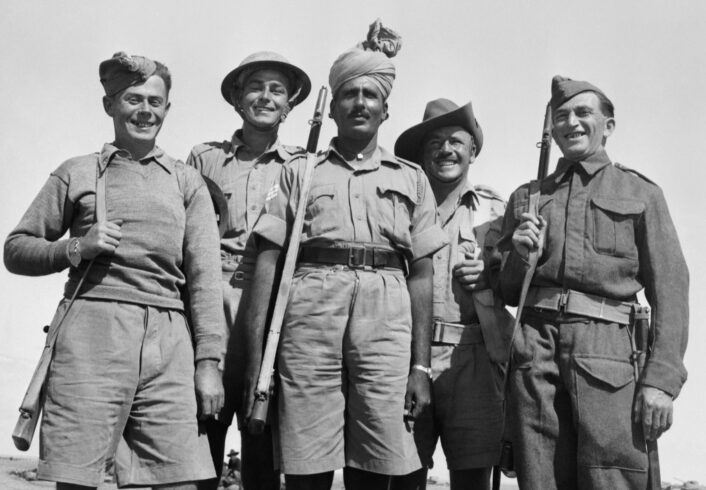
Allied soldiers at Tobruk, representing Polish, British, Indian, Australian and Czechoslovak forces. Wartime group photograph; public domain via Wikimedia Commons.

Tobruk, 1941: The Port That Would Not Fall

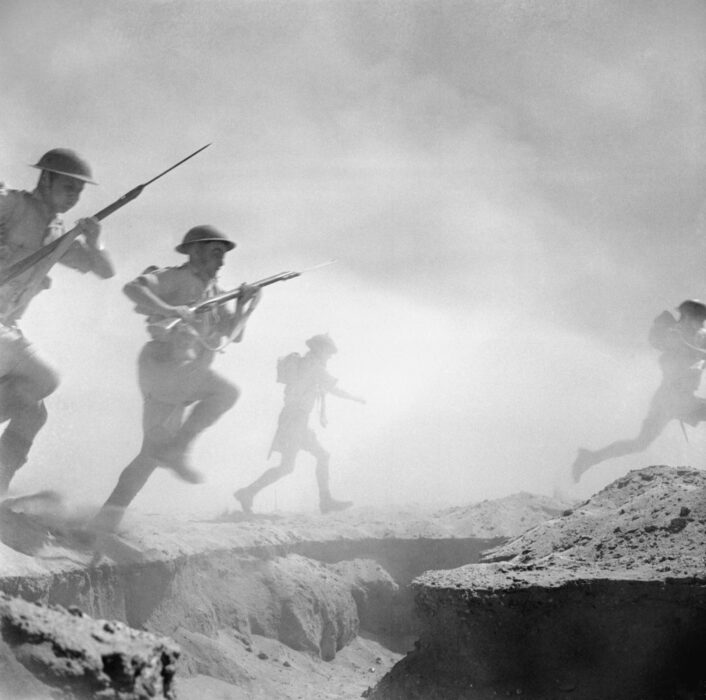
A trench in the Tobruk perimeter did not look much like the sweeping desert war of popular memory. Its occupants were below the horizon, watching ground they might have to patrol after dark. Behind them lay a harbour. Beyond the perimeter lay an enemy whose advance had carried him past the town, but who still could not use its docks. Holding this unglamorous place imposed a cost on every mile of that advance.

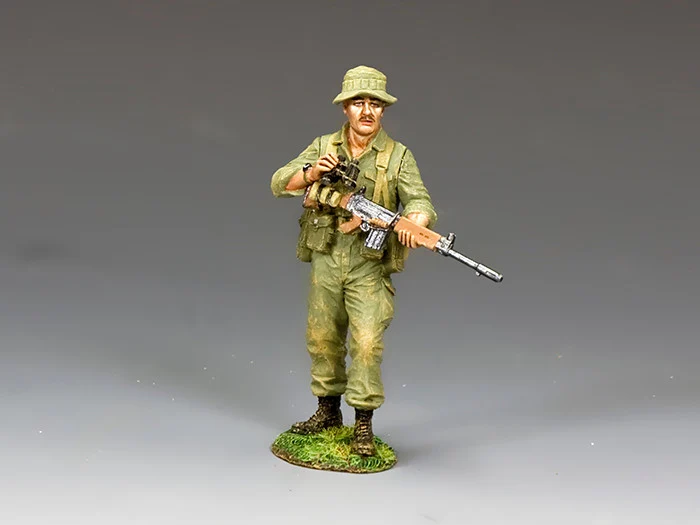
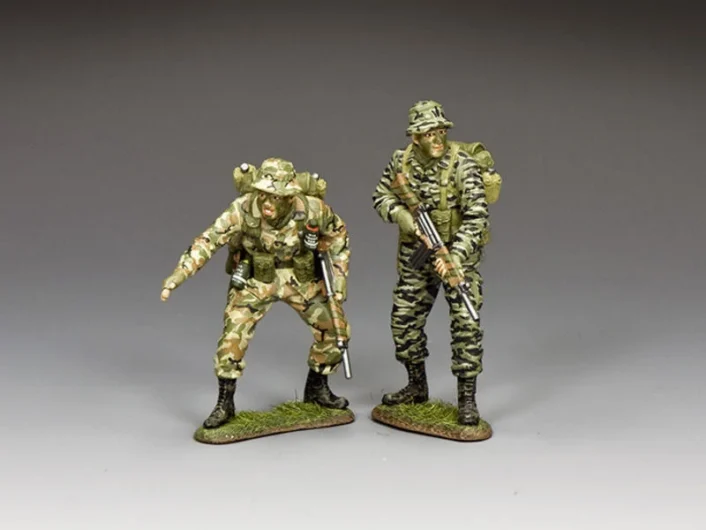
VN030 King & Country catalog image

King & Country VN030: Australian Patrol Section: Four Figures, Four Different Loads

VN030 shows four Australians moving on foot, with bush hats, varied weapons and equipment carried across their backs. The spacing between the separate figures is part of its appeal: the group can stretch along a path instead of being fixed into one compact fighting cluster. After the helmeted Marines of the early VN releases, the changed silhouette is immediately noticeable.