

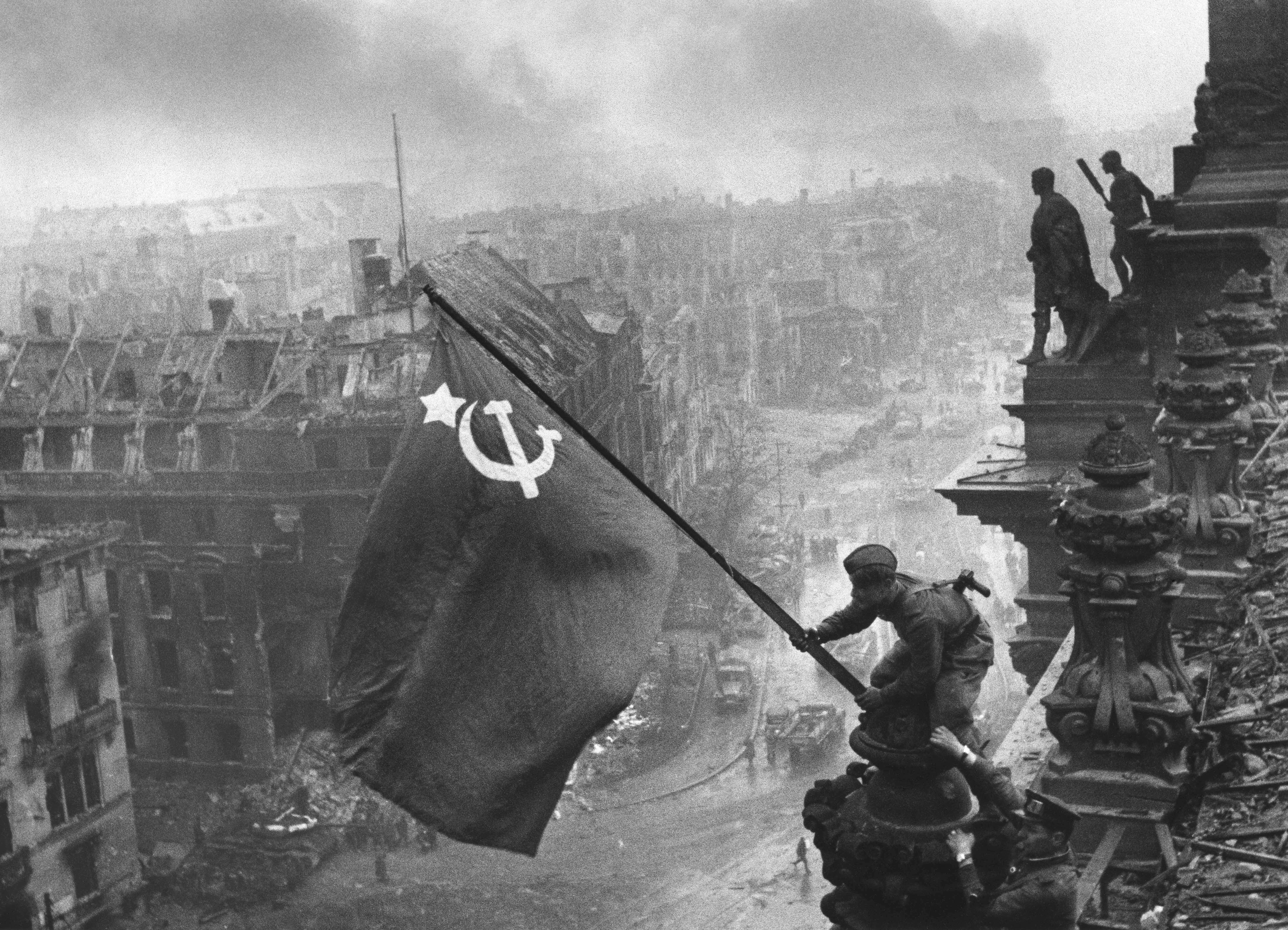
The photograph shows a flag above the Reichstag. The city beneath it is the harder subject. By the time Yevgeny Khaldei arranged his famous image on 2 May 1945, Berlin had endured bombing, encirclement and fighting through its streets. The photograph gives the ending a single gesture. The battle had given the people inside it thousands of smaller, less conclusive moments.
The final assault began outside the city on 16 April. Marshal Georgy Zhukov’s 1st Belorussian Front advanced from the east, while Marshal Ivan Konev’s 1st Ukrainian Front drove in from the south. The Red Army’s winter advance had brought it to the Oder, but the short remaining distance to Berlin still contained organised defences. German forces would be trapped beyond the city as well as within it.
At the Seelow Heights, German defences used the contrast between the low ground near the Oder and the higher ground beyond it. General Gotthard Heinrici sought to make the Soviet approach costly rather than hold every forward position equally. Zhukov’s attack did not pass through this barrier in one effortless movement. The fighting continued for days before the defensive system broke.
The assault on the approaches also closed escape routes outside Berlin. German troops south-east of the capital became caught in the fighting around Halbe, where attempts to break west brought soldiers and civilians into the same narrowing passages through the woods. The destruction of these forces belonged to the Berlin operation even though it occurred beyond the streets that would dominate its photographs.
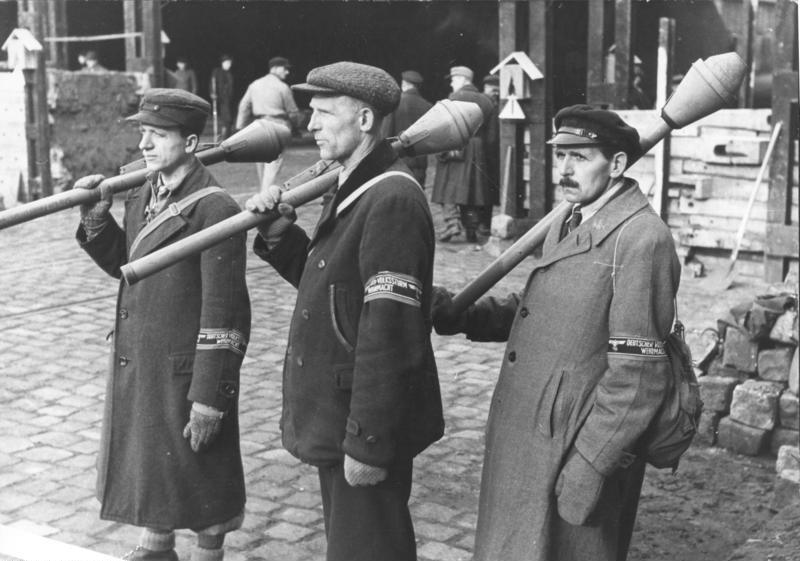
Once the approaches were broken, Soviet forces closed around a capital already damaged by years of bombing. Its defenders included battered army formations, Waffen-SS troops, police, Volkssturm and Hitler Youth. Their equipment and training varied sharply. Mobilising boys and older civilians widened the number of people drawn into the battle without creating the reserves the regime needed.
Close-range weapons could nevertheless make a street dangerous. A Panzerfaust in a doorway threatened a tank moving past, even when its bearer lacked the organisation and support of a regular formation. Soviet armour needed infantry to find those threats; the infantry needed heavy weapons to break defended buildings. A local ability to inflict losses survived long after any realistic German prospect of victory.
Orders and hopes of relief continued inside that collapse. On the ground, units faced encirclement and shrinking choices. The wider strategic situation had moved beyond the possibility that holding another street would restore Germany’s position. It could still cost lives.
The fighting divided the city into rooms, stairways, courtyards and crossings. Men could occupy one part of a building without controlling the next. Rubble blocked vehicles, while exposed roads forced infantry to search for another approach. Heavy fire might silence a position and leave the passage beside it harder to use. The streets no longer behaved like the lines on a map.
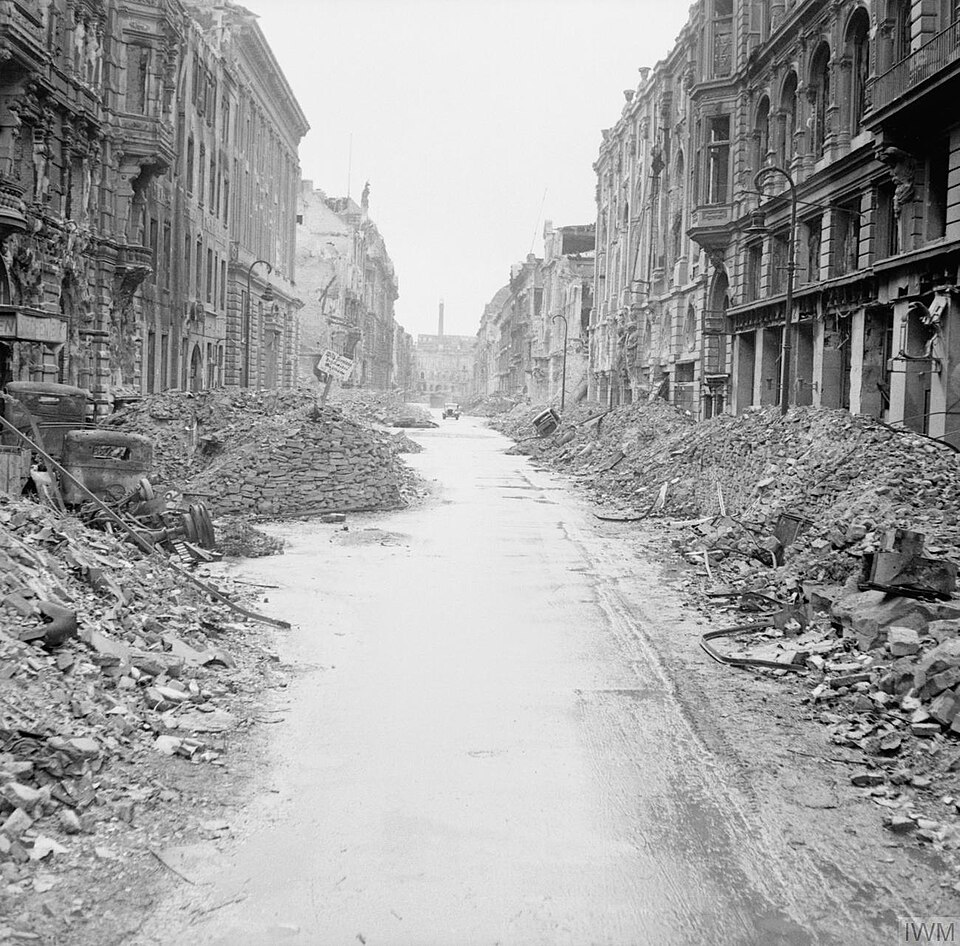
Tanks and infantry consequently depended upon keeping contact in places that repeatedly separated them. A crew looking through narrow openings had a different view from a man in a doorway. Neither could see every nearby threat. Success on one block did not reveal what waited across the intersection, and messages from elsewhere in the city might already be out of date.
Civilians inside the collapse
For civilians, the end of Nazi rule and the experience of the battle were bound together with fear, hunger and displacement. People sheltered below ground while the city above them changed hands. Soviet troops also committed widespread sexual violence and other abuses against civilians. A truthful account of victory must leave room for those experiences rather than treating the population as scenery around the military action.
At the same time, Berlin’s destruction cannot be detached from the regime’s aggression, occupation policies and genocide. The capital’s suffering was part of the end of a war Nazi Germany had brought across Europe. Remembering civilian victims does not require erasing that responsibility.
What a victory photograph leaves outside the frame
The Reichstag acquired special symbolic importance even though it was not the centre from which Hitler directed the defence. Soviet troops fought into the building as the regime collapsed. Flags were raised before Khaldei reached its roof for his photograph on 2 May. The familiar image was arranged and later retouched; it records the representation of victory after earlier acts that were less neatly preserved by a camera.
Hitler died by suicide in his bunker on 30 April. General Helmuth Weidling surrendered Berlin’s garrison on 2 May. Elsewhere, German forces continued fighting or sought routes towards surrender to the Western Allies. The fall of the capital and the wider German capitulation were separate events, however closely they became joined in memory.
For Berlin’s survivors, the end of the shooting left urgent problems unanswered. Families searched for missing people; displaced persons and prisoners faced uncertain journeys. Food, shelter and medical care were immediate necessities in a city whose ordinary systems had been broken. The soldiers’ victory and the regime’s destruction did not restore the homes beneath the Reichstag’s roofline.
Bomb damage had disabled pumps and damaged sewers, compromising the water supply. Clearing a street and distributing food were now matters of survival. Soviet authorities organised feeding and appointed local administrators while arrests and abuse continued. Victory, occupation and the attempt to make the city habitable arrived together. The flag could announce the fall of the capital; it could not tell a family where its missing members were or make the water safe to drink.
Photographic credits and rights are given with each image. Wikipedia overview linked above is available under CC BY-SA.