

At a crossroads in Belgium, the convoy disappeared. Harry Leigh-Dugmore had been told to follow the vehicle ahead; when the military police waved him on, there was nothing to follow. He was twenty, a lance-corporal, and suddenly responsible for eight other men, a truck and a Bren carrier. The road to Dunkirk began, for his small party, with the discovery that nobody knew where to go.
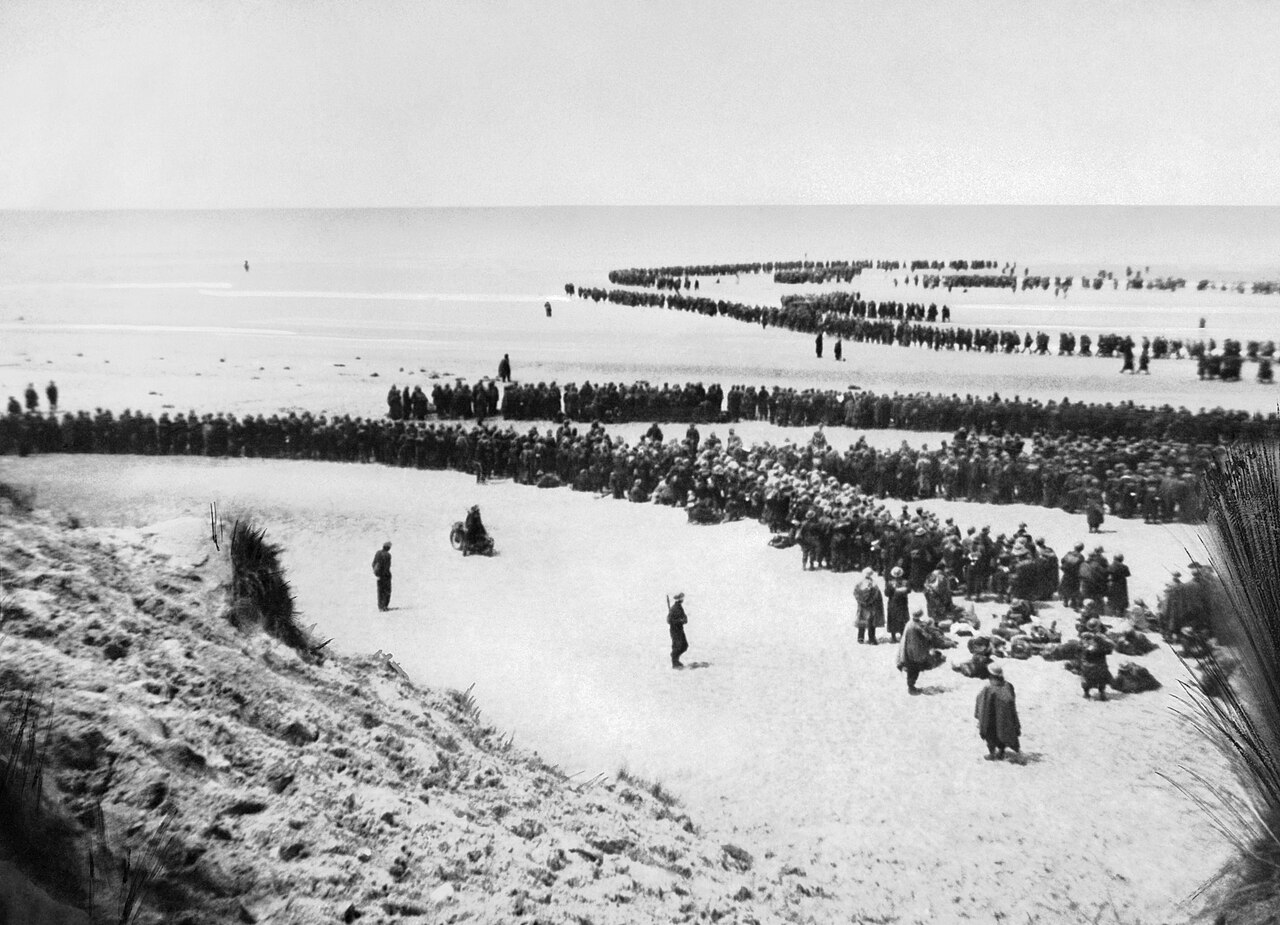
Leigh-Dugmore followed refugees towards the coast, looking for information as well as a way out. His recollection catches the uncertainty below the level of an army headquarters: at the next turning, a junior soldier might have to decide for himself.
“None of us had any idea where we were supposed to be going.”
Harry Leigh-Dugmore, recalling the retreat to Dunkirk — Royal British Legion
The confusion on those roads had begun with a rupture far to the south. In May 1940, German armoured formations broke through the Ardennes and drove towards the Channel, cutting the northern Allied armies away from the rest of France. The British Expeditionary Force had gone to the continent to fight a land campaign. Within weeks, its survival depended on ships.
General Lord Gort’s decision to move the British Expeditionary Force towards the coast came as attempts to restore the Allied situation became increasingly unrealistic. The German thrust had reached the Channel. A soldier might still be capable of fighting, and his battalion might still have ammunition, while the army around him had lost the communications and freedom of movement needed to conduct the campaign it had planned. Tactical resistance and strategic defeat could exist at the same time.
Evacuation required more than reaching the coast. Someone had to hold the roads, villages and canals behind the beaches while other men moved towards the harbour. French and British troops fought those delaying actions. The French resistance around Lille tied down German formations during a critical part of the withdrawal; the Dunkirk perimeter itself remained a battlefield while embarkation continued.
The German halt order gave the Allies time, but it did not make them safe. Air attack continued, the perimeter contracted, and the evacuation had to operate within an unfolding military defeat. The familiar image of men waiting in orderly lines can conceal that pressure. A queue on the sand was the visible end of a much larger effort to keep a route open.
The extra time was used under pressure from several directions. Belgium’s surrender on 28 May exposed another flank of the retreating armies. At Lille, French troops continued resisting until the end of the month, occupying German formations while evacuation accelerated farther north. Their battle did not save Lille. It helped keep men and guns away from Dunkirk during days when the number of soldiers reaching ships was rising sharply.
The harbour mattered as much as the beach
Operation Dynamo began on 26 May under naval direction from Dover. The shallow water off the beaches prevented many large vessels from coming close. Small craft could reach places that destroyers and transports could not, carrying men out to larger ships or, in some cases, across the Channel themselves.
The mole became the evacuation’s indispensable working platform. It had not been designed as a passenger quay, but Captain William Tennant recognised that vessels could berth against its eastern arm. Men could walk out to deep water instead of waiting for a boat to shuttle them off the beach. Destroyers and transports took aboard loads that a fleet of small craft alone could never have carried. The little ships mattered enormously, especially in the shallows; the harbour made their work part of a much larger movement.
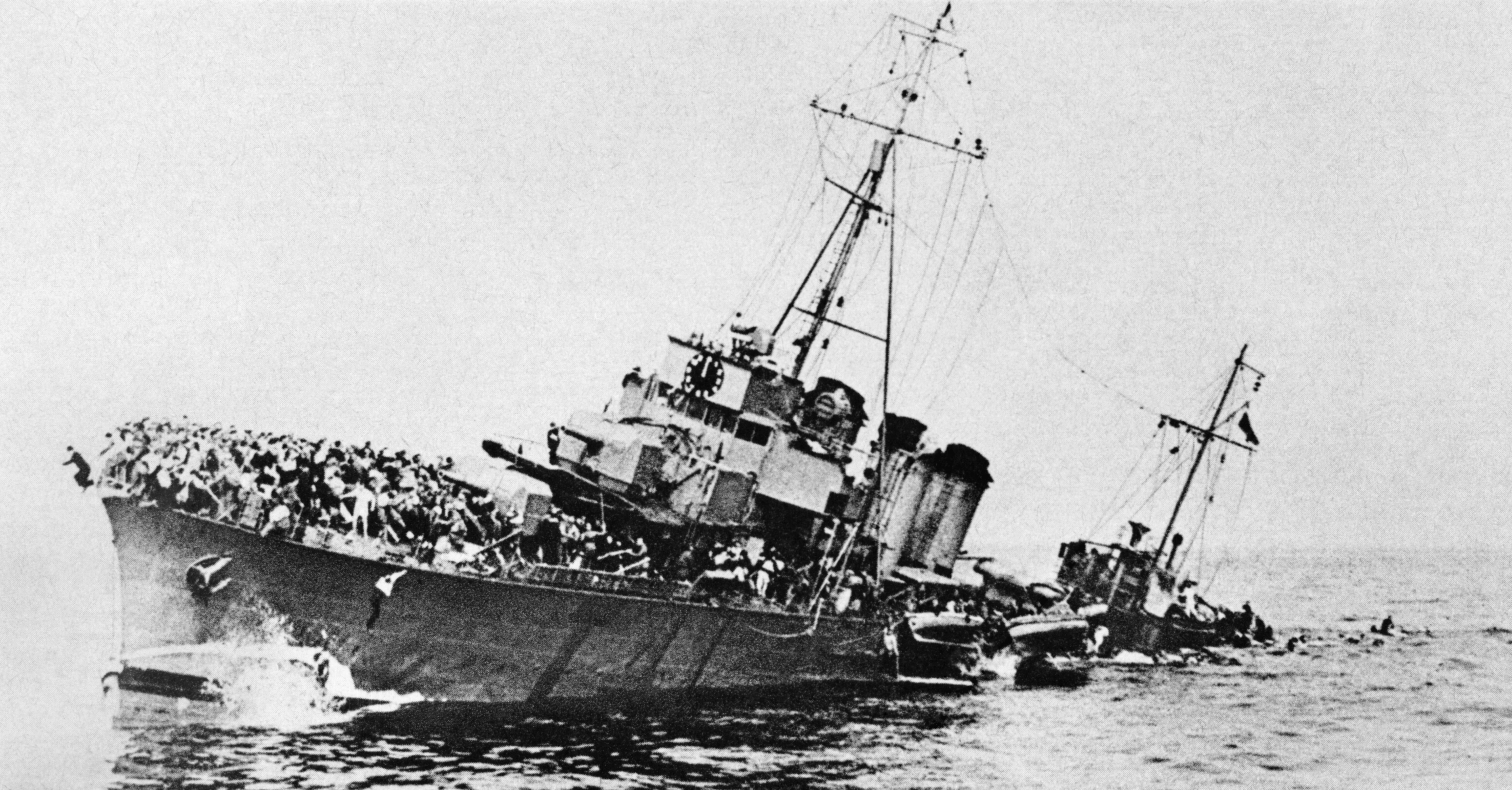
At sea, distance was not simply the straight line between two ports. Mines, enemy fire and the availability of safe routes shaped the passage. A ship had to embark men, get clear, cross, unload and, if it survived and remained serviceable, do it again. The photograph of the sinking French destroyer Bourrasque makes the multinational character and the physical risk of that traffic impossible to miss.
On 29 May, the destroyer Wakeful was sunk by a German torpedo boat and Grenade by air attack. The dangers did not arrive one at a time or end at the harbour entrance. By the beginning of June, air attacks had made daylight embarkation increasingly costly, and the final stages shifted into darkness. The operation’s growing success was accompanied by the steady destruction of the vessels making it possible.
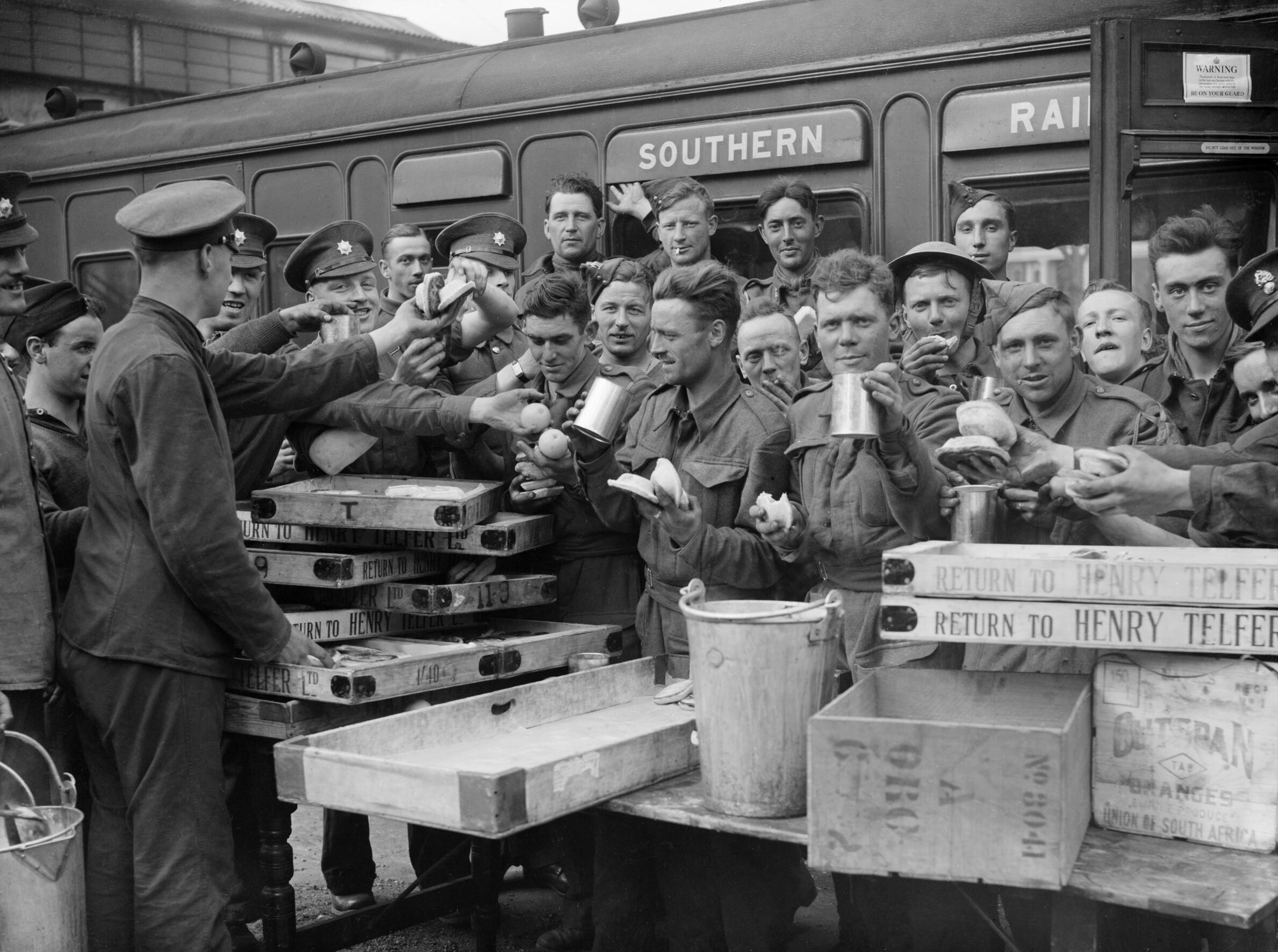
Leigh-Dugmore reached the mole and eventually boarded the Maid of Orleans. His next clear destination was unexpectedly remote from the battle: after sleeping on a train, he woke in Wales. For the services receiving the evacuated men, rescue now meant railway movements, food, beds and the slow work of putting units back together.
The last nights were heavily concerned with bringing out French troops. British rearguards had withdrawn, but the perimeter still had to be held long enough for further embarkation. When the ships finally stopped coming, thousands remained to surrender. The line between evacuation and captivity could be measured in the hours at which a unit was released from its position.
By 4 June, more than 338,000 Allied troops had been evacuated. That number included large numbers of French soldiers as well as British troops. It was an achievement far beyond the modest expectations with which the operation began, but the men did not bring an intact field army’s equipment home with them. Tanks, guns and vehicles were left behind. Others never reached a ship.
Britain had saved trained men and the possibility of rebuilding its army; it had not reversed the defeat in France. Churchill’s speech on 4 June held both realities together. The escape was a reason for courage, but an evacuation could not be counted as a battlefield victory. For men such as Leigh-Dugmore, the voyage ended one ordeal without revealing how long the next would last.
- British government: remembrance of the Dunkirk evacuation
- Dunkirk evacuation: chronology and bibliography
- Harry Leigh-Dugmore’s recollection
Photographic credits and rights are given with each image. Wikipedia overview linked above is available under CC BY-SA.