

King & Country · The Pacific collection
U.S. Marine Corps figures
Riflemen, radio operators, corpsmen and tank crews. Explore the USMC sets through their equipment, their individual stories, and the campaigns that give them context.
The historical setting
The US Marines in World War II
The Marine Corps’ WWII story runs from the defense of Wake Island to the long campaigns of Guadalcanal, the central Pacific and Okinawa. Getting ashore was only one problem. Holding an airfield, opening a route through jungle, bringing guns forward and carrying casualties back demanded different people and equipment. Those jobs are the most useful way to read this collection.
Four standout Marine subjects
Signature sets
The photographs, people and stories behind the miniatures.
From Suribachi to the cinema, these four releases give the collection some of its most distinctive subjects. The flag-raising set comes from King & Country’s earlier Sands of Iwo Jima (IWJ) range.
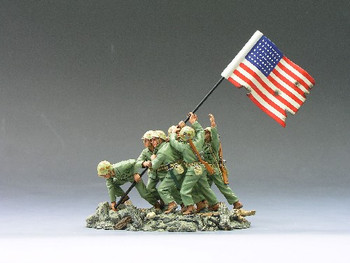
IWJ019 · Iwo Jima flag raising
Flag Raising Set
The diagonal flagpole and six straining figures translate Joe Rosenthal’s photograph into a three-dimensional group. He caught the second flag raising on Mount Suribachi on 23 February 1945, when a larger flag replaced the first. The photograph later inspired the Marine Corps War Memorial. Iwo Jima’s battle continued for weeks after this moment; the set captures a symbol of resolve, rather than the end of the fighting.
The battle behind the photograph →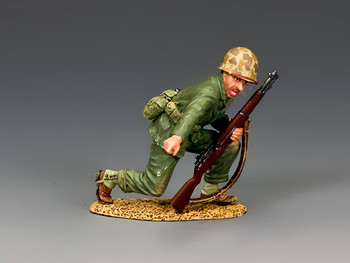
USMC034 · Sands of Iwo Jima
“Stryker”
King & Country’s sculpting inspiration is unusually specific here: a photograph of John Wayne in Sands of Iwo Jima. The maker says it used that image for the Marine’s pose, then named the figure after Wayne’s character. This is a small piece of film history inside the fighting range. Its appeal comes from recognizing the screen Marine in the stance, rather than identifying a real officer or a documented battlefield incident.
Read the maker’s inspiration →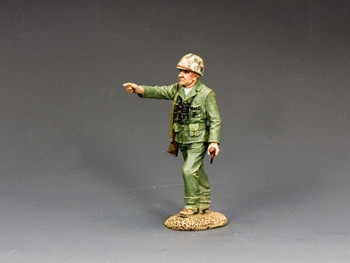
USMC059 · Chesty Puller
Lewis “Chesty” Puller
The pipe, soft cap and pointing arm turn this release into a recognizable portrait. Puller commanded 1st Battalion, 7th Marines on Guadalcanal, earning his third Navy Cross there; his fourth followed at Cape Gloucester. King & Country presents him as a lieutenant colonel during the Pacific campaigns. The model draws on a real commander’s field appearance, while its gesture suggests the forceful leadership for which he became known.
Explore the Puller figure →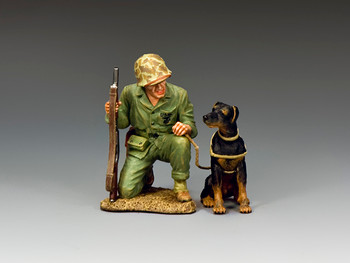
USMC052 · Marine war dog
Pacific War Dog
A seated dog beside a kneeling handler brings a different kind of vigilance to the collection. Marine war dogs worked as scouts, sentries and messengers; on Guam their senses helped handlers detect concealed danger. The miniature concentrates on the partnership, with the animal looking toward the man instead of attacking. King & Country names its dog “Sailor,” but the historical inspiration is the wider war-dog program, rather than a verified portrait of one wartime animal.
Explore the dog and handler →The illustrated catalog
USMC set catalog
Set photographs, history and a review of each release.
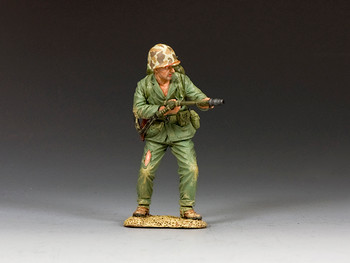 USMC011Marine Flame Thrower
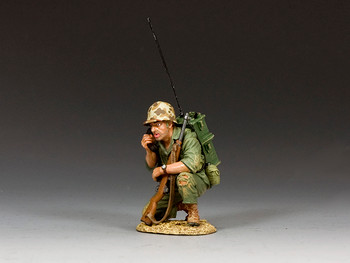 USMC012Marine Radioman
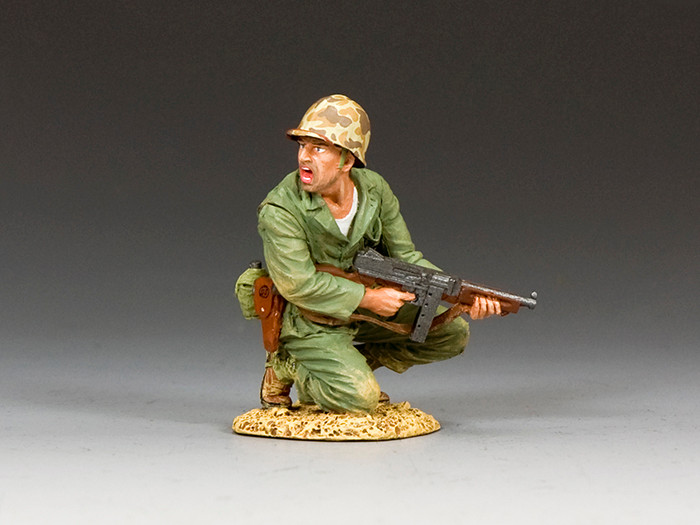 USMC013Marine Officer
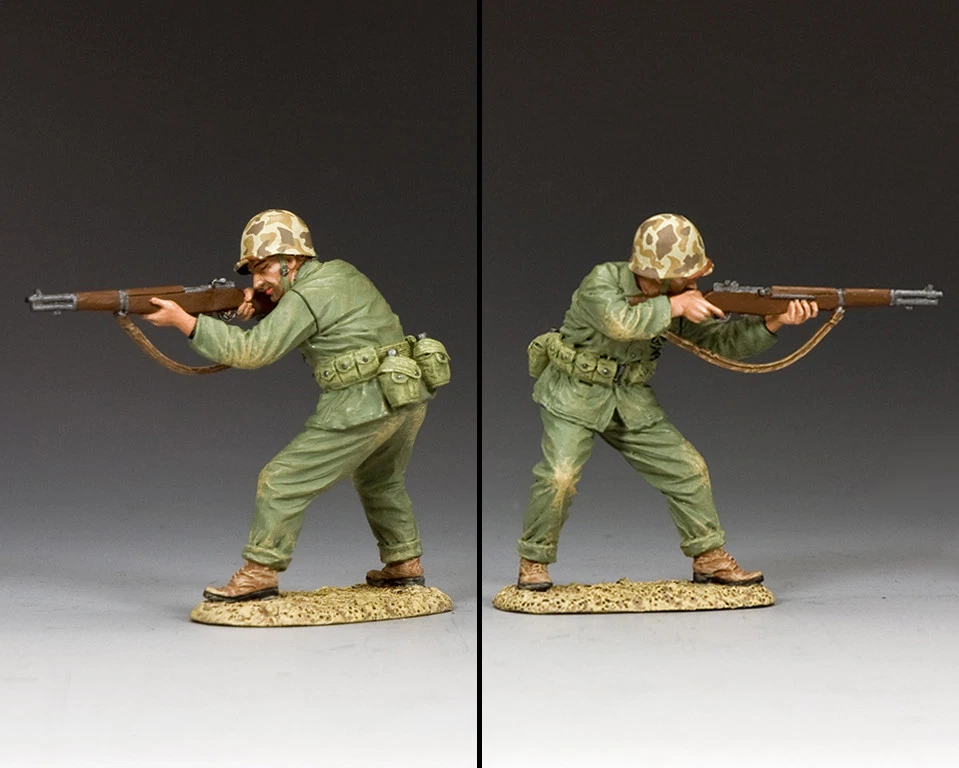 USMC014Marine Firing
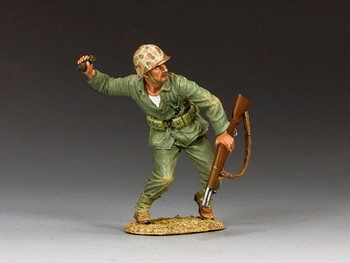 USMC015Marine Grenadier
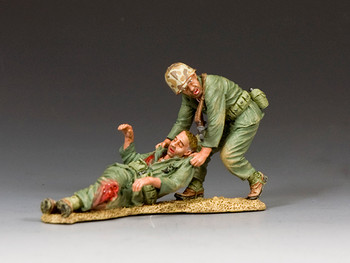 USMC016No Marine Left Behind
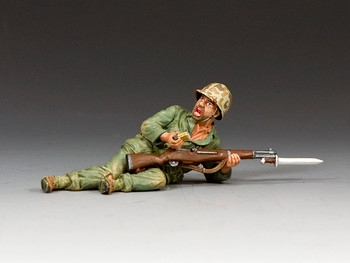 USMC018Marine Reloading
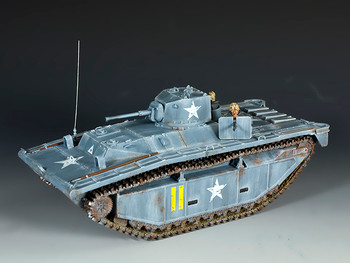 USMC023LVT(A)-1 Alligator
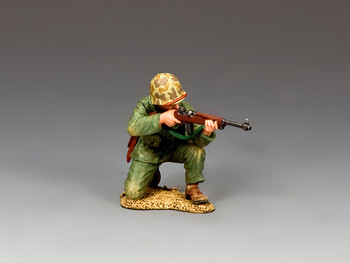 USMC024Marine Kneeling Firing Carbine
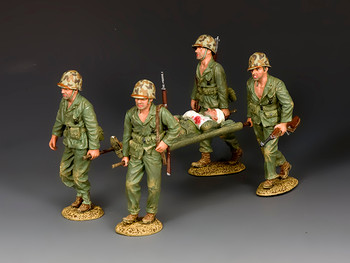 USMC025The Stretcher Party
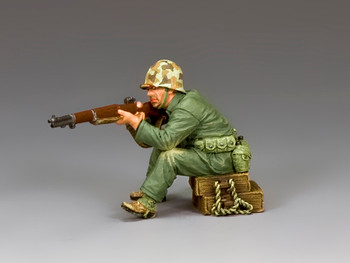 USMC026Marine Sniper
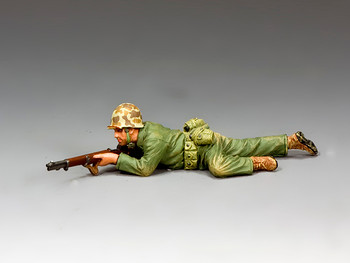 USMC031Marine Crawling into Position
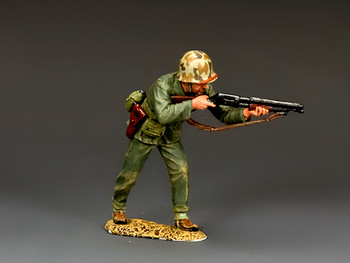 USMC036Shotgun Marine
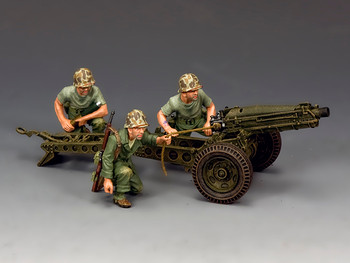 USMC04175mm Pack Howitzer and Crew
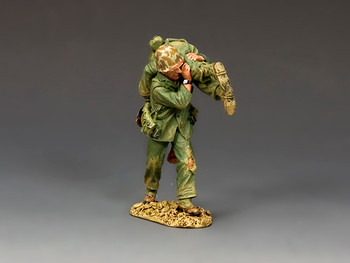 USMC043Hold On Buddy, We’re Almost There
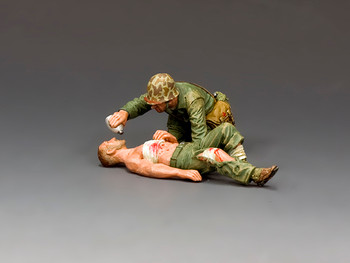 USMC044Navy Corpsman and Wounded Marine
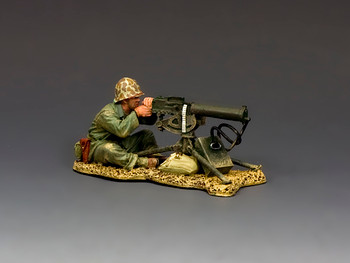 USMC045Marine Machine GunnerUSMC052Pacific War Dog
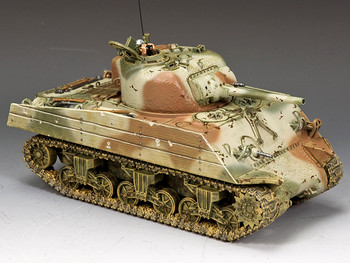 USMC053Pacific Sherman
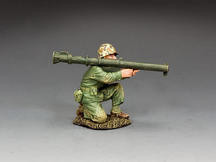 USMC054Kneeling Marine with Bazooka
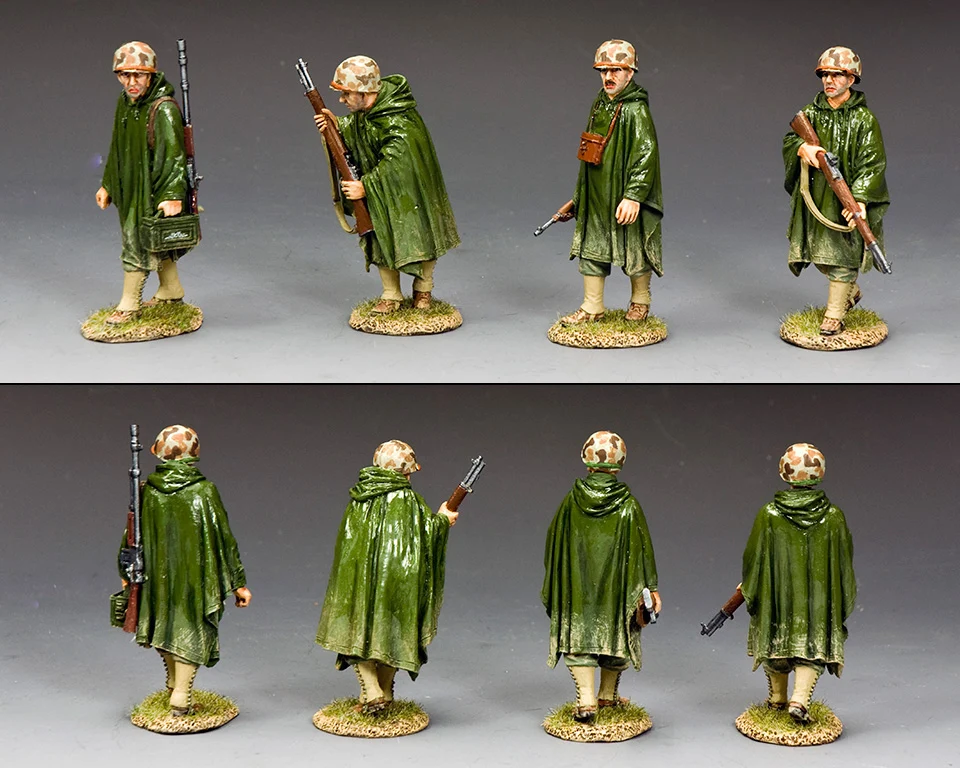
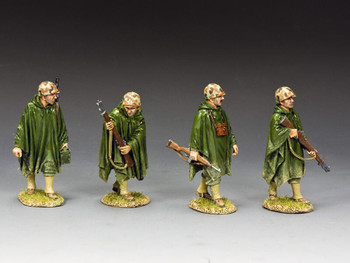 USMC058Wet Weather PatrolUSMC059Lieutenant Colonel Lewis “Chesty” Puller
No matching set. Try a shorter name or choose All sets.
1941–1945 · Across the Pacific
Major Pacific campaigns
A reef-fringed atoll, a flooded jungle and a defended ridge were not the same battlefield. The campaigns below explain why the collection ranges from amphibious armor to a Marine listening to a radio or helping a wounded man. Marine operations depended on Navy transport and gunfire, air power, Army formations and the work of island communities; the Pacific war was never the story of one service alone.
Wake Island
Marine defenders, naval personnel and civilian workers resisted Japanese attacks before the island fell. Wake belongs to the opening defensive phase of the war, before the amphibious offensives represented by much of this collection.
Guadalcanal & the Solomons
The struggle for Henderson Field depended on fighting ashore, in the air and at sea. Marines and later Army formations faced supply shortages as well as Japanese attacks. Puller’s battalion fought here, but the weapons of a later-war USMC figure should not automatically be carried back into August 1942.
Bougainville & Cape Gloucester
These operations formed part of the Allied effort to isolate Rabaul. On New Britain, monsoon rain and flooded ground made movement, supply and health major problems. Wet Weather Patrol and the pack howitzer crew bring those conditions and supporting tasks into focus.
Tarawa & the Marshalls
At Betio, the reef complicated the approach of landing craft while LVTs carried assault troops toward the shore. The costly Tarawa battle sharpened amphibious planning. Armored amphibians such as the LVT(A)-1 added another kind of support during the subsequent Marshall Islands operations.
Saipan, Tinian & Guam
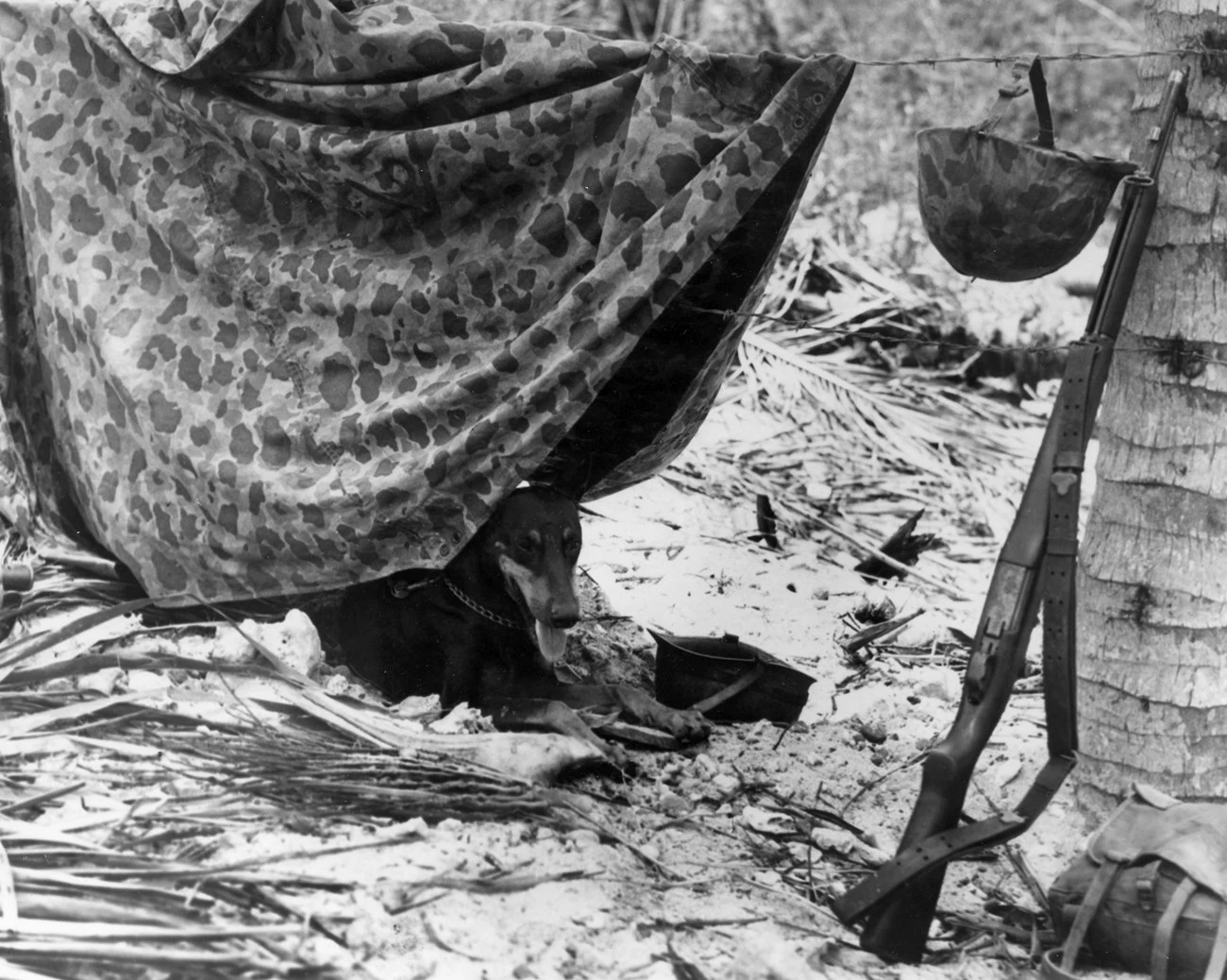
The Marianas campaign brought major airfields within reach of Japan. Marines and Army troops fought on Saipan and Guam; the struggle also devastated local communities. Guam is particularly important to the history of Marine war dogs, whose patrol work relied on detection rather than a visible target.
Peleliu
Well-prepared Japanese positions in coral ridges turned an expected short operation into prolonged fighting. The 1st Marine Division and Army’s 81st Infantry Division confronted an enemy using depth and concealment. Small-unit assaults, supporting weapons and casualty evacuation became inseparable parts of the battle.
Iwo Jima
The 3rd, 4th and 5th Marine Divisions fought against an extensive defensive system. The flag raising on Suribachi came early in a battle that continued for weeks. Navy corpsmen and stretcher parties represent work that the familiar summit photograph does not show. Read our Iwo Jima history →
Okinawa
Marines and Army troops fought a long land campaign while the fleet endured air attack offshore. Rain, defended ridges and the catastrophic suffering of Okinawan civilians distinguish it from the popular image of a brief beach assault. Victory on the shore did not settle the battle inland.
Campaign chronology: Marine Corps History Division; National Park Service; the battle for Saipan.
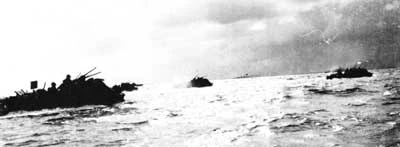
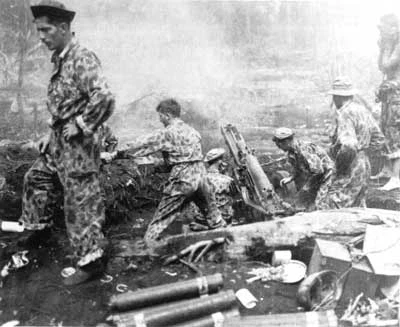
Figure details
About the figures
Weapons and equipment
The long Garand and shorter M1 carbine share a designation, not a cartridge or purpose. The radioman’s SCR-300 entered production in 1943. The turret on USMC023 identifies an armored amphibian, rather than the LVT-1 transport shown in the Tarawa photograph. These details are more useful than assigning every green-uniformed figure to the same island.
Machine-gun and artillery crews
Three Marines work the pack howitzer; one man operates a water-cooled Browning. One release includes a crew, another concentrates on the firing position. The distinction matters when reading the scene: ammunition carriers, communications and observation remain part of the historical job even when a boxed set does not include them.
Corpsmen and casualty evacuation
Dragging a casualty, carrying him over a shoulder, giving aid and moving a stretcher are four different subjects. Together they describe a process that could continue from a shell hole to a beach, a landing craft and a hospital ship. The corpsman was a Navy medical specialist serving with Marines.
Chesty Puller
Chesty Puller has a documented biography. Most of the range’s other men are anonymous interpretations of a role. A photograph of a gun crew or war dog can explain that role without proving that the miniature was sculpted after those particular people or animals.
Patrol figures
Marine patrols and war dogs
Rain changes the outline of the poncho-clad patrol, hiding equipment under cloth. At Cape Gloucester it also flooded kitchens and fighting positions. A wet-weather figure is therefore more than a uniform variation: it opens a part of the campaign that photographs of a landing alone cannot explain.
The dog and handler suggest another kind of work. Marine dogs served as scouts, messengers and sentries, using senses their handlers could not duplicate. The seated dog in the miniature is a partner waiting with his handler, not a generic symbol of aggression.
Historical reading & photograph credits
- Joseph H. Alexander, Across the Reef: The Marine Assault of Tarawa
- Bernard C. Nalty, Cape Gloucester: The Green Inferno
- Frank O. Hough, Bloody Beaches: The Marines at Peleliu
- National Park Service, War Dogs in the Battle of Guam
- Naval History and Heritage Command, Iwo Jima: A Sailor’s View
- King & Country US Marine Corps release references
The period photographs reproduced here are credited U.S. government images. Product photographs are King & Country reference images. Each set article identifies its release source and separates depicted contents from additional display figures.