

Geoffrey Wellum remembered the telephone. Before the engine noise and the climb, before the enemy aircraft and the decision to fire, there was the waiting for it to ring. The young Spitfire pilot’s recollection shifts the Battle of Britain away from its familiar silhouette in the sky and back towards an airfield where men did not yet know what the next few minutes would require.
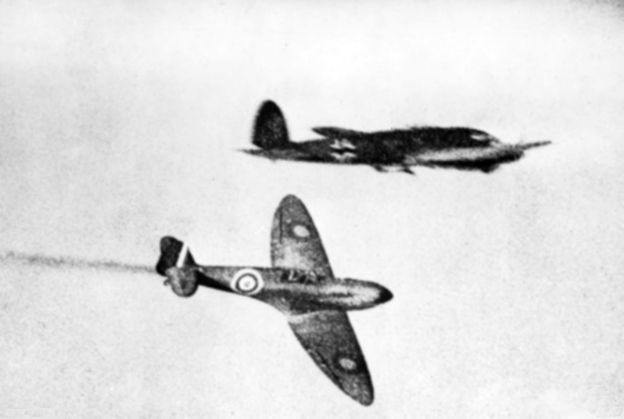
“The worst part was the waiting; waiting for the phone to ring.”
Geoffrey Wellum, recalling service with No. 92 Squadron — RAF Benevolent Fund interview
Wellum described a change once he was inside the aircraft and could feel its vibration: the machine gave the uncertainty a practical form. There were controls to operate, a formation to join and a task to perform. His recollection also returned to the loss of friends. The famous aircraft was therefore both a means of survival and the place from which men could fail to return. The victory did not remove that burden from those who lived through it.
Behind the waiting lay the strategic emergency of June 1940. France had fallen, bringing German air bases much closer to southern England. An invasion across the Channel would still have to face the Royal Navy, but British fighters also threatened the shipping and troops needed for a crossing. The Luftwaffe’s task was therefore larger than winning dogfights: it had to break a defensive force that could interfere with an invasion.
The defence had been built around a refusal to accept that bombers must always get through. Air Chief Marshal Hugh Dowding’s Fighter Command brought aircraft, warning systems and command arrangements into one organisation. Air Vice-Marshal Keith Park’s No. 11 Group bore much of the pressure in the south-east. Their problem was not to put every available fighter into the air at once, but to commit forces where they could interrupt raids while keeping the defence capable of fighting again.
Radar was indispensable, but radar alone was not the system. Reports had to be assessed, overlapping information reconciled, and decisions passed onwards. Once aircraft crossed the coast, observers helped follow them. The apparent simplicity of a scramble concealed a sequence of human judgements about height, strength, direction and time.
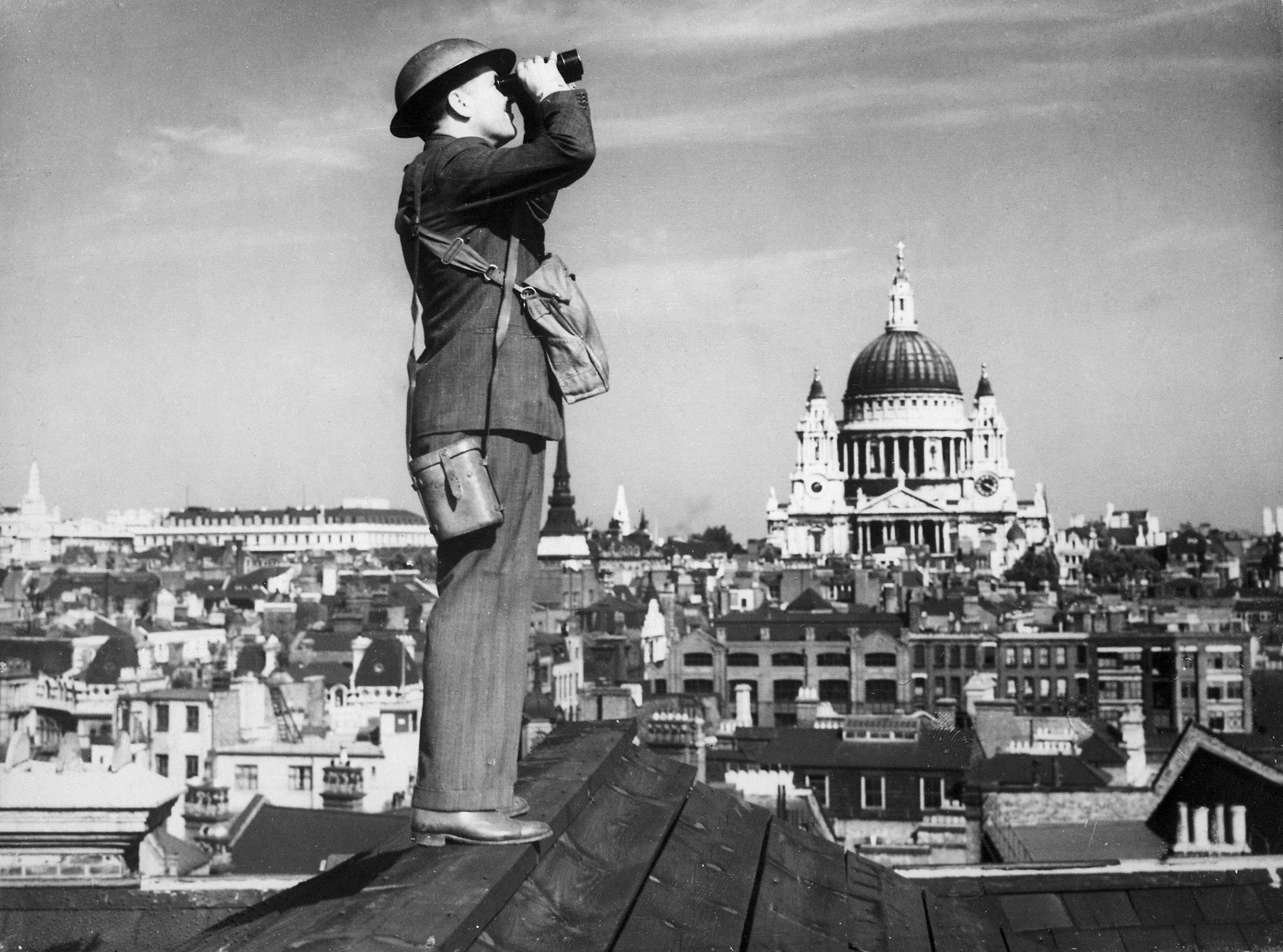
This system did not make every report accurate or every interception successful. Its value was that it helped a limited number of fighters avoid spending the whole day searching empty sky. Squadrons could be directed towards danger. Ground crews then had to repair, refuel and rearm the aircraft that returned, turning another landing into another possible sortie.
A summer that changed its shape
The fighting developed in stages. Attacks on Channel shipping and coastal targets gave way to heavier pressure on airfields and the infrastructure supporting Fighter Command. In September, London became a central target. The campaign conventionally called the Battle of Britain, from 10 July to 31 October, overlapped with the longer night-bombing campaign remembered as the Blitz.
August brought the danger close to the machinery of defence. Raids struck airfields and radar installations, attempting to damage not only aircraft but the means of directing them. The towers of the warning stations were difficult targets to destroy. Damage to buildings and equipment could interrupt a station, yet the wider reporting network might continue working around it. The Luftwaffe was attacking an organisation that could suffer local blows without necessarily ceasing to function.
Those changes should not be compressed into one unchanging afternoon above the countryside. A squadron’s experience depended on its location, the phase of the battle and the work demanded of it. Some airfields came under severe pressure. Pilots were lost, replacements arrived, and the demands of repeated operations accumulated. An aircraft’s return did not mean that its pilot or mechanics had finished their day.
On 15 August, attacks also came from bases in Norway and Denmark against northern England. The Germans encountered stronger fighter resistance than expected, an indication that Britain had not stripped every other area to protect the south-east. A raid approaching from another direction did not automatically find an empty sky. The day’s fighting widened the campaign beyond the Kent and Sussex landscape that later became its familiar setting.
Geography imposed different burdens on the opponents. German fighters escorting bombers had a limited period over Britain before fuel forced them to turn back. A British pilot who survived a descent by parachute over friendly territory might return to service; a German airman in the same situation usually became a prisoner. These were practical constraints, not guarantees of victory in any particular encounter.
The machines also deserve to be separated from their legends. The Hurricane carried a large share of the fighting, even though the Spitfire became the more glamorous emblem. German aircraft had advantages as well as limitations. A Messerschmitt Bf 109 could be a formidable opponent, but escorting bombers imposed a different task from hunting fighters freely. A pilot’s tactical choices were bounded by fuel, altitude, visibility and the need to remain with other aircraft.
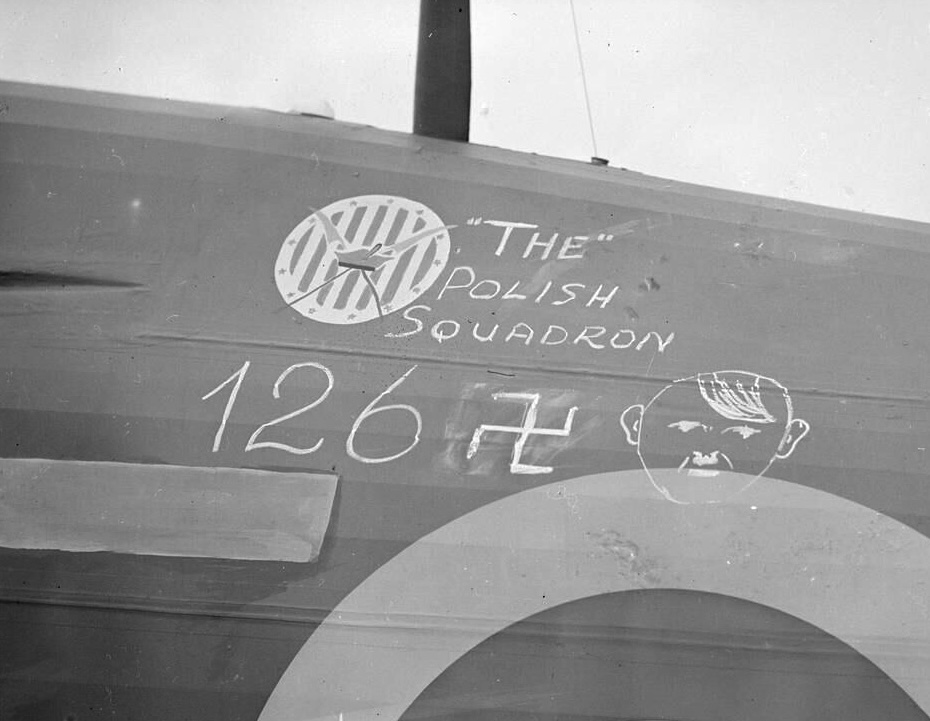
Among the pilots sent into that system were men who had already lost one country to the war. Polish and Czechoslovak airmen served alongside British and Commonwealth crews; No. 303 Squadron became one of the campaign’s celebrated Polish units. Their experience did not remove the difficulty of learning unfamiliar procedures or communicating over a radio in another language. Britain was the battlefield and the base, but the defence drew upon people who had reached it by very different routes.
Even within Fighter Command, the best way to use those men and aircraft remained contested. Advocates of the “Big Wing” wanted several squadrons assembled for a concentrated attack. Park had to weigh that striking power against the minutes spent forming up while bombers approached his airfields. A formation arriving late could miss the raid it had been gathered to destroy. The disagreement grew sharper under the pressure of casualties and competing claims of success.
Survival was the strategic result
The major raids of 15 September met determined resistance over southern England. They did not end the air war, but they helped expose the gap between German claims that Fighter Command was nearly finished and its continuing ability to intercept. Two days later, Hitler postponed Operation Sea Lion indefinitely. Britain would still be bombed; it had denied the condition the planned invasion required.
That outcome is easy to make sound inevitable with hindsight. It was experienced through damaged machines, changing orders and the uncertainty of the next raid. The Spitfire became a symbol because it gave that effort a memorable shape. Behind its outline stood a network of people whose work made the moment of interception possible.
- Air Force Museum of New Zealand: the Battle of Britain
- Battle of Britain: chronology and bibliography
- Geoffrey Wellum: retrospective interview
Photographic credits and rights are given with each image. Wikipedia overview linked above is available under CC BY-SA.