

By 23 September 1944, Sergeant Dennis Smith’s account from Arnhem had narrowed to the essentials: shelling, rain, exhaustion and the need for relief. Six days earlier, aircraft had delivered an army into the Netherlands with the promise of speed. Now the men around Oosterbeek were measuring time by what they could still endure.
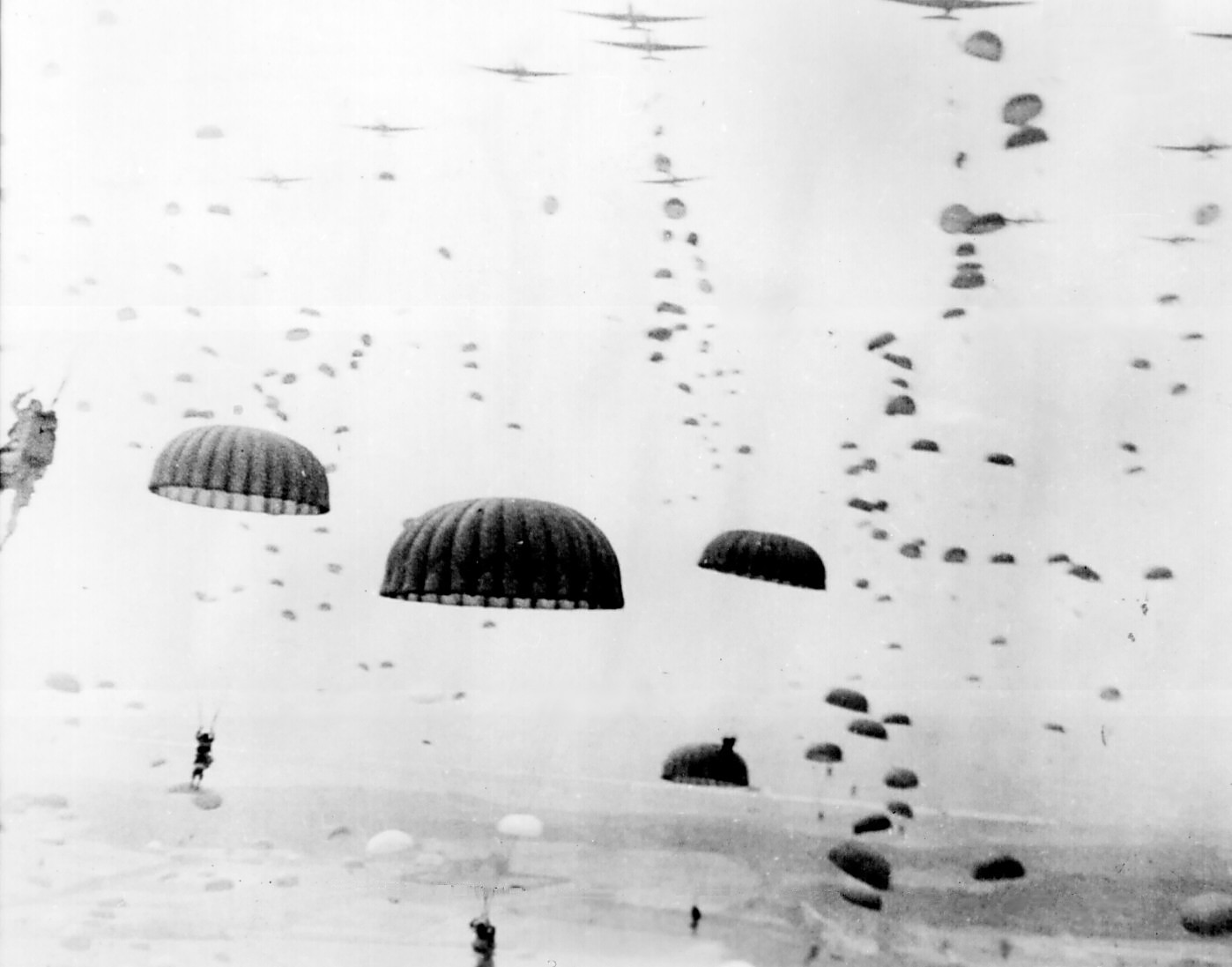
“The men are tired, weary and food is becoming scarce”
Sergeant Dennis Smith, Army Film and Photographic Unit, 23 September 1944 — National Army Museum
Six days before Smith wrote those words, the operation had opened with airborne landings on 17 September. American divisions were to seize crossings farther south, while the British 1st Airborne Division landed near Arnhem. XXX Corps would drive north to link them. Aircraft could place men beyond the German front; the ground column had to reach them with the weight of a field army before their ammunition, supplies and freedom of movement ran out.
The route joined bridges at Son, Grave, Nijmegen and Arnhem. Each crossing presented a separate problem, but the consequences of a delay travelled north. Engineers might replace a demolished bridge given enough equipment and time. At the far end, lightly armed troops would have to fight through the hours spent waiting for it.
Near Arnhem, the landing grounds lay several miles from the road bridge. Troops had to assemble and move towards the objective while others protected areas needed for subsequent arrivals. The whole division could not be delivered in one lift, and its resources were divided between securing the approach from the air and opening the approach on the ground.
Intelligence about German armour in the area had not been wholly absent. Reports and reconnaissance raised warnings, but their significance was not adequately incorporated into the plan. Saying simply that the tanks were unknown makes the failure look like missing information alone. The harder problem was how information was assessed when it conflicted with the desired timetable and assumptions about German disorganisation.
German resistance formed quickly along the routes into town. Units already in the area, including elements of SS armoured formations, gathered into improvised battle groups. The Allied advance across France had disorganised German armies, but it had not removed every local headquarters, weapon or experienced commander. Around Arnhem, these surviving elements found time to block the way.
One end of the bridge
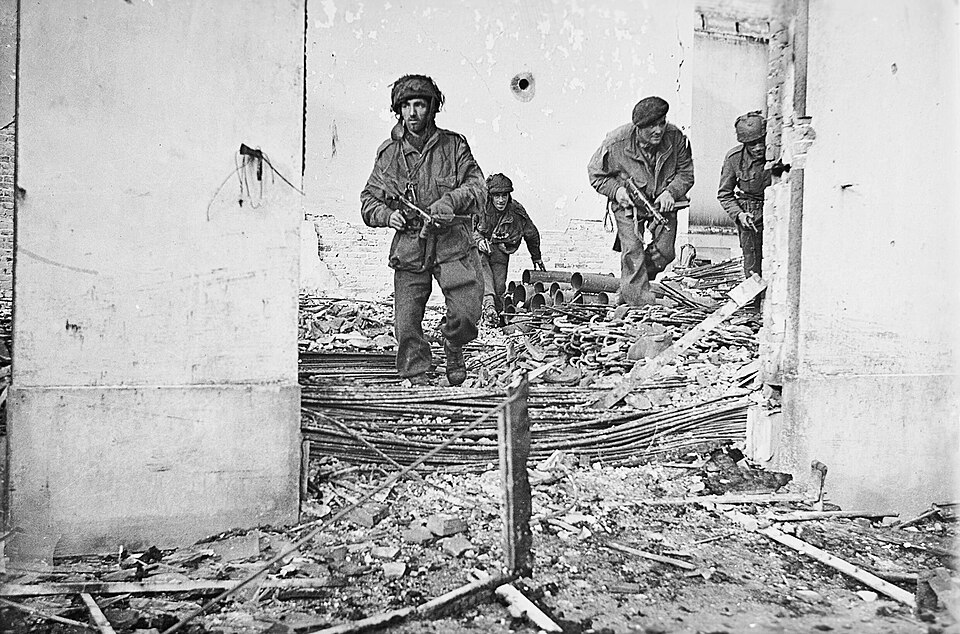
Lieutenant-Colonel John Frost’s force reached the northern end of Arnhem’s road bridge, but most of the division could not follow. The bridge defenders fought from buildings while the main body became concentrated around Oosterbeek, to the west. A road distance that looked manageable on the plan became a line of German resistance between two isolated British positions.
Frost’s men could defend the buildings around the northern approach, but they did not possess both ends of the bridge or a secure route back to the division. German attacks reduced the shelter available to them. Fire and structural damage could make a position impossible to occupy even before an attacker entered it. As the perimeter of houses contracted, the wounded and the men still able to fight were crowded into fewer usable spaces.
Farther south, the ground advance met demolished crossings, resistance and congestion. In places, the road stood above soft ground that limited movement off it. A blockage could halt much more than the vehicle immediately behind it. German counterattacks threatened the corridor itself.
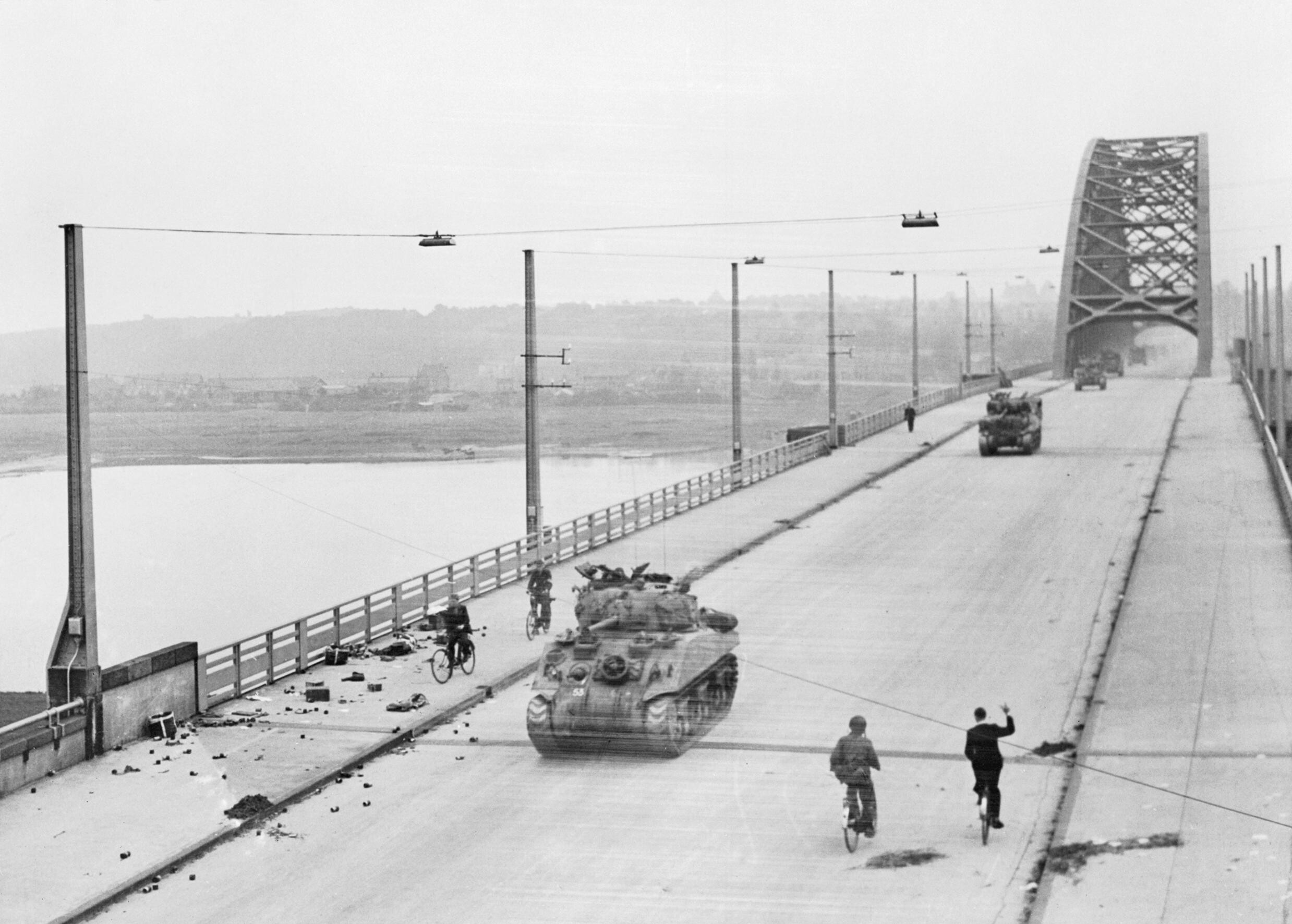
On 20 September, American airborne troops crossed the Waal at Nijmegen in assault boats while British armour attacked towards the road bridge. Its capture opened another link in the route. It could not recover the lost days. At Arnhem, Frost’s force was overwhelmed as ammunition dwindled, buildings burned and the wounded crowded the remaining shelter.
Across the river in darkness
The Polish 1st Independent Parachute Brigade, commanded by Stanisław Sosabowski, landed around Driel on the south side of the Rhine after delays. Its soldiers were close to the British perimeter in geographical terms and still separated from it by a formidable practical obstacle: the river. Attempts to move men across depended on boats, landing places and enemy fire. Proximity did not produce a usable connection.
At Oosterbeek, Smith’s exhausted men held on until withdrawal across the Rhine on the night of 25–26 September. Boats worked in darkness to carry survivors to the south bank. Many wounded men could not be moved and remained behind. Others had already been killed or captured. The division that had landed little more than a week earlier emerged as a shattered force.
Dutch civilians carried consequences that lasted beyond the airborne withdrawal. Helping wounded or hiding soldiers could bring danger under occupation. Liberation had arrived in some places and receded from expectation in others. For them, the broken timetable was not an argument between generals; it shaped the next day’s risks and the months still to come.
Arnhem endures because it joins courage to a difficult truth. Men can fight with extraordinary determination inside a plan whose essential conditions have broken down. Their conduct deserves remembrance without requiring the plan itself to be called a success.
Photographic credits and rights are given with each image. Wikipedia overview linked above is available under CC BY-SA.