

King & Country · First World War · FW
First World War figures
Browse FW soldiers, commanders, weapon teams and support figures by set code. Each card opens a photographed article about the model and the military role it represents.
The history behind the FW range
Early French infantry, German machine-gun teams, British tanks and medical figures each show a different part of the First World War. Below the set catalog, six archival photographs explore their uniforms, equipment and roles, with links to the FW models that represent them. See the historical photographs →
From the collection
Featured sets
Different subjects, poses and stories from the collection.
FW · FW001
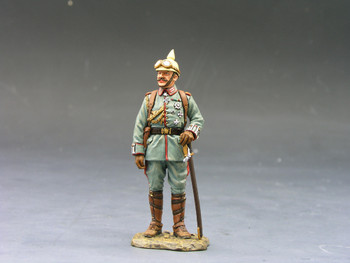
The Kaiser
The Kaiser’s helmet, decorations and walking stick make this a portrait figure rather than a generic officer. Its upright stance fits naturally into a command gathering or a display of the range’s named personalities.
Explore this set →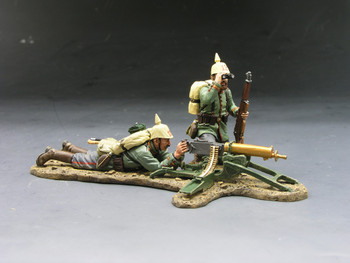
FW · FW019
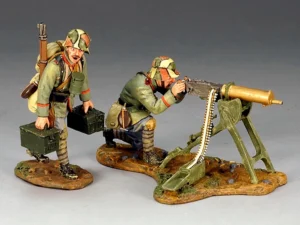
German Machine Gun Set
A prone gunner operates the machine gun while a kneeling companion observes through binoculars. The water-cooled weapon and the contrast between firing and observation show two different jobs within one small team.
Explore this set →FW · FW049
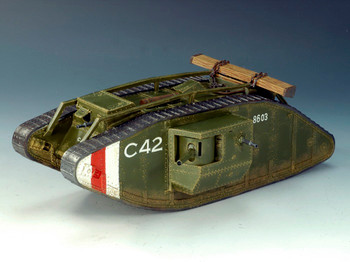
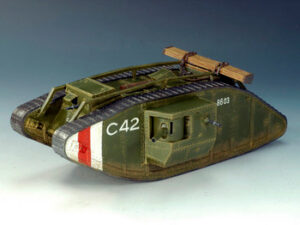
British Mark IV Heavy Tank
The Mark IV’s long tracks wrap around its rhomboid hull, with the C42 marking and roof-mounted beam adding distinctive details. Its shape makes a strong centerpiece among the infantry and gun teams of the FW range.
Explore this set →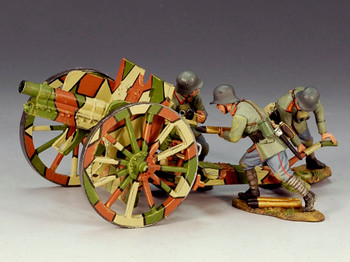
FW · FW057
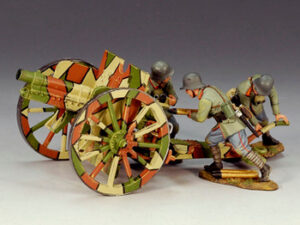
77mm Artillery Set, 1917
A camouflaged gun shield and three crew figures give this artillery set both color and activity. The men around the weapon turn a piece of equipment into a working gun position.
Explore this set →Collector identification
Reading the early FW command subjects
These separate command and musician entries can appear in one display, but their proximity does not make them one release. Use the equipment and pose to separate vague listings.
| Code | Subject | What to verify |
|---|---|---|
| FW005 | Mounted officer | The dealer description identifies a saluting mounted major of the 13th Bavarian Rifles; it does not give a personal name. |
| FW007 | Officer with flag | The reference describes a battle flag carried over the shoulder. Inspect the flag, staff and attachment points. |
| FW008 | Marching bugler | Compare the musician’s equipment with the reference; a generic marching-figure title loses this distinction. |
Keep the source’s identification separate from any later display caption. A uniform or range prefix alone does not document a particular person, date or location. Request photographs of the actual figures rather than using a stock scene as condition evidence.
Reference basis: individually checked dealer release descriptions, not hands-on inspections. FW005 source · FW007 source · FW008 source.
Illustrated article index
First World War Set Catalog
Browse the documented FW subjects below. Each card opens a set photograph, historical context and collecting notes. The index grows as further releases are researched; gaps in the numbering are not filled with assumed sets.
51 sets
No sets match your search. Try another name or set code.
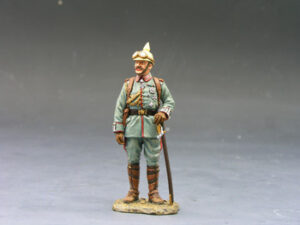 FW001The Kaiser
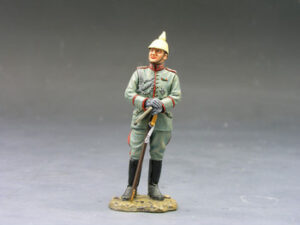 FW002Kaiser’s Aide-de-Camp
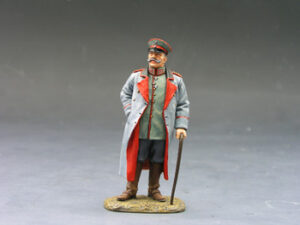 FW004Hindenburg
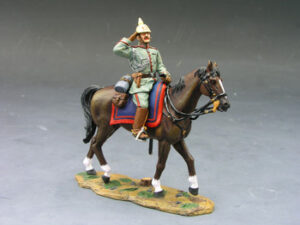 FW005Mounted Officer
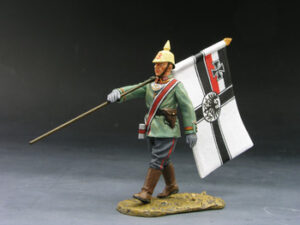 FW007Officer with Flag
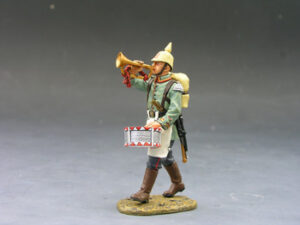 FW008Marching Bugler
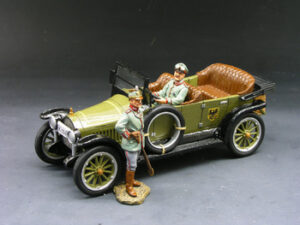 FW013Kaiser’s Staff Car
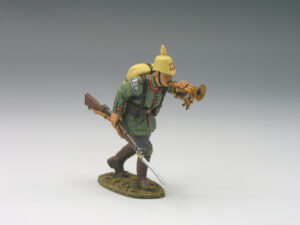 FW017Running with Rifle & Bugle
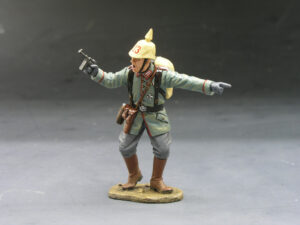 FW018Officer with Pistol
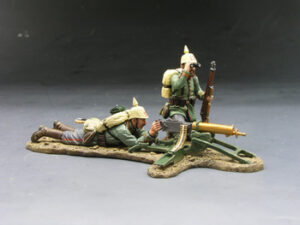 FW019German Machine Gun Set
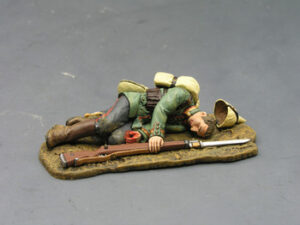 FW021Dead German
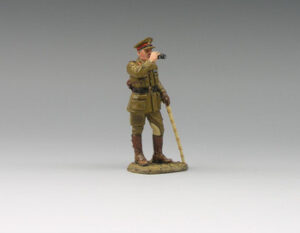 FW024Sir John French
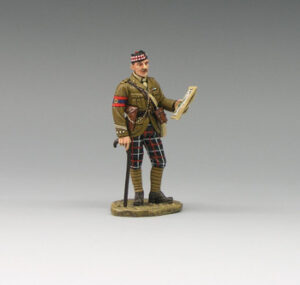 FW025KOSB Officer with Map
 FW031Battlefield First Aid
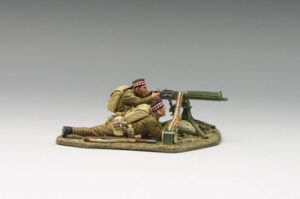 FW033Vickers Machine Gun Set
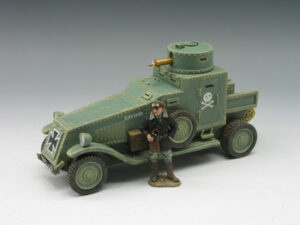 FW034German Armoured Car
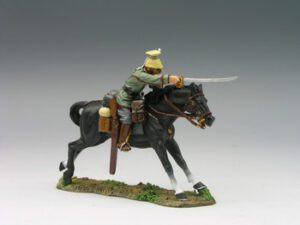 FW035Charging Uhlan Officer
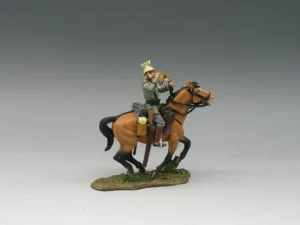 FW036Uhlan Bugler
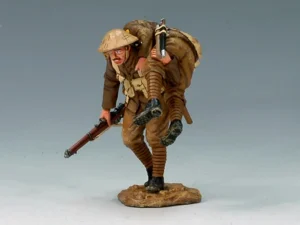 FW046Wounded
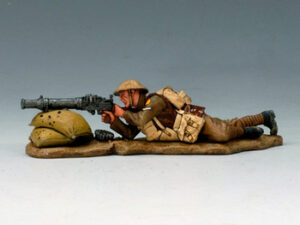 FW048Lewis Gunner
 FW049British Mark IV Heavy Tank
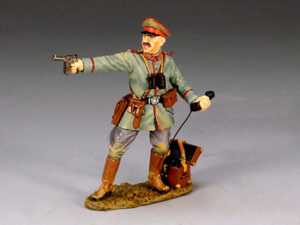 FW050Officer with Pistol and Field Telephone
 FW052Machine Gun Set
 FW05777mm Artillery Set, 1917
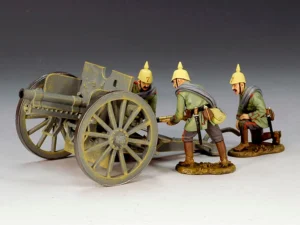 FW05877mm Artillery Set 1914
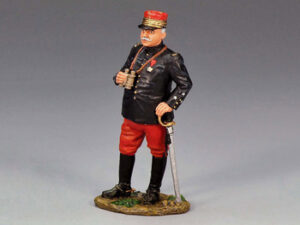 FW060General Joffre
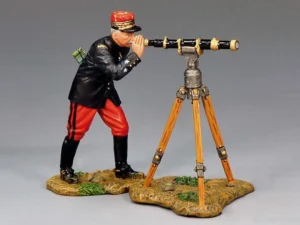 FW061General Foch
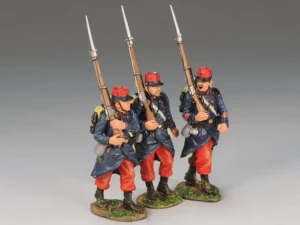 FW064Marching Poilus
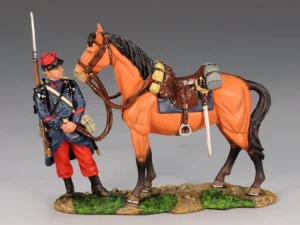 FW067Poilu Attending to a General’s Horse
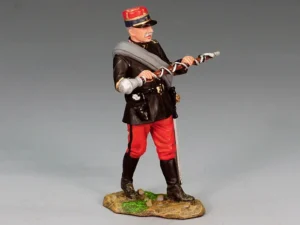 FW068Drum Major
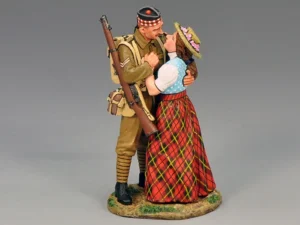 FW073Goodbye-ee
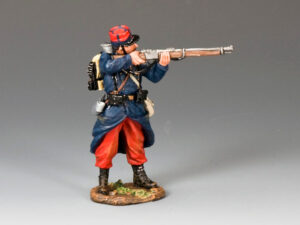 FW078Poilu Rifleman
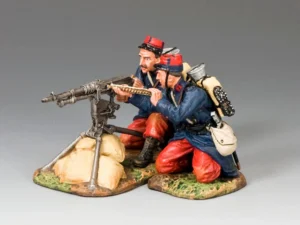 FW079French Machine Gun Set
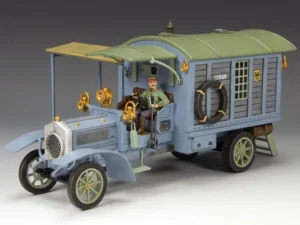 FW092Kaiser Bill’s Staffwagen
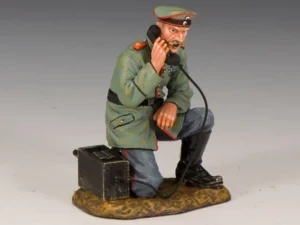 FW100Field Telephone
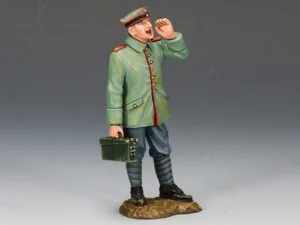 FW101Shouting Mechanic
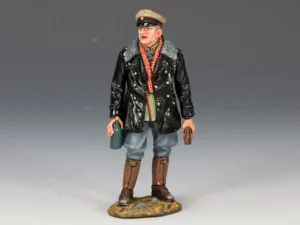 FW103Oswald Boelcke
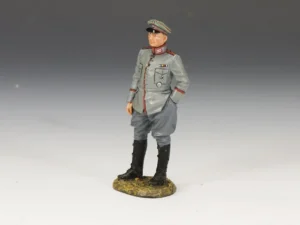 FW106Lieutenant Werner Voss
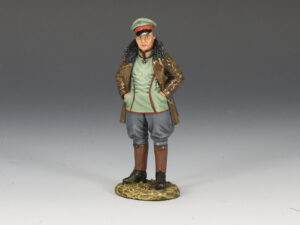 FW107Red Baron
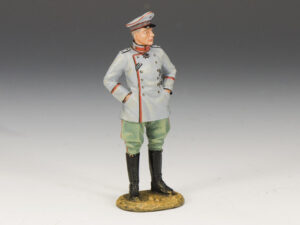 FW108Hermann Goering
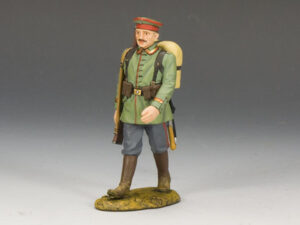 FW109Marching Rifleman
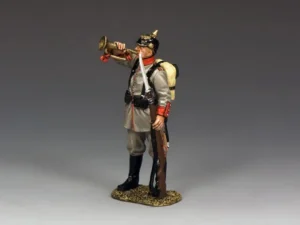 FW134Baden Infantry Bugler
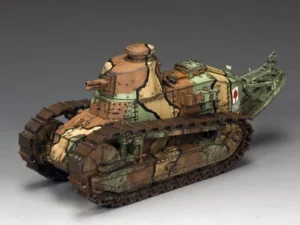 FW146Renault FT Tank
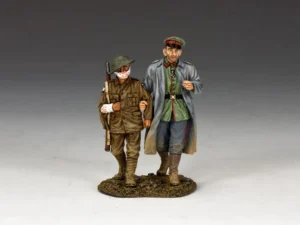 FW168Bantam and Prisoner
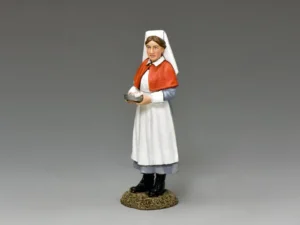 FW173Nursing Sister
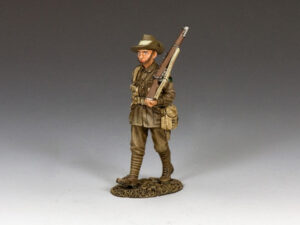 FW181Australian Marching
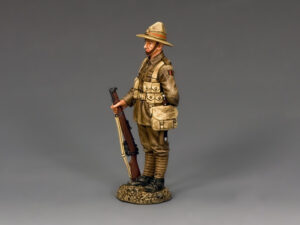 FW182New Zealander Stand‑at‑Ease
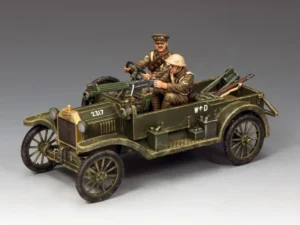 FW188Ford Model T Vickers Machine Gun Carrier
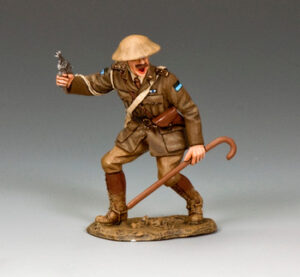 FW189-QAdvancing Officer (Queensland)
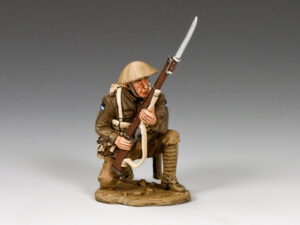 FW192-QAustralian Queensland 9th Infantry Kneeling
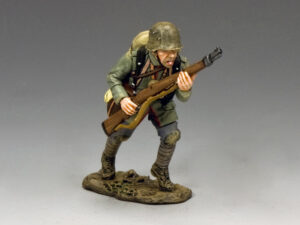 FW215Advancing with Rifle
1914–1918 · The history behind the figures
The First World War in photographs
The FW range covers several stages of the war. French infantry in early uniforms, German gun crews and a British Mark IV tank belong to different moments within those four years. These archive photographs put the equipment and everyday work of the soldiers alongside the sets that depict them.
Most of the scenes below come from the Western Front. The photographs are historical comparisons for the models; each caption links to the archive’s identification and date.
French troops went to war in blue coats and red trousers. The later horizon-blue uniform and Adrian helmet changed their appearance.
The Mark IV entered service and took part in the massed tank attack at Cambrai that November.
The small, two-man French tank first saw action in May, bringing a fully rotating turret to the battlefield.
French infantry at the start of the war
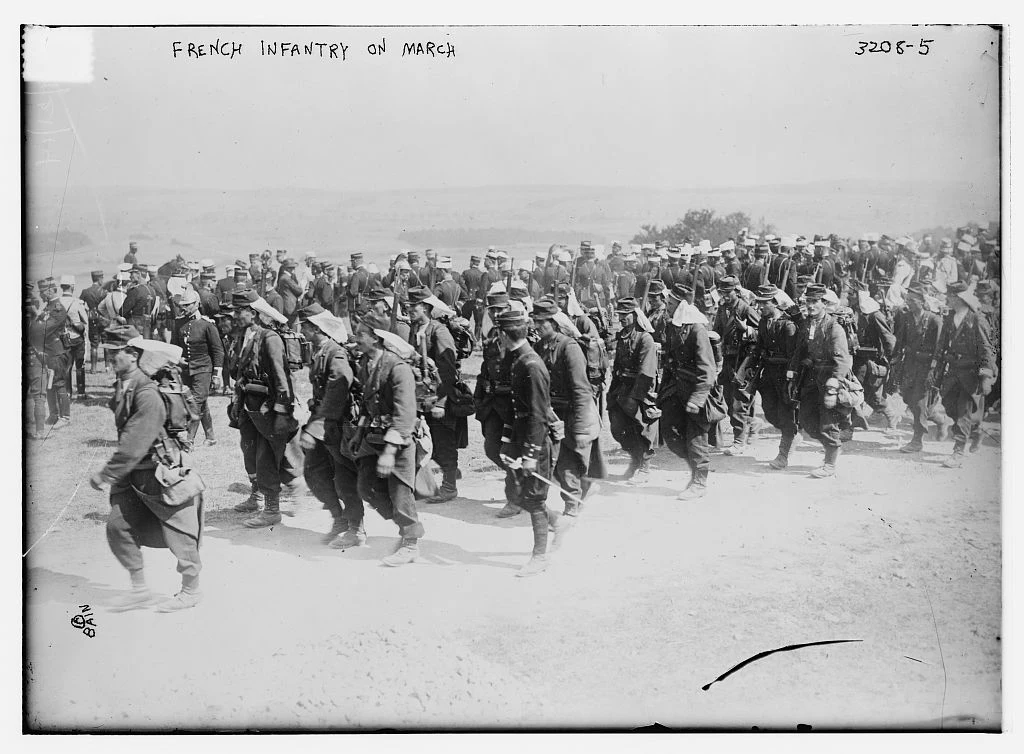
The marching column shows how much a soldier carried: a rifle, a bulky pack and rolled equipment, with long coats adding to the silhouette. Those details give FW064 Marching Poilus its character. The photograph also offers a useful comparison for the spacing and posture of men moving along a road.
In 1914, French red trousers and blue coats stood out beside British khaki and German field grey. By late 1915, horizon-blue clothing and the Adrian steel helmet were replacing that early appearance. The change helps date a French subject more precisely than the broad label “First World War.” In a black-and-white photograph, the shape of the headgear and equipment provides clues that colour cannot.
Read more: National Army Museum on French uniforms
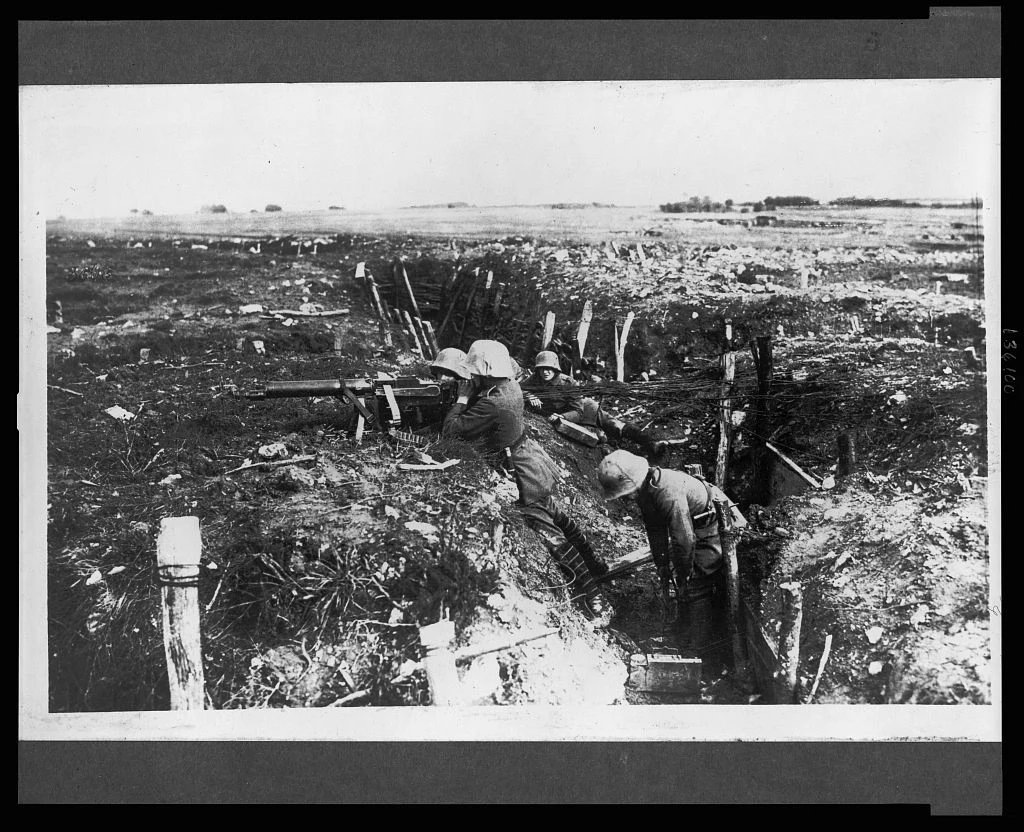
Machine-gun crews and their equipment
A machine gun needed a working team and a steady supply of ammunition. The British Vickers also required cooling water and spare barrels. The lighter Lewis gun gave infantry more portable firepower, with a second man helping to supply ammunition and reload. These differences explain why FW033 and FW048 represent distinct jobs.
In the German trench photograph, the earth around the crews gives their firing positions some protection. Compare that setting with FW019: the prone gunner stays close to the weapon, while his kneeling companion uses binoculars. The two poses show firing and observation within the same team. The archive dates the photograph broadly to 1914–18, so it is best used to study the work and position of the men.
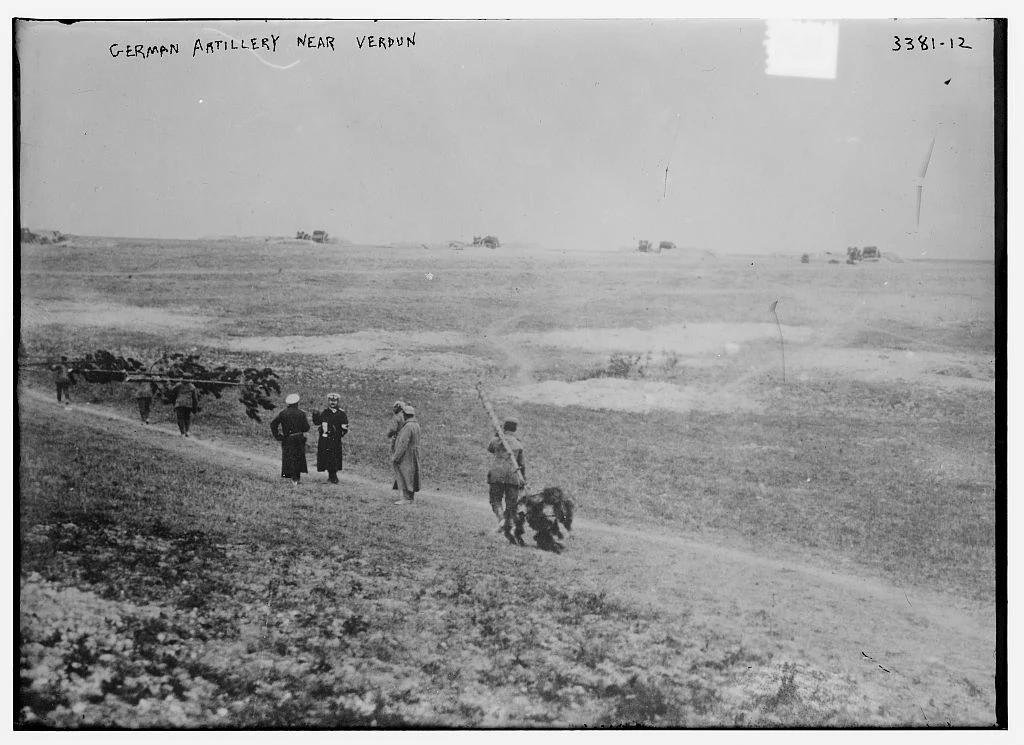
Field guns, crews and horse transport
Artillery dominated the battlefield. High-explosive and shrapnel shells could strike troops beyond an infantryman’s view, while creeping barrages moved ahead of an attack to cover its advance. Accurate fire depended on observation as well as the men serving each gun.
This early-war photograph near Verdun widens the view beyond a single gun crew. Guns and horse-drawn equipment occupy a broad stretch of ground, with men moving between them. It helps explain the space and transport behind a compact set such as FW057 or FW058. K&C dates these two 77mm subjects to 1917 and 1914 respectively: comparing their crew uniforms and gun finish gives a more useful picture of the range than treating every artillery release as interchangeable.
Read more: National Army Museum on artillery and observation
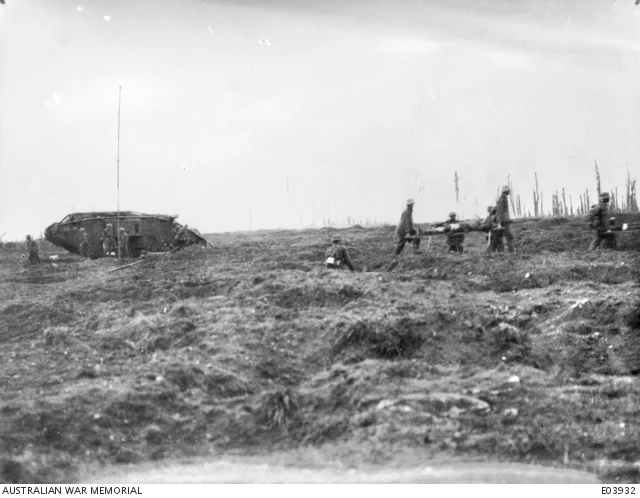
The Mark IV and the Renault FT
The Mark IV arrived in 1917 and became the principal British tank at Cambrai in November. Its long track runs and rhomboid hull are the features that immediately identify FW049. In the photograph from Inverness Copse, the churned ground shows the sort of terrain these machines had to cross. The archive identifies this vehicle as a female Mark IV; it provides a period comparison for the tank’s shape and surroundings.
The French Renault FT, represented by FW146, took a different approach. A driver sat in the front, the engine occupied the rear and a second crewman worked in a fully rotating turret. Its combat debut came on 31 May 1918. Seen together, the two models make the rapid development of tank design during the war easy to follow.
Read more: The Tank Museum’s Mark IV · Renault FT development
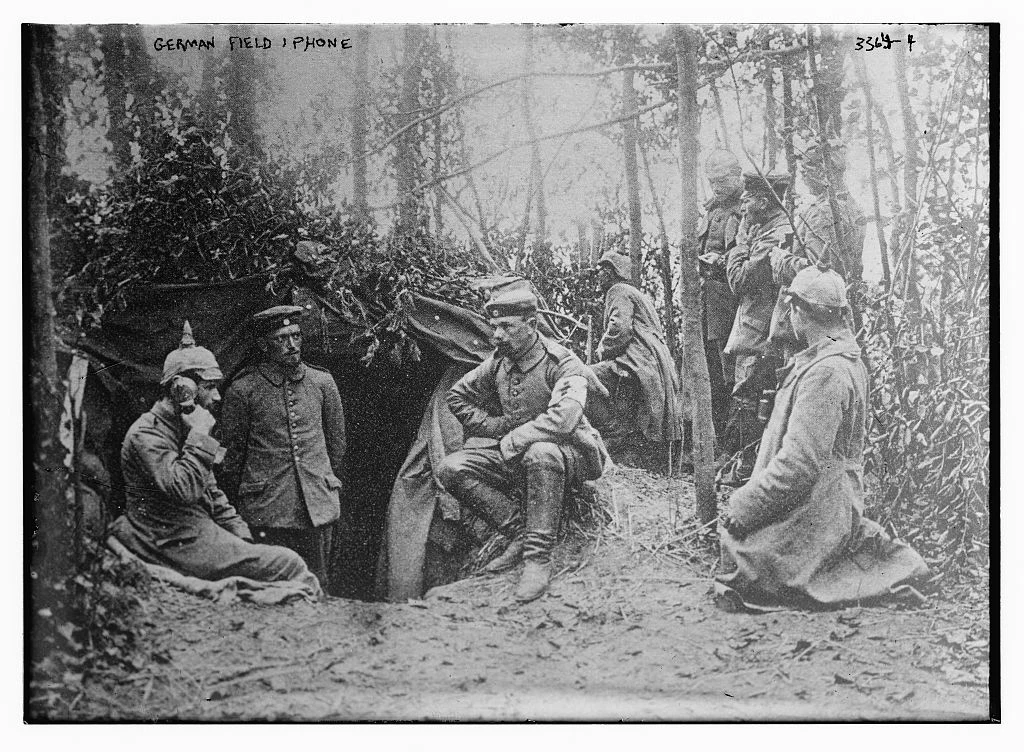
Keeping a field telephone working
Telephone lines connected headquarters, gun positions and troops near the front, but shellfire could cut the cables. Burying them took time and labour and still did not guarantee a working connection. Armies used several methods to pass messages, including runners, visual signals and pigeons, because no single system was dependable in every situation.
The German soldiers in this photograph have set up beside a dugout. One man uses the handset while others wait close by; the equipment belongs to an occupied working position. FW100 Field Telephone and FW050 Officer with Pistol and Field Telephone bring that communications role into the collection. Their small accessories make more sense when seen beside the cables, shelter and men in a period scene.
Read more: Canadian War Museum on battlefield communications
Stretcher bearers and nursing sisters
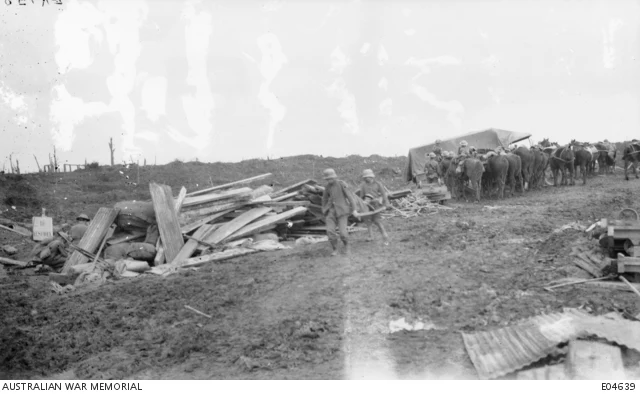
Near Hooge on 20 September 1917, stretcher bearers carry a wounded man along a damaged road. The horses beside them had brought bread and water forward, according to the Australian War Memorial’s record. Casualty evacuation and supply traffic shared the same battered routes. The broken boards underfoot show one of the practical difficulties faced by men trying to move a stretcher.
FW031 Battlefield First Aid depicts help close to the fighting; FW173 Nursing Sister introduces the trained nursing staff who cared for patients further along their journey. British military nurses served in casualty clearing stations and hospitals, as well as aboard ambulance trains, hospital ships and barges. Together, these subjects allow the collection to cover several stages of treatment and recovery.
Read more: National Army Museum on military nursing
More First World War subjects
The catalog also includes Australian and New Zealand infantry, mounted officers and aviation personalities. Follow the individual articles for their uniforms, equipment and named subjects. For the Middle Eastern campaigns, the Australian Light Horse catalog covers the separate AL range.
Photographs: Library of Congress (no known restrictions on publication) and Australian War Memorial (public domain). Full descriptions and collection references are linked in the captions.
From the Operation ToyBox channel
Video: buying King & Country figures
The Operation ToyBox collector guide looks at ways to save money on King & Country figures. Use the advice alongside the exact code, pictured components and condition notes in this catalog.