

Before Eighth Army tried to break the Axis line, it tried to make the enemy look in the wrong direction. Dummy vehicles, disguised tanks and a false pipeline helped create a battlefield that could be misread from the air. El Alamein began not only with guns in the night, but with weeks of work on what an observer would think he was seeing.
Operation Bertram was designed to conceal preparations in the north while suggesting activity farther south and a later timetable. Real equipment could resemble something less threatening; dummy equipment could imply a concentration that did not exist. The purpose was not a theatrical trick for its own sake. If German and Italian commanders misjudged the place or timing of the attack, reserves might be committed too late or in the wrong direction.
The deception concealed an army preparing for a battle in which it could not easily go around its opponent. The Mediterranean closed the northern flank; the Qattara Depression obstructed a wide mechanised turning movement to the south. Earlier fighting at El Alamein and Alam el Halfa had stopped the Axis advance into Egypt. By October, Bernard Montgomery’s Eighth Army was preparing to drive the Germans and Italians back through the narrow front they had fortified.
The offensive depended on accumulation: tanks, shells, fuel, trained men and a plan to move them through defended ground. Eighth Army was a multinational force, bringing together formations from Britain and the Commonwealth alongside other Allied troops. Its strength cannot be reduced to the reputation of one commander.
When the guns opened on 23 October, Rommel was away on medical leave. General Georg Stumme commanded the Axis army in his absence and died after going forward during the early fighting. Rommel returned to find the offensive already under way. The defence’s first reactions had therefore been made without the commander whose name would dominate later accounts.
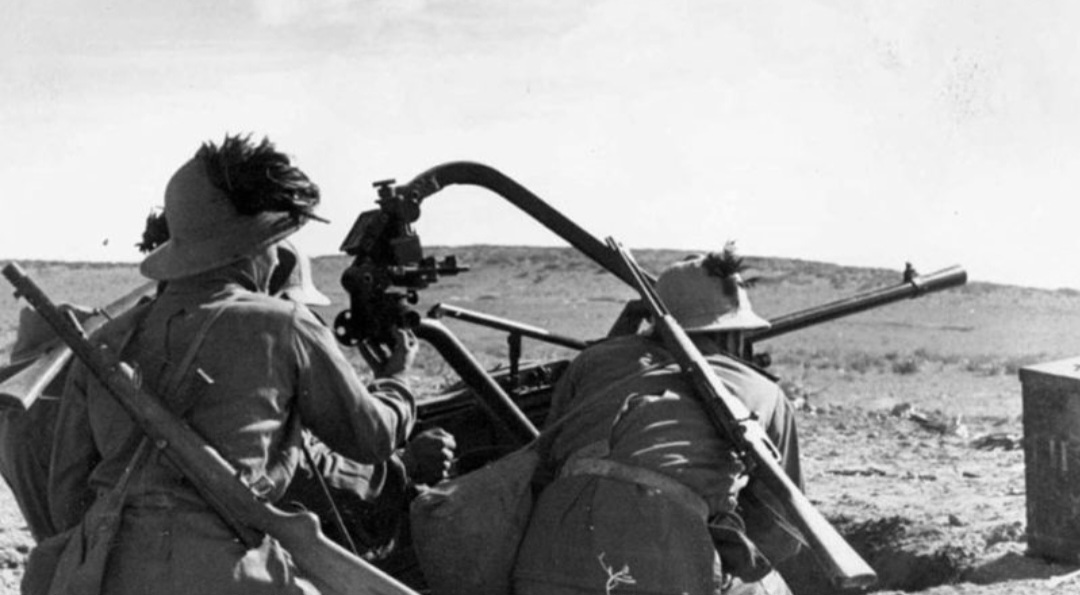
Italian formations held extensive sectors of the line alongside the Germans. Infantry, artillery and armoured units faced the same bombardment, but their ability to move and recover from losses varied. Some formations had little transport. If the position broke, the difference between holding a truck and relying on one’s feet would become decisive.
Across the line, Axis forces faced growing supply difficulties. Fuel mattered not only to tanks but to the transport that kept an army functioning. The distances of the desert campaign were carried inside every operation. A vehicle’s presence at the front represented the work of ports, shipping and roads far behind it.
A path wide enough for an army
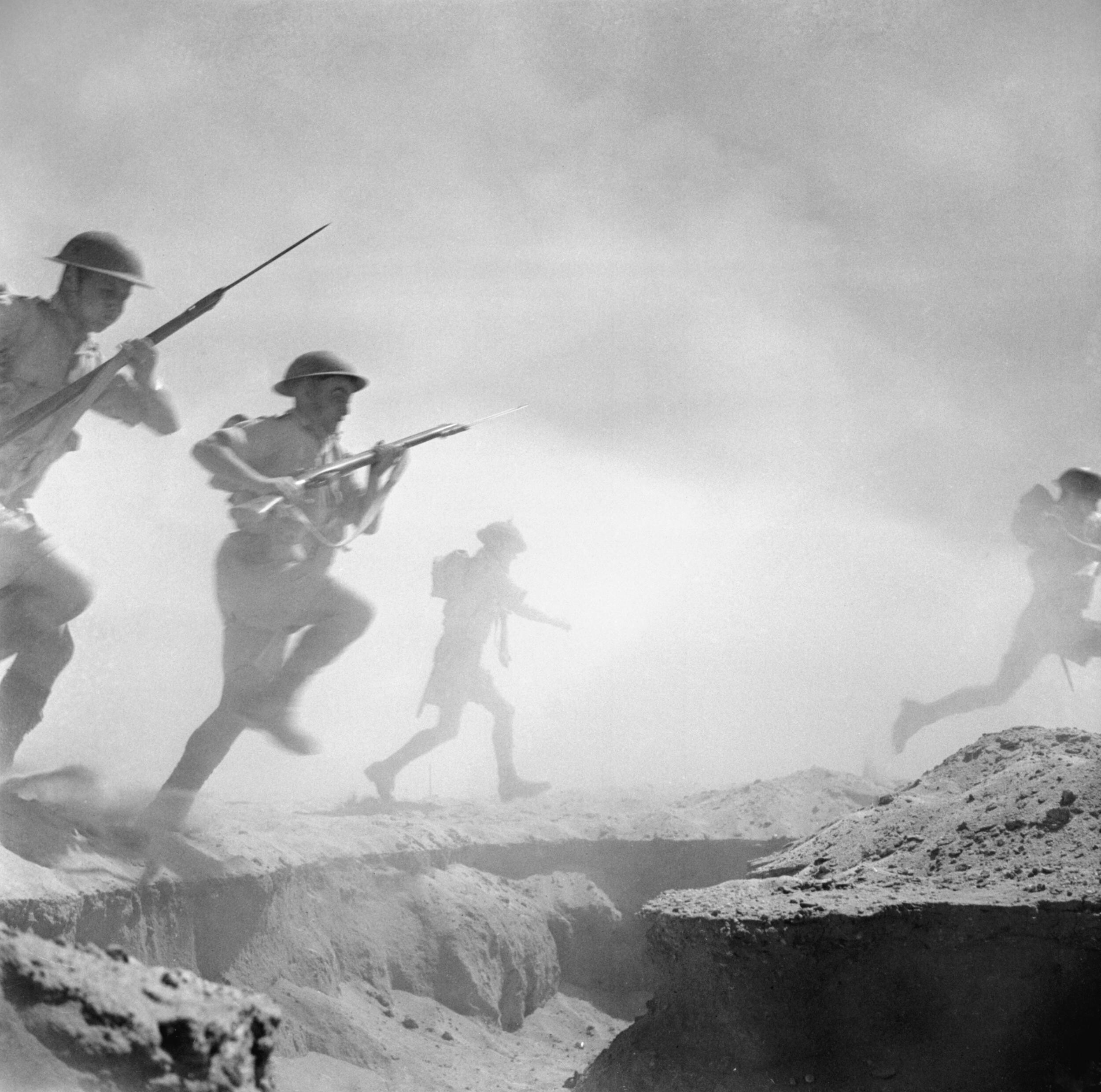
The opening bombardment began on the night of 23 October. Infantry advanced and engineers worked to clear passages through the minefields. The name Operation Lightfoot can make the movement sound almost delicate. The actual task required men to create usable routes under battlefield conditions and then keep traffic moving through them.
For engineers, the infantry’s passage was only the beginning. A route that men could cross on foot still needed to be cleared and marked for the tanks following them. Mines hidden in darkness had to be found under fire, and the usable gaps were narrower than the army’s mass of vehicles. Getting through late could leave armour meeting an alert defence after the protection and confusion of night had passed.
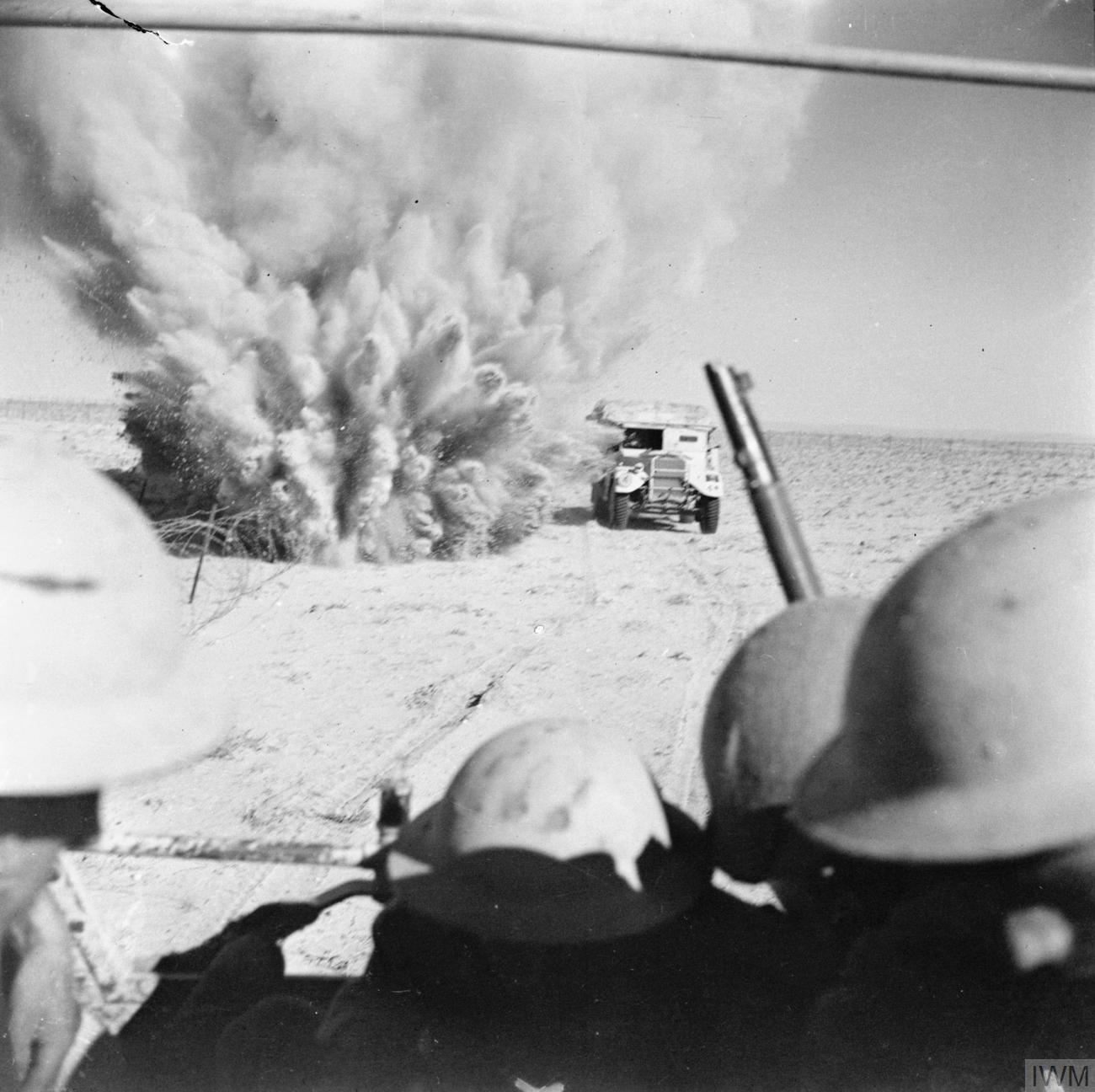
A lane was a solution and a new vulnerability. Vehicles converged upon it. Delays travelled backwards through the column. Beyond the mines waited guns and defended positions. The problem was not merely crossing a line on a map; it was getting enough combat power through the obstacle in a condition to fight on the other side.
The first attacks did not produce an effortless breakthrough. Fighting continued as the Allies sought to wear down the defence and the Axis committed reserves. The battlefield became a contest of local positions, counterattacks and losses that each side had different capacities to replace.
The struggle narrowed at times to positions such as Snipe. There, men of the Rifle Brigade and supporting anti-tank gunners fought with 6-pounders against repeated armoured attacks. Smoke, dust and uncertainty about friendly positions complicated every engagement. A gun crew had to remain at its weapon as tanks approached, fire accurately and survive the return fire long enough to reload. The losses it imposed could matter far beyond the patch of desert it occupied.
After the opening attacks failed to produce a quick breakthrough, Montgomery shifted the weight of the offensive. Operation Supercharge began in early November, pressing against a defence already worn down by repeated fighting. The attack sought to carry the army beyond the defended belt and force the Axis armour into a battle it could no longer sustain.
The 9th Armoured Brigade paid heavily in that effort. Its attack against the anti-tank screen on 2 November cost most of the tanks it committed. Behind the eventual breakthrough lay crews killed or wounded and regiments reduced by a few hours of fighting. Greater Allied resources made such losses more replaceable than those suffered by the Axis, but they did not make the experience of the men any less destructive.
The road beyond Alamein
By 4 November the Axis position was breaking. Rommel’s army could no longer maintain the front against the renewed pressure, and withdrawal became unavoidable. The retreat took place after orders to stand fast had delayed the freedom to disengage. A formation that waited too long risked losing not only its position but its route out.
Withdrawal sharpened the difference between the motorised and the immobile. Orders to hold ground could not create the trucks needed to leave it. The fate of Axis infantry consequently cannot be understood solely through the escape of armoured formations. The ending was uneven, and for many men it was captivity rather than a westward journey.
The victory removed the immediate Axis threat to Egypt and began a long pursuit west. A few days later, the Allied landings of Operation Torch in French North Africa opened another front. The Axis position was squeezed from two directions, although the campaign continued in Tunisia until May 1943.
The lasting image is often a tank moving through dust. Behind that movement was a cleared lane, and behind the lane were men who had to make a passage where an enemy had worked carefully to prevent one.
- National Army Museum: Second Battle of El Alamein
- Second Battle of El Alamein: chronology and bibliography
Photographic credits and rights are given with each image. Wikipedia overview linked above is available under CC BY-SA.