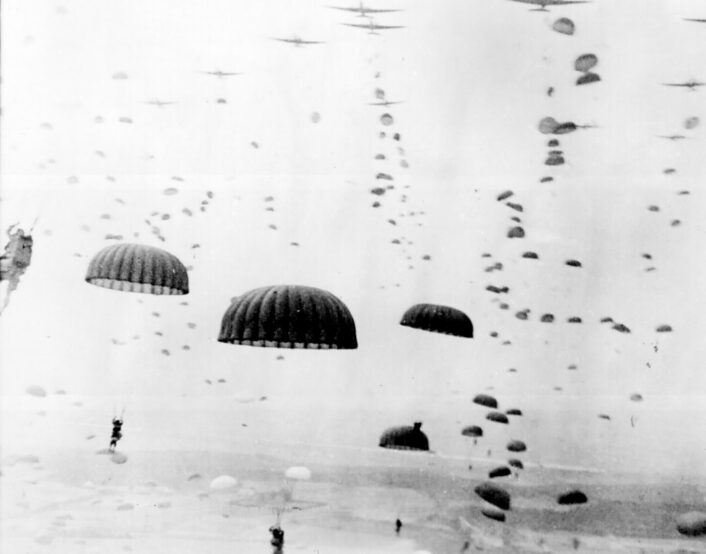
Paratroops descend during Allied airborne operations in the Netherlands, September 1944. U.S. Army photograph; public domain. The image shows the wider operation, not a verified view of Arnhem bridge.

Arnhem: The Bridge at the End of the Road

By 23 September 1944, Sergeant Dennis Smith’s account from Arnhem had narrowed to the essentials: shelling, rain, exhaustion and the need for relief. Six days earlier, aircraft had delivered an army into the Netherlands with the promise of speed. Now the men around Oosterbeek were measuring time by what they could still endure.

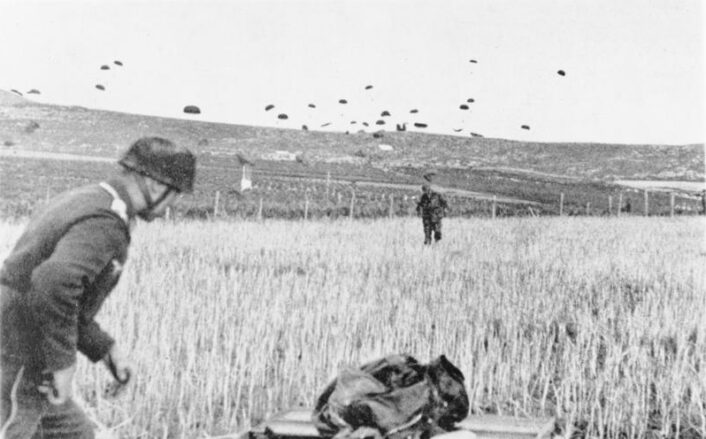
German parachute landings on Crete, May 1941. Bundesarchiv, Bild 141-0864, photographer unknown; CC BY-SA 3.0 DE. Image reproduced without alteration.

Crete, 1941: The Airfield That Turned the Battle

“I was scared stiff,” Sapper John Haines remembered in an account preserved by NZ History. Private Ivan Divehall remembered excitement. The same parachutes could produce both reactions. On the morning of 20 May 1941, German troops descended over Crete, and the men watching them had only moments to turn astonishment into action. The invasion would be decided by airfields and command decisions, but it began as a profoundly personal encounter with an unfamiliar way of war.