

King & Country · BBG catalog
Battle of the Bulge: German sets
24 King & Country BBG sets covering winter infantry, armor, artillery, transport and medical support. Compare the releases and explore their collecting context, including Eastern Front subjects within the broader BBG range.
The German offensive in the Ardennes
Germany’s December 1944 offensive sought to break through the Allied front and reach Antwerp. Its advance created the salient that gave the Battle of the Bulge its English name, but it failed to achieve its objective. BBG is a collecting range, not an order of battle: a winter finish or series code alone does not identify a particular unit or prove that a vehicle fought at a named location.
Historical background: U.S. Holocaust Memorial Museum.
Signature sets
Four subjects from this selection

BBG002 · Infantry
Winter Patrol
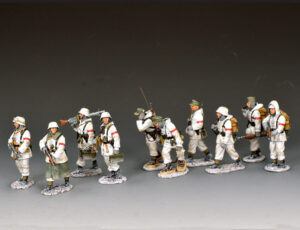
White outer clothing and varied equipment give this patrol its winter appearance. The release combines Waffen-SS and Volksgrenadier subjects, so it is better understood as a selection of late-war infantry than a documented patrol from one formation.
Read the BBG002 review →
BBG009 · Armor & transport
Raupen Schlepper
A tracked truck, trailer and two figures put the emphasis on carrying supplies. The pointing NCO gives the vehicle a destination, while the ammunition trailer makes its role clear. It brings transport into a collection often dominated by tanks.
Read the BBG009 review →
BBG016 · Armor & transport
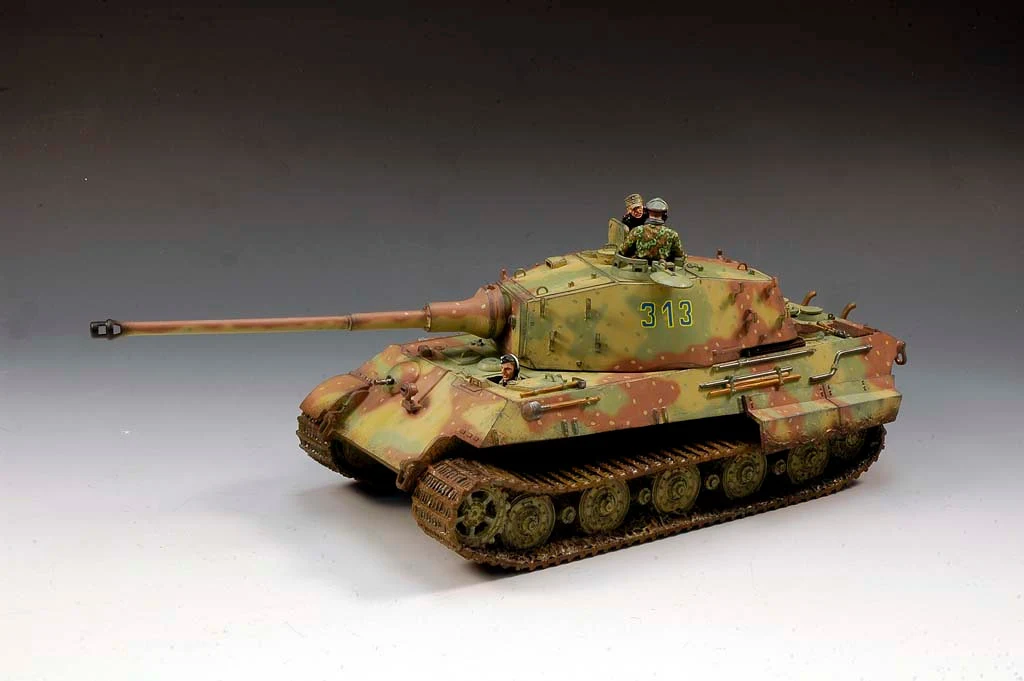
King Tiger — Henschel Turret
The Tiger II is represented with the later turret commonly called the Henschel type. The shape is familiar, but the name simplifies a more complicated design history involving Krupp. Its size, crew and three-color finish make it a natural central vehicle.
Read the BBG016 review →
BBG035 · Artillery & support weapons
Flak 41 88mm Gun
The Flak 41 was a different 88mm design from the Flak 18/36/37 family. This model is deployed on its outriggers and includes one seated gunner. Its long barrel and spread base make the equipment itself the focus.
Read the BBG035 review →Browse the BBG sets
24 set studies with product references, display ideas and buying checks.
24 of 24 sets
 BBG-S03Heritage Classics Combined Gift SetBBG002Winter PatrolBBG009Raupen Schlepper
 BBG012Radio GroupBBG016King Tiger — Henschel Turret
 BBG019German Medics Set
 BBG033Cold Feet… Warm BootsBBG035Flak 41 88mm Gun
 BBG050Winter Traffic
 BBG090Kneeling Winter Officer
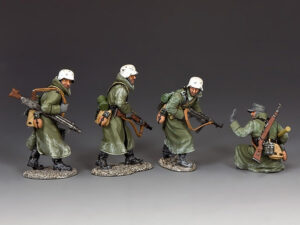 BBG121Advancing Thru’ The Snow
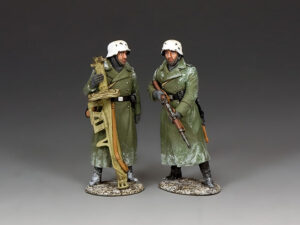 BBG122The Panzerschreck Team
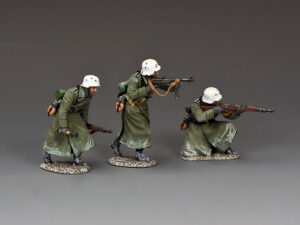 BBG123Winter Attack!
 BBG125MG34 Machine Gun Team
 BBG128The Combat Photographer
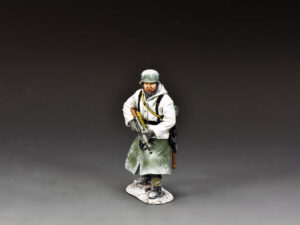 BBG129The Scout
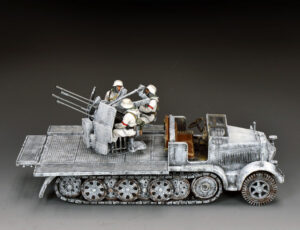 BBG132Flakvierling Sd.Kfz. 7/1 20mm
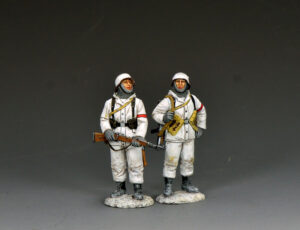 BBG133Ostfront Vehicle Guards
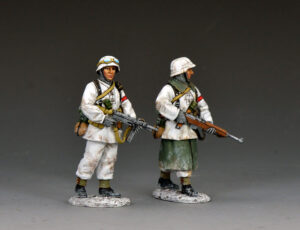 BBG134K&C ‘Heritage Classics’ On Patrol #1
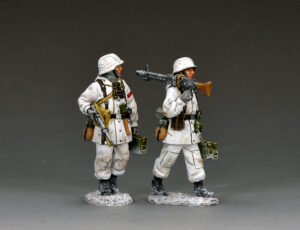 BBG135K&C ‘HC’ Walking MG Gun Team
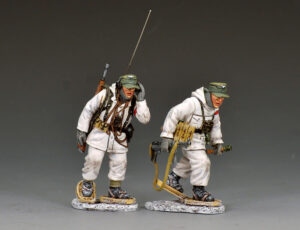 BBG136K&C ‘HC’ Snowshoe Radio Team
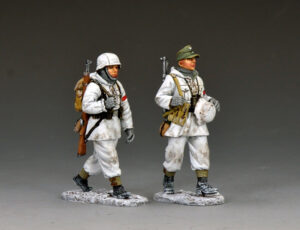 BBG137K&C ‘HC’ On Patrol #2
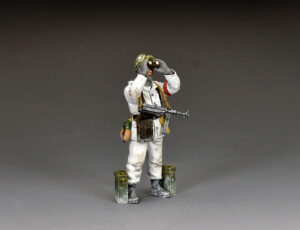 BBG139Ostfront Skywatcher
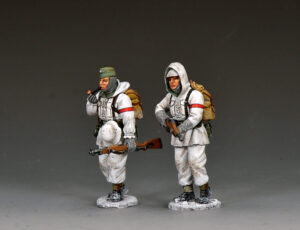 BBG142K&C ‘HC’ On Patrol #3
No matching sets. Try another code or clear the filters.
December 1944–January 1945
The Ardennes offensive
The attack begins
German forces attacked through the Ardennes in poor weather. The operation depended on a rapid advance through a region with limited routes. Infantry, armored vehicles and the columns following them all had to use the same constrained road network.
The stalled northern advance
American resistance around Elsenborn prevented the planned breakthrough in the north. The failure helped upset the offensive’s wider timetable. Heavy armor alone did not solve the problems of defended routes and restricted movement.
St. Vith and Bastogne
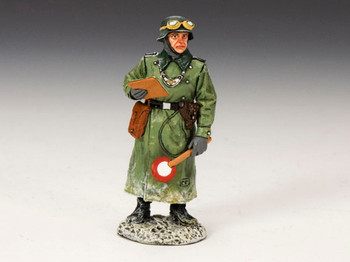
Road centers mattered because troops and supplies needed routes through the wooded country. Fighting for these places drew in infantry, artillery and supporting services. A traffic policeman or supply vehicle can represent part of that struggle for movement.
The offensive fails
German forces did not reach their objective. Allied resistance, reinforcement and improved flying weather helped turn the battle. The remaining salient was pushed back during January, leaving severe losses and widespread destruction in the towns and villages.
Campaign sources: U.S. Army historical account; U.S. Holocaust Memorial Museum.
Units, civilians and prisoners
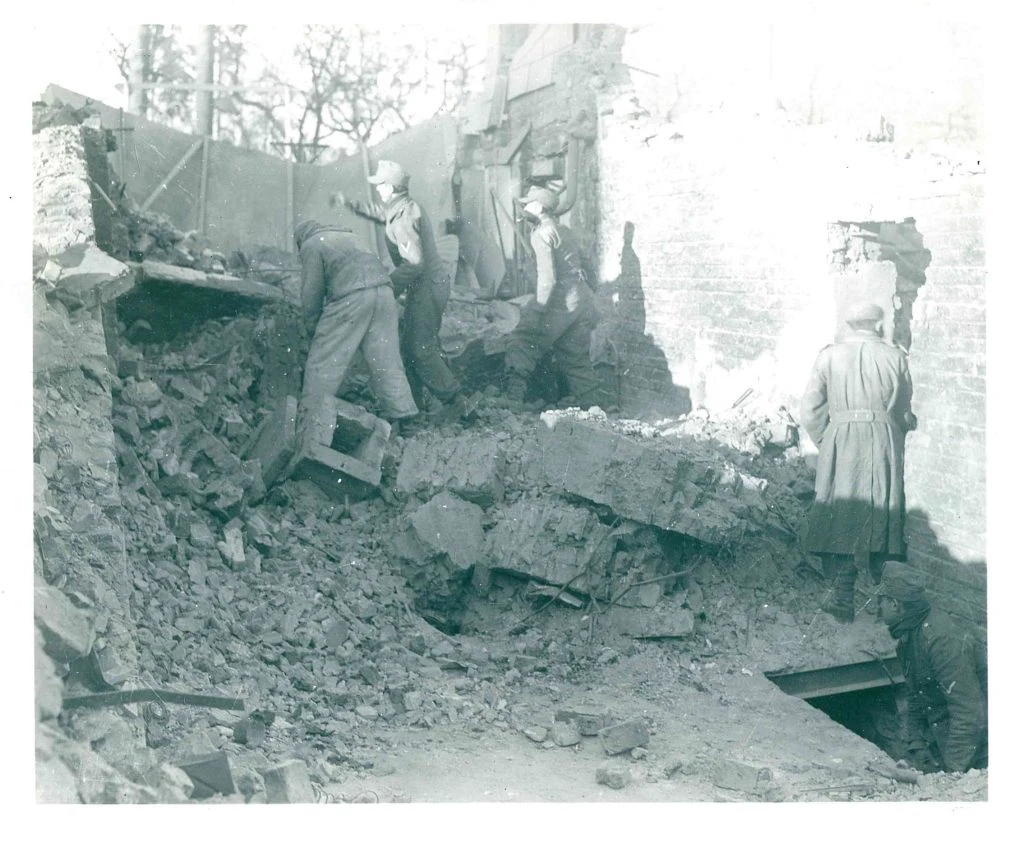
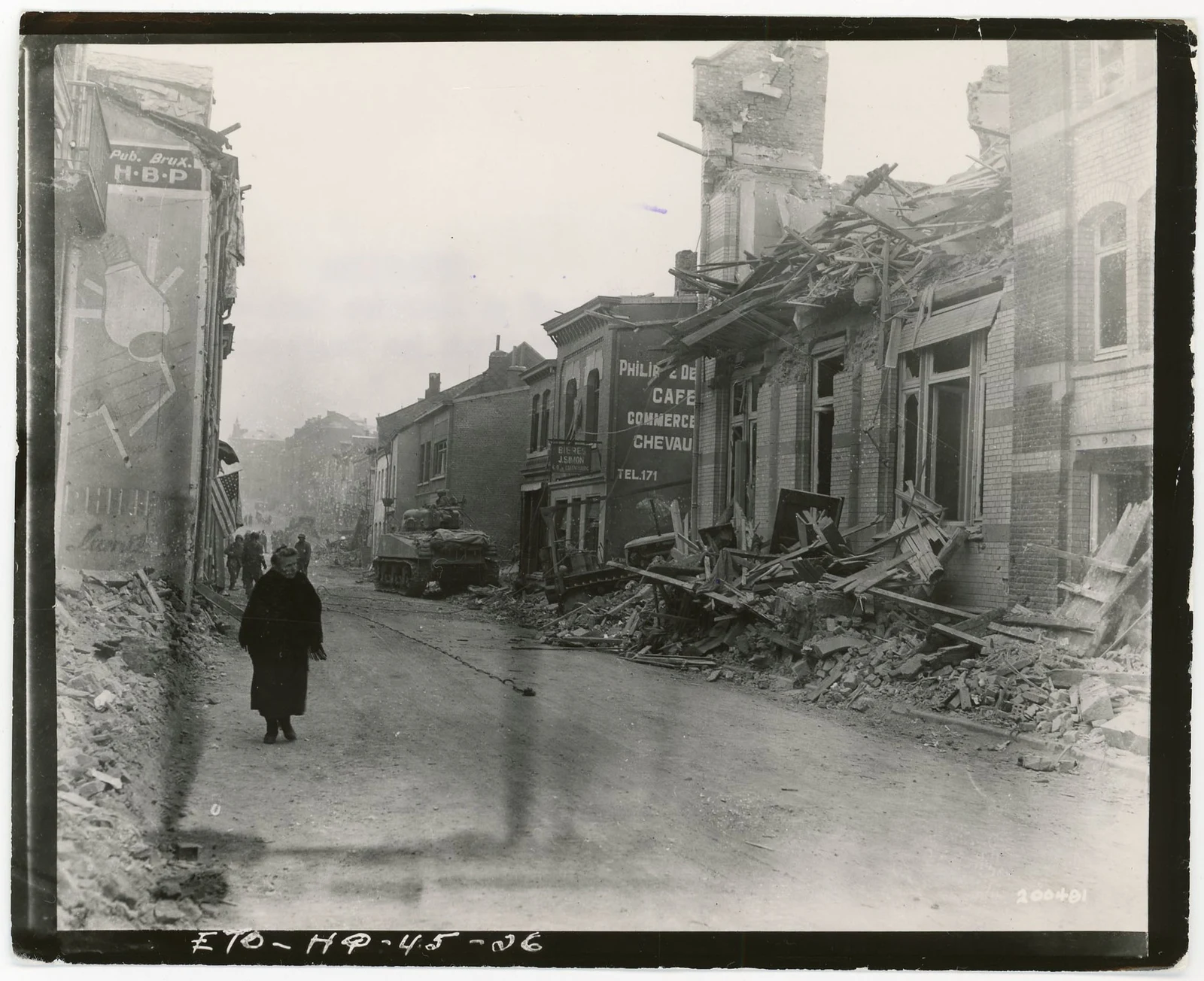
The range includes Army and Waffen-SS subjects. Their historical context includes crimes against prisoners and civilians: on 17 December, Waffen-SS troops murdered 84 American prisoners near Baugnez, in the event commonly called the Malmedy massacre. The photographs above also show the damage left in Bastogne and German prisoners working in its ruins.
Historical account: The Malmedy massacre, U.S. Holocaust Memorial Museum.
For the American subjects, visit the BBA catalog.
About this catalog and its sources
Set names and original contents are checked against archived King & Country release material. Each linked article includes its product reference and historical sources. Reviews based on reference photographs are identified as such. A series code describes a collecting range; it does not, by itself, verify a unit, date or battlefield location.
Historical photographs are credited individually. Product photographs depict the models; the period images provide background and are not claimed as the sculptor’s exact source.