
Del Prado Portuguese Cavalry Trumpeter: A Voice in an Allied Army
The trumpet and pale horse make this rider stand apart from a row of cavalrymen. His Portuguese identity matters just as much: the Peninsular army was never exclusively British.

Cavalry unit.
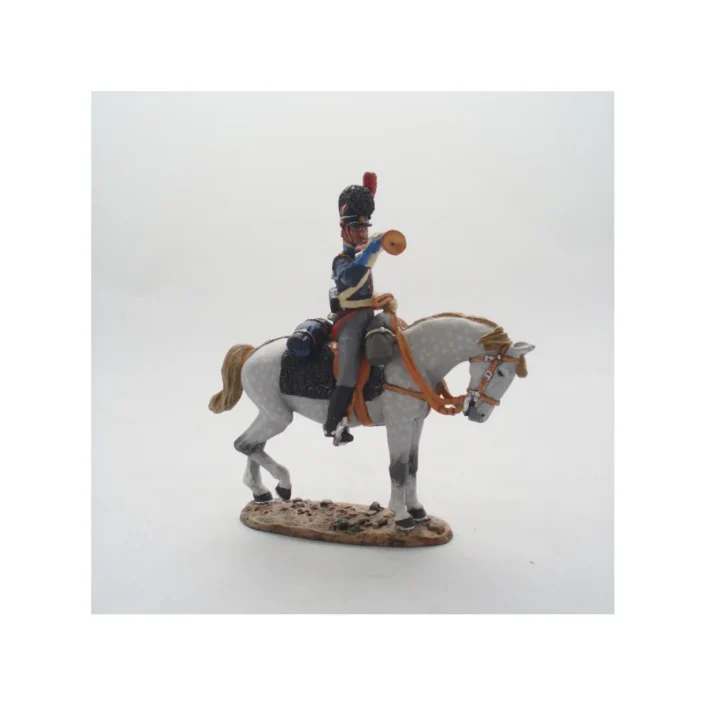
The trumpet and pale horse make this rider stand apart from a row of cavalrymen. His Portuguese identity matters just as much: the Peninsular army was never exclusively British.
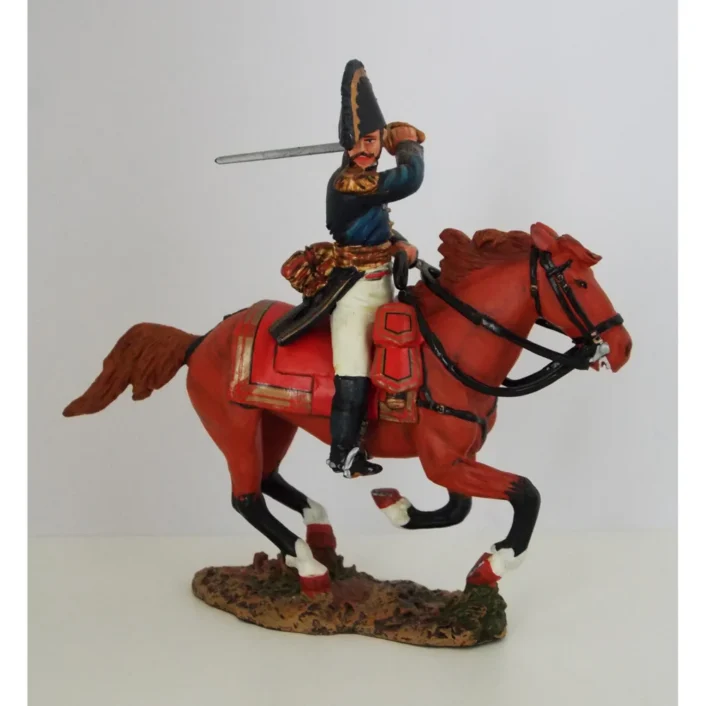
The forward-pointing sword and moving horse make Montbrun a forceful mounted portrait. His career supplies an equally direct story: a cavalryman who rose from the ranks to command a corps.
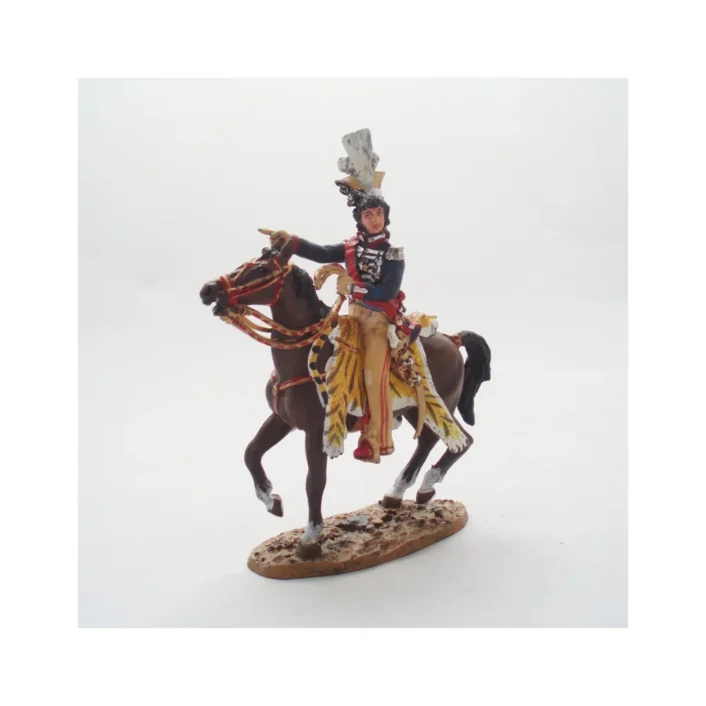
Murat’s spectacular clothing can overshadow the complicated career beneath it. This mounted portrait represents a cavalry leader who rose to a throne—and eventually tried to preserve that throne by breaking with Napoleon.
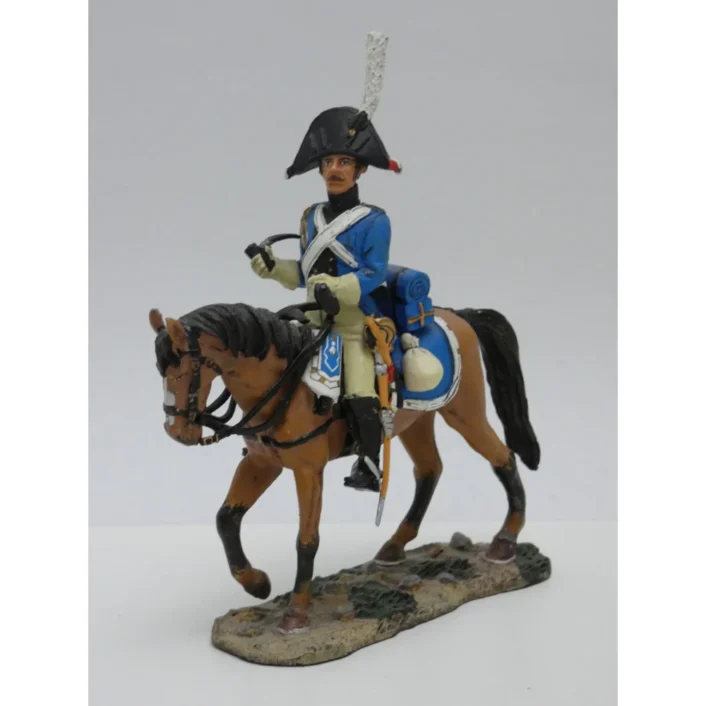
The blue uniform and bicorne belong to Prussia before its later Napoleonic revival. The year 1806 places this rider at the collapse that made reform unavoidable.
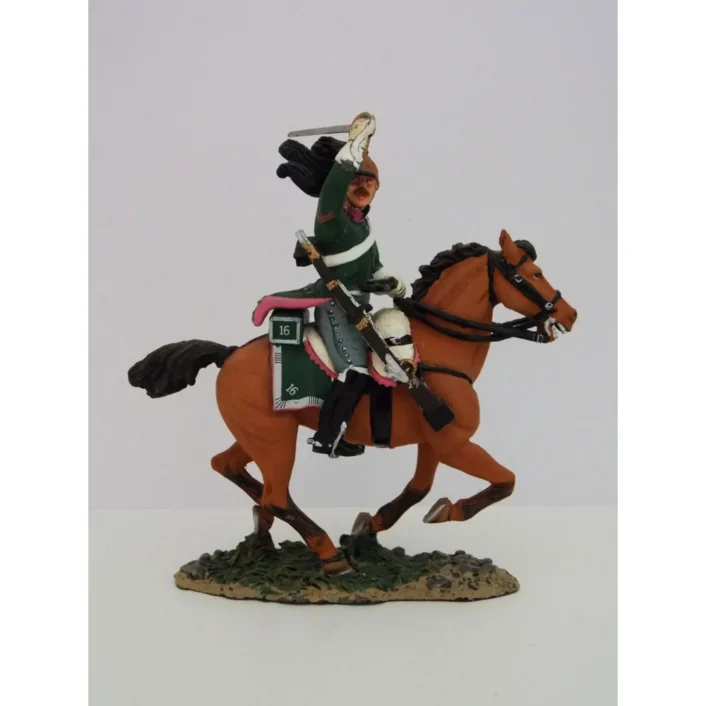
The green coat and raised sword suggest confidence. The date tells a harder story: in 1814, Napoleon’s army was defending France after the losses of Russia and Germany.
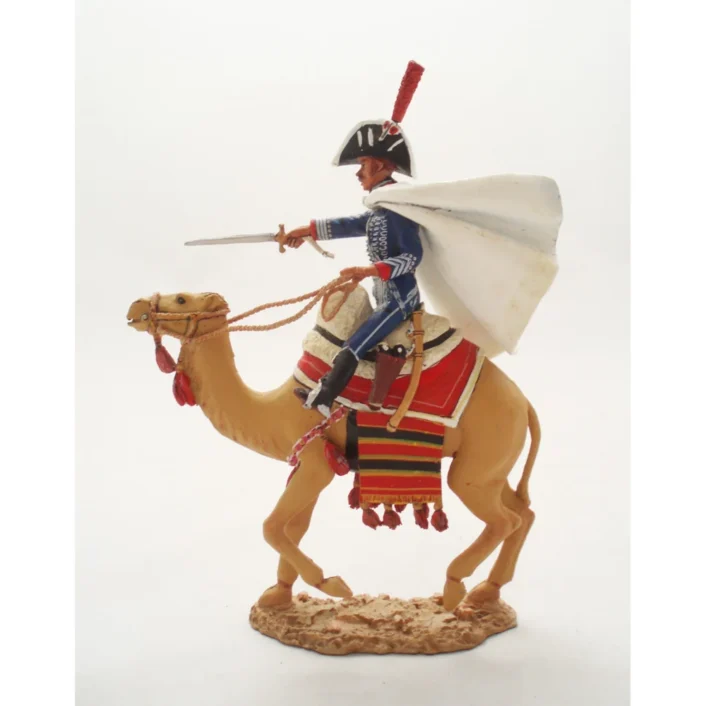
The camel changes everything: height, balance and the shape of the equipment. Del Prado’s Captain François is a reminder that the French expedition to Egypt required more than transferring European cavalry habits to a different landscape.
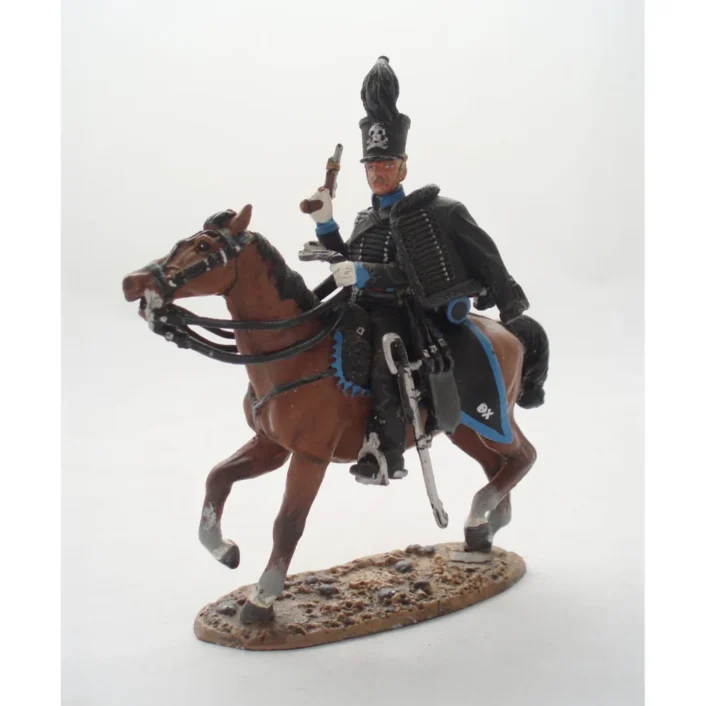
Among brilliant red and blue cavalry uniforms, the Brunswick rider’s black clothing is striking. It carries the memory of a displaced dynasty and a force raised against Napoleon, not simply a preference for darker dress.
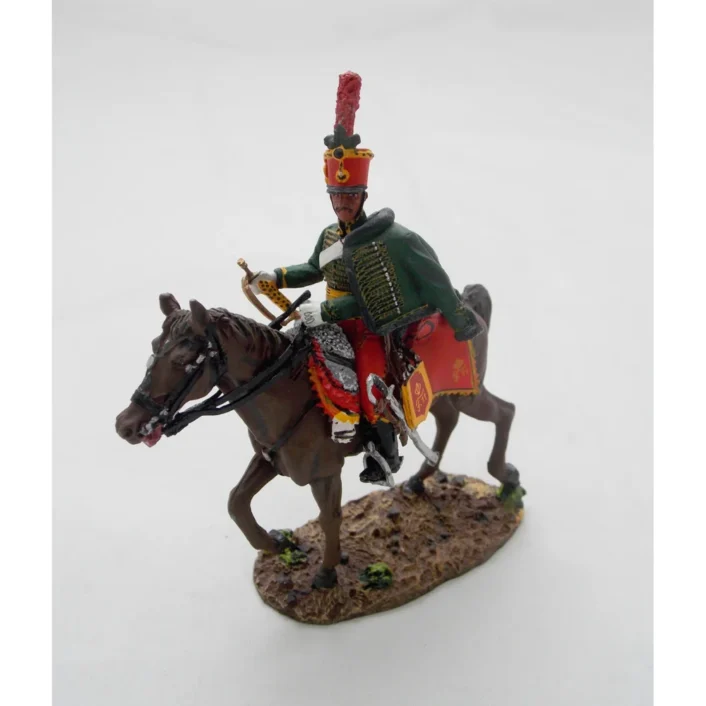
A cavalry regiment needed more than swords. This trumpeter makes the act of communication visible: an order had to reach moving riders through noise, distance and the confusion of horses.
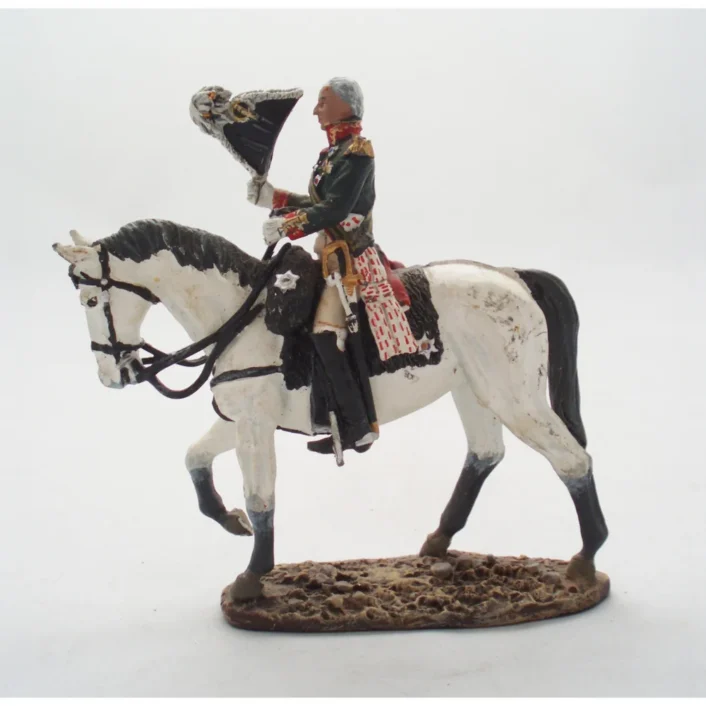
Kutuzov raises his hat from a pale horse, but his place in history rests on something less theatrical than a charge. In 1812, preserving the Russian army meant accepting the loss of Moscow.
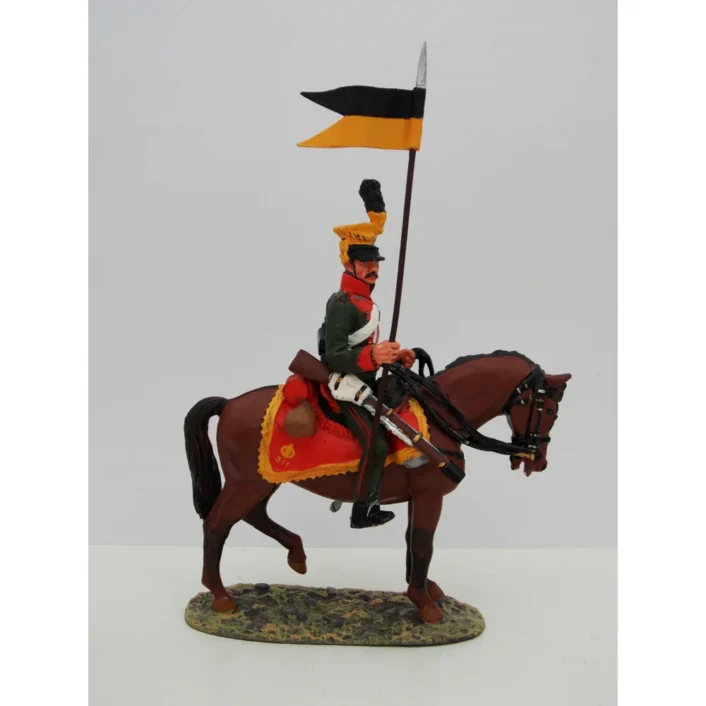
The black-and-yellow pennant rises well above the rider and horse. It makes this Austrian uhlan easy to spot, while the date places him in a campaign that brought both an Austrian victory over Napoleon and a costly reversal.