

Del Prado · Prussia · 1806
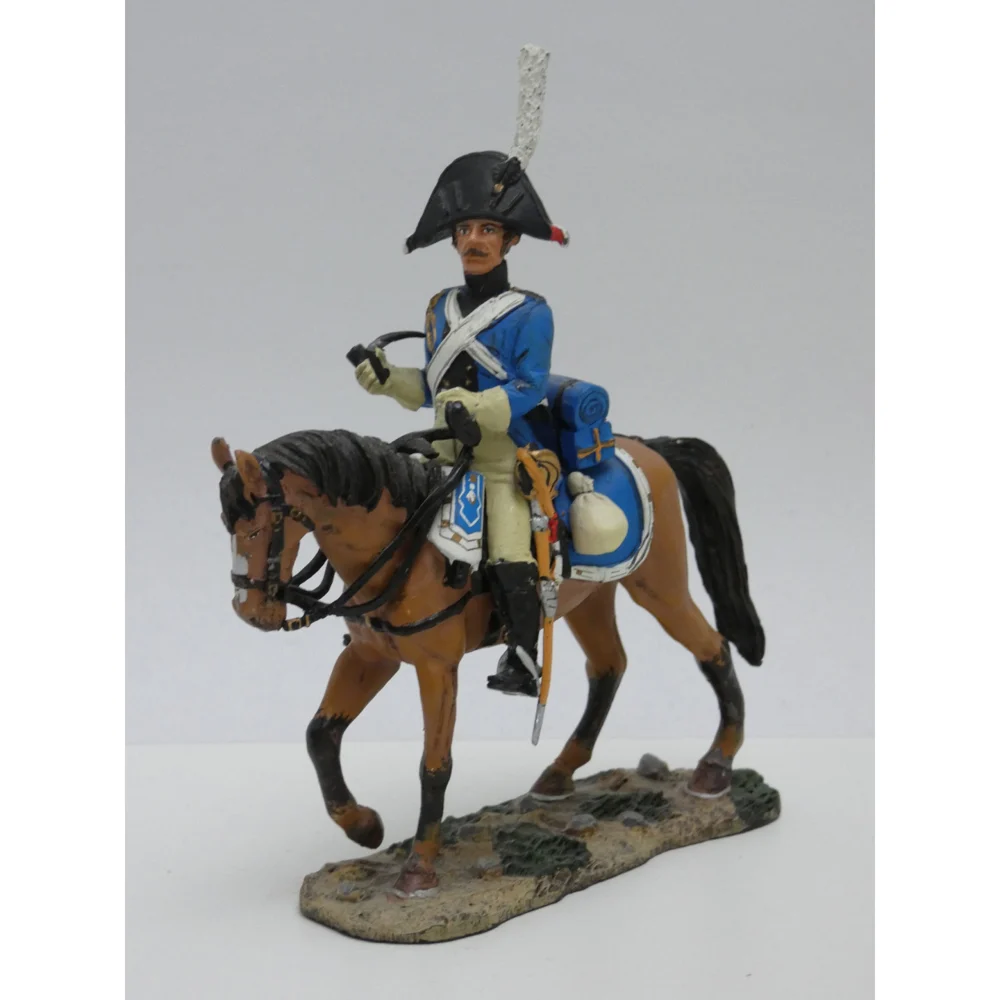
The blue uniform and bicorne belong to Prussia before its later Napoleonic revival. The year 1806 places this rider at the collapse that made reform unavoidable.
- Maker
- Del Prado
- Subject
- Prussian 6th Dragoon, 1806
- Setting
- Prussia · 1806
- Type
- Painted metal mounted figure
The horse stands quietly and the rider sits erect, with white straps crossing the blue coat. The bicorne is an especially useful recognition point. It gives the model a different appearance from the later Prussian figures most readily associated with the campaigns of 1813–15.
A date between two Prussian armies
On 14 October 1806, the battles of Jena and Auerstedt shattered Prussia’s military position. The city of Jena’s historical chronology records the double battle against French forces. The date deserves to remain prominent: this miniature represents the army before the later reform-era victories, not simply “Prussian cavalry” at Waterloo.
The distinction does not imply that every individual soldier was ineffective. A campaign can collapse through command, coordination and the consequences of defeat without reducing the men in each regiment to caricatures. The figure’s formal appearance is better used to study its period than as a visual punchline about an allegedly obsolete army.
What changes when you keep the date?
A Prussian figure dated 1806 provides a beginning for a display about defeat and recovery. A figure dated 1815 supplies a later chapter. Putting them together works best when the years remain visible.
The horse furniture offers another point of comparison. The blue cloth and edging frame the rider without the exuberant braiding of a hussar. In a cavalry grouping, that helps show that different branches and armies did not all use the same decorative vocabulary.
There is no need to attach this generic trooper to a named incident in the double battle. The regimental designation and year are the secure identification; the campaign explains why that year matters.
The quieter sculpt rewards careful viewing
Check the bicorne edges, reins and lower straps in photographs. A stationary horse can still suffer damage at the ears and ankles. Request the back of the rider and the underside of the base if the item is offered without packaging.
Placed beside a French cavalryman, the Prussian dragoon makes an effective visual comparison. Placed beside a later Prussian subject, he becomes part of a historical sequence whose turning point is the date on his own label.
References and further reading
- City of Jena — Nineteenth-century chronology
- German Historical Museum — Revolution and the remaking of Germany
- Planète Légendaire — figure reference
- Génie Miniature — Del Prado identification index
The photograph identifies the model; condition and packaging vary between examples offered for sale.