

Del Prado · Austrian Empire · 1809
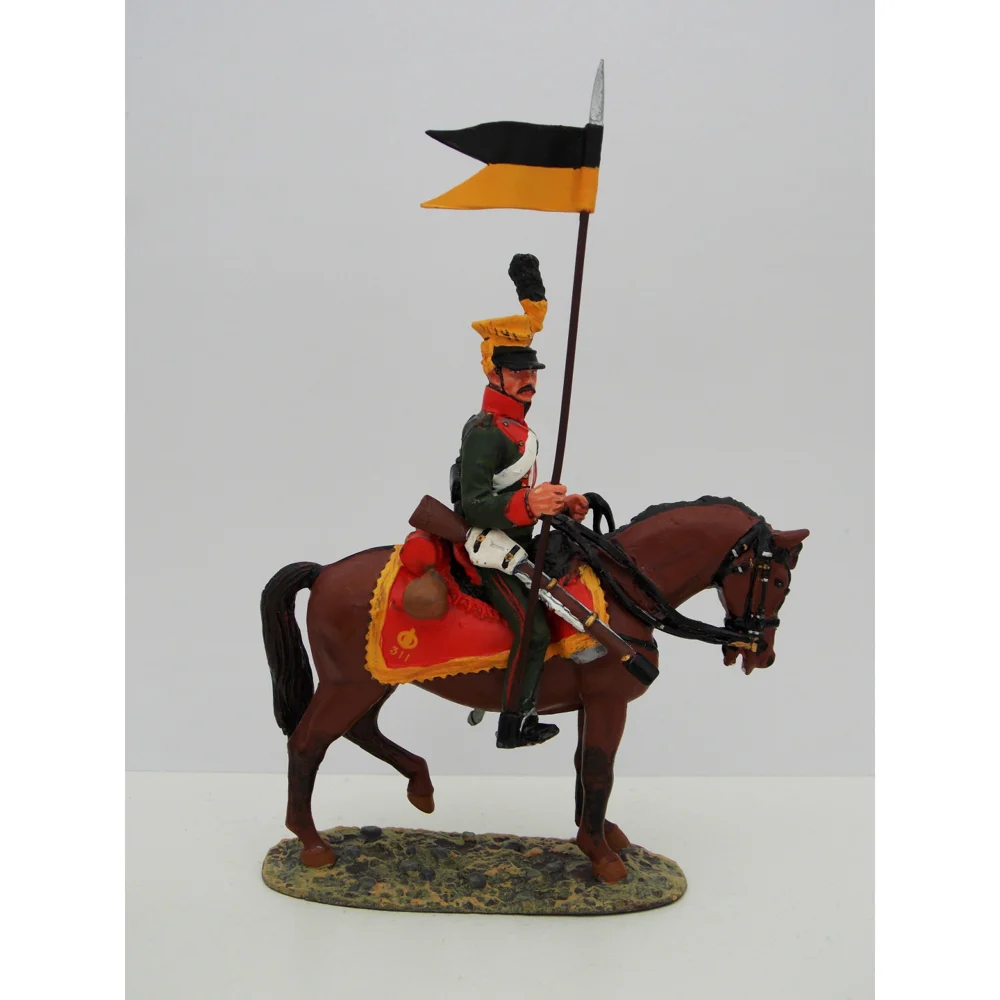
The black-and-yellow pennant rises well above the rider and horse. It makes this Austrian uhlan easy to spot, while the date places him in a campaign that brought both an Austrian victory over Napoleon and a costly reversal.
- Maker
- Del Prado
- Subject
- Austrian Uhlan, 1809
- Setting
- Austrian Empire · 1809
- Type
- Painted metal mounted figure
The lance is the organising line of the miniature. Beneath it sit the square-topped headwear, green coat and brightly coloured horse furniture. The horse’s restrained movement keeps the tall weapon readable rather than turning the model into a knot of raised limbs.
Aspern was not the end
Austria reopened the war against Napoleon in 1809. Archduke Charles defeated the French at Aspern-Essling in May, but Napoleon returned across the Danube and won at Wagram in July. The World of the Habsburgs sets those opposite outcomes within the reign of Emperor Francis.
The sequence is a useful corrective to a display built only around French victories. Austria’s army could inflict a serious setback, yet winning one battle did not decide the campaign. The river crossings and the interval between the two encounters mattered as much as the reputation of either commander.
“Uhlan” identifies a lancer tradition, not a nationality by itself. The Austrian designation and imperial colours therefore deserve to remain in the caption. A row of lance-armed miniatures can otherwise conceal how widely different armies adopted related equipment and forms of dress.
The long weapon is also a reminder that a cavalry figure’s size is not just the height of its rider. Allow clearance above the pennant and to either side before placing it in a cabinet. Tilting a tall model through a narrow shelf opening is an easy way to catch the tip.
Before buying a loose example
Ask to see the complete lance in one photograph. Check the join at the hand, the edge of the pennant and the horse’s contact points with the base. Those areas carry more of the model’s identity and fragility than the large painted surfaces.
This rider works well as an Austrian counterpart to French cavalry of 1809. A simple dated pairing can communicate the campaign’s opposing armies without assigning the generic trooper to an unsupported specific regiment or action.
References and further reading
- World of the Habsburgs — Francis I and the Austrian Empire
- Fondation Napoléon — The Battle of Wagram
- Planète Légendaire — figure reference
- Génie Miniature — Del Prado identification index
The photograph identifies the model; condition and packaging vary between examples offered for sale.