
Del Prado Prince Rupert, 1642: Cavalry at the Opening of Civil War
The raised blade and animated horse give Rupert the confidence of a cavalry commander. The date places him at the beginning of a war whose outcome was still far from decided.

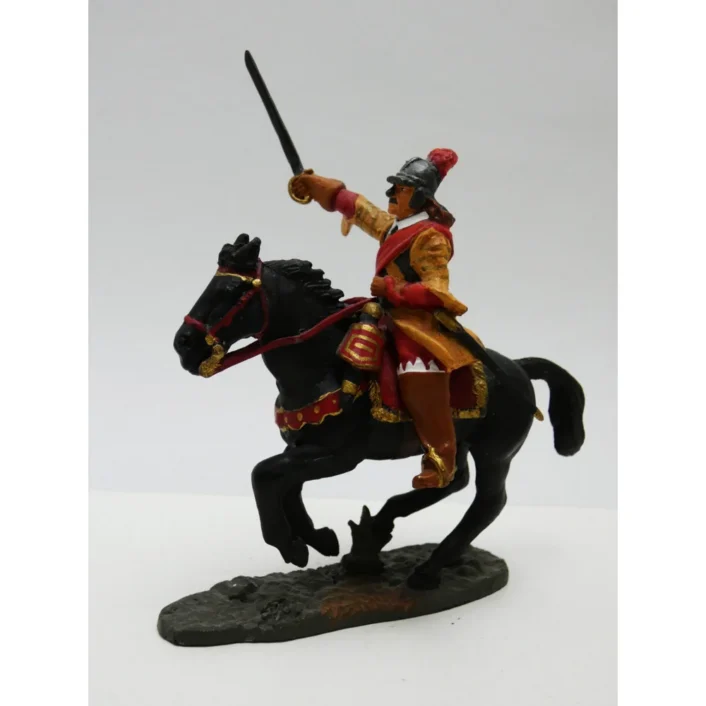
The raised blade and animated horse give Rupert the confidence of a cavalry commander. The date places him at the beginning of a war whose outcome was still far from decided.
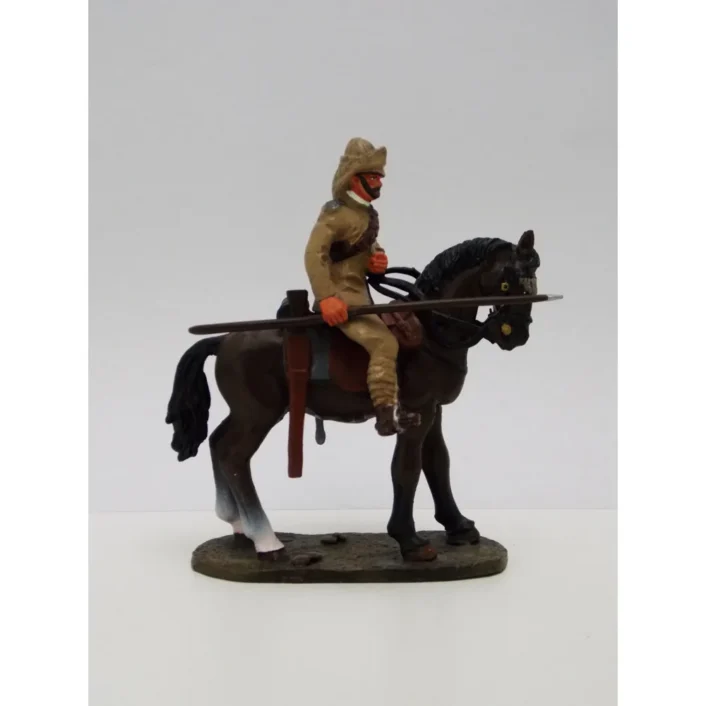
The lowered lance makes the intention unmistakable. Behind this small khaki-clad rider lies an encounter in which the ground concealed far more danger than the cavalry expected.
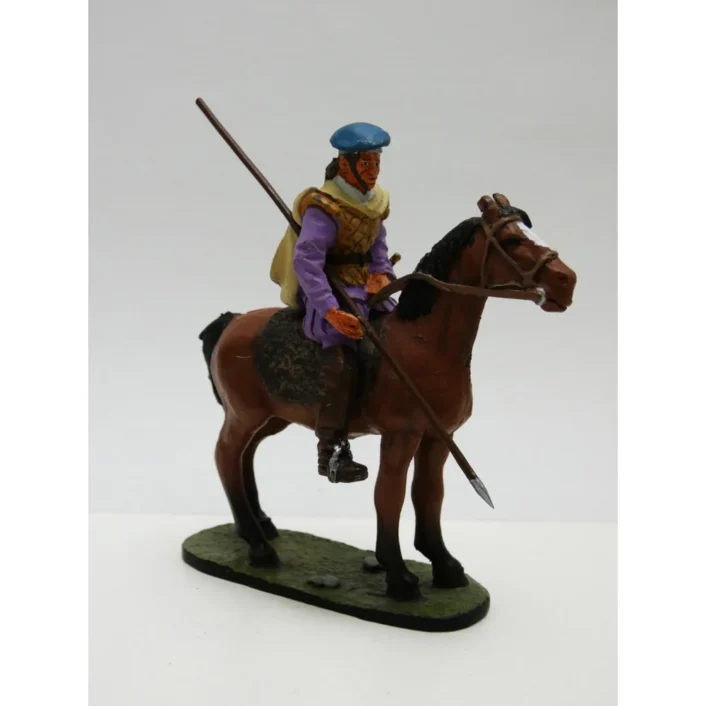
This rider belongs to a frontier of farms, towers and family allegiances. The horse mattered because a raid depended on getting across difficult country—and getting home again.
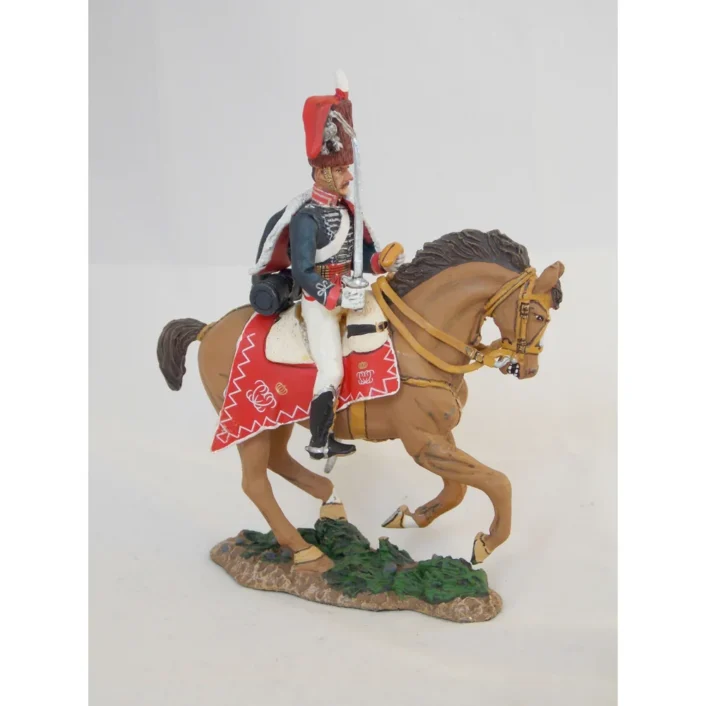
The red headgear and braided blue coat make this hussar conspicuous. His regiment’s Waterloo story offers something less obvious than a charge: the importance of bringing back the right news.
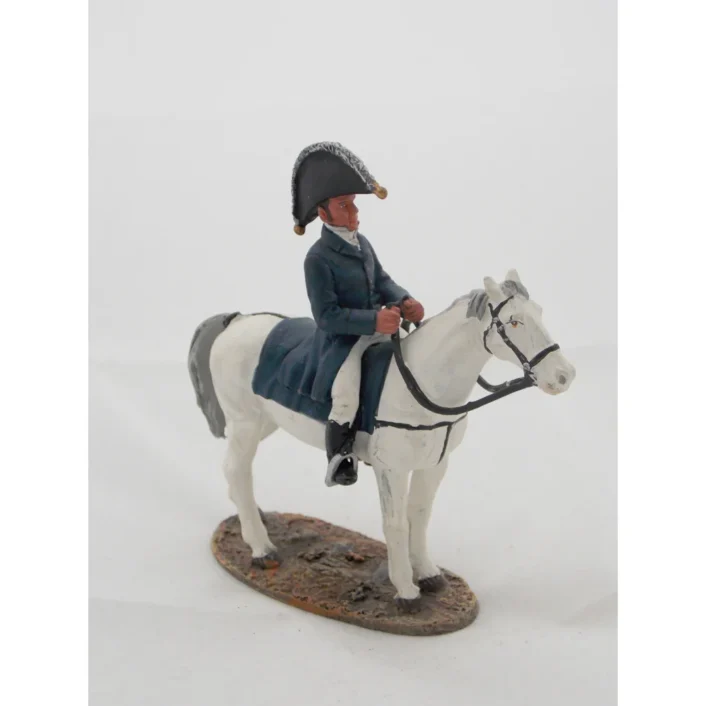
The plain coat and quiet grey horse make a restrained portrait of Wellington. The 1812 date points toward Salamanca, where he showed that patience could prepare the way for a sudden attack.
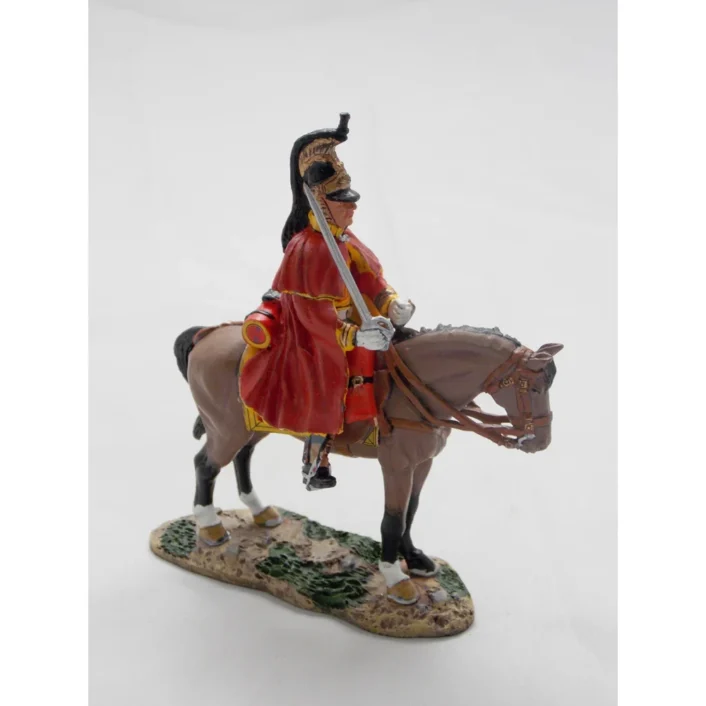
The red coat and crested helmet belong to a heavy cavalryman. At Waterloo, the Inniskillings rode in a brigade whose three regiments represented England, Scotland and Ireland—a detail that gives this mounted figure a particularly good companion story.
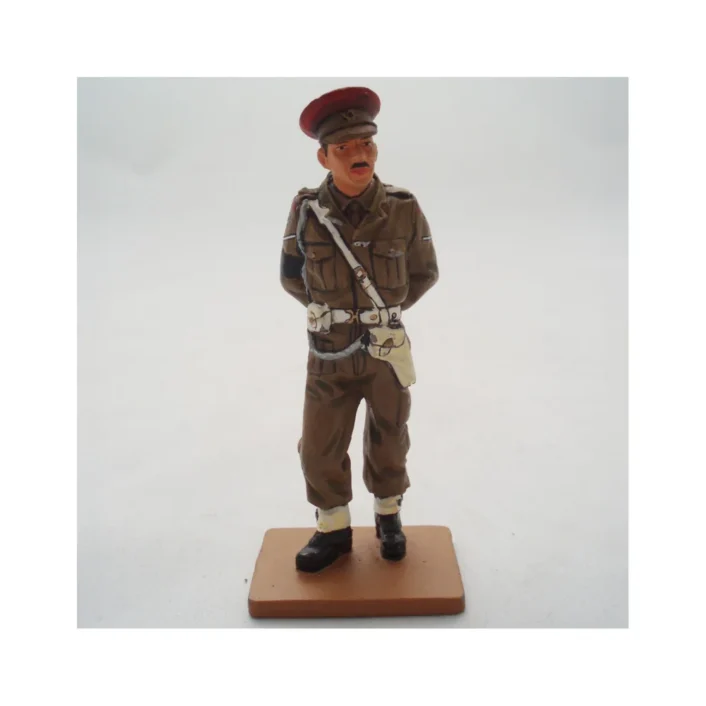
The red-topped cap and white equipment are designed to be noticed. This Royal Military Police figure represents a different kind of military presence: directing, regulating and maintaining order rather than blending into the landscape.
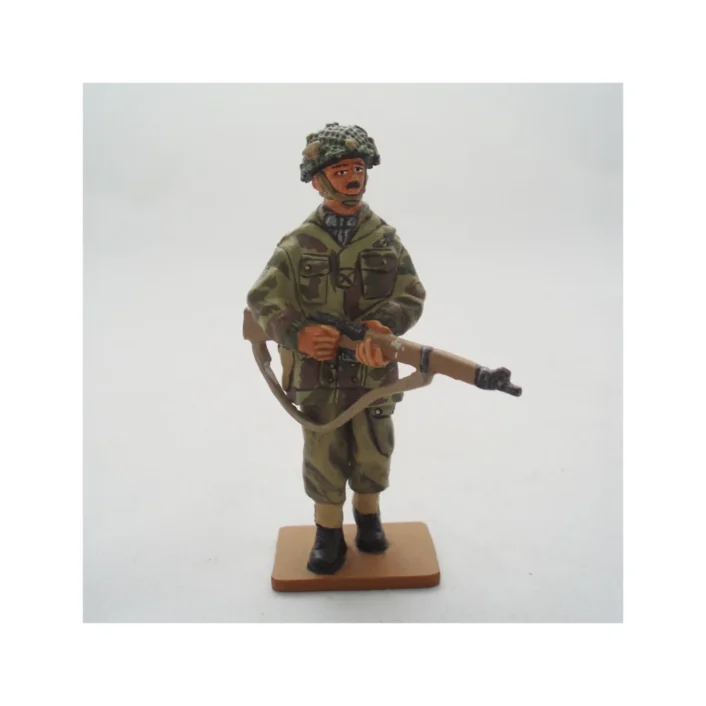
The landing is only the beginning of an airborne operation. Del Prado’s British sergeant, with rifle across his body and equipment ready for movement, is a useful reminder that the objective still had to be reached and held.
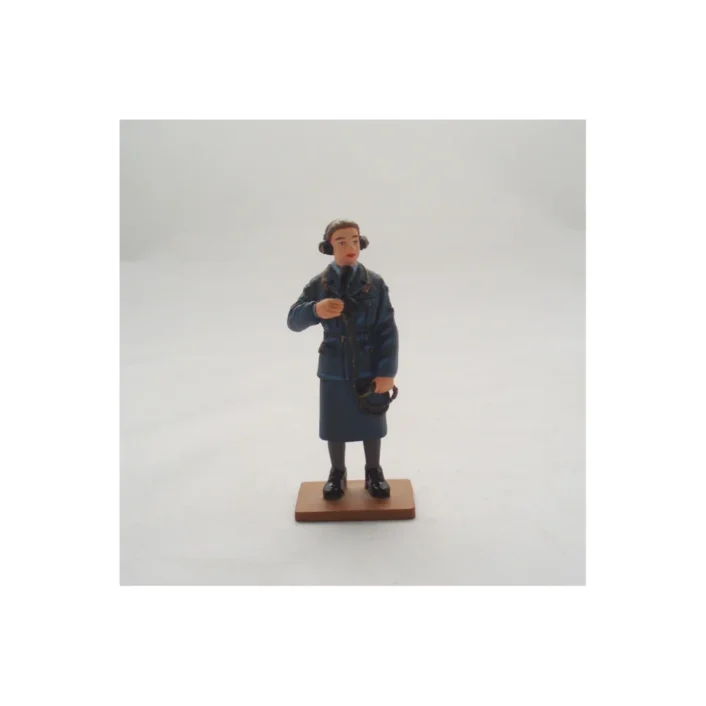
An air-force uniform does not necessarily mean a pilot. Del Prado’s WAAF airwoman represents the women whose communications, plotting and technical work helped an air force function, even though they were not its combat aircrew.
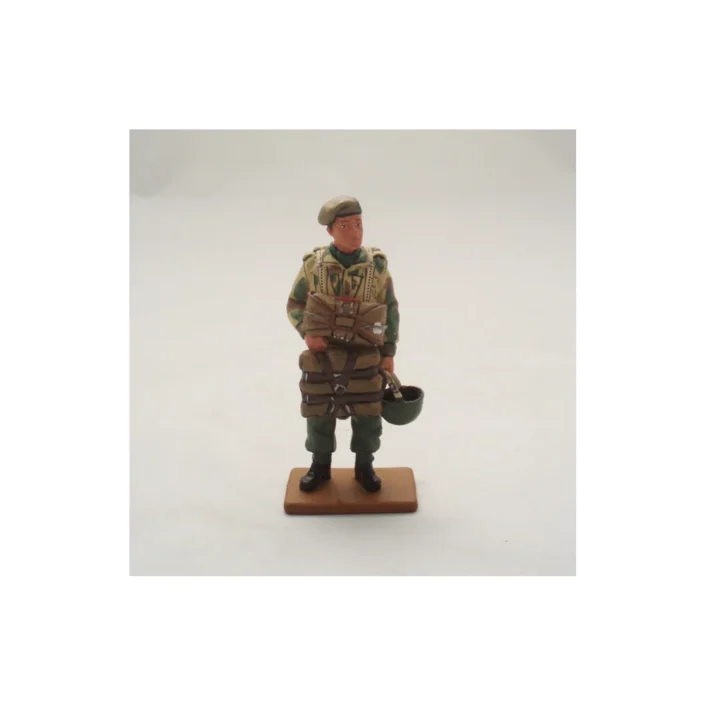
The wartime SAS is usually pictured beside a heavily armed jeep. Del Prado’s 1960 paratrooper opens a different chapter: the regiment’s postwar revival, its Territorial roots and the practical weight of airborne equipment.