

Del Prado · British Army · 1951
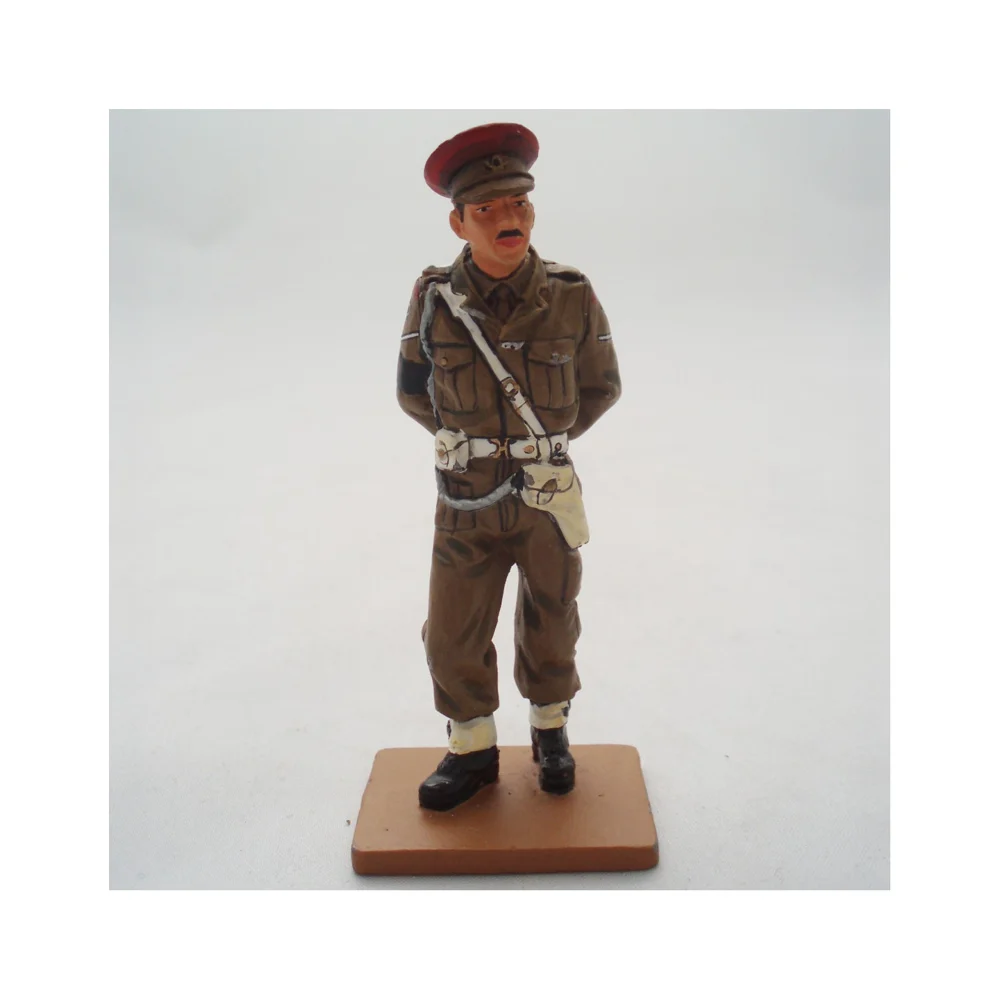
The red-topped cap and white equipment are designed to be noticed. This Royal Military Police figure represents a different kind of military presence: directing, regulating and maintaining order rather than blending into the landscape.
- Maker
- Del Prado
- Subject
- Royal Military Police, 1951
- Setting
- British Army · 1951
- Type
- Painted metal figure
The contrast is unusually crisp for a khaki-clad subject. White gloves, belt and straps cut across the darker uniform, and the cap supplies a second strong colour. Where a camouflage figure asks the eye to work through a broken pattern, this miniature announces its role through visibility.
The road is part of the operation
The National Army Museum’s history of the Royal Military Police traces duties extending beyond the familiar idea of arresting soldiers. Traffic control and handling prisoners were important wartime tasks. Keeping routes usable and movements organised was part of enabling an army to function.
The corps received the “Royal” prefix in 1946. That is a useful detail for this figure’s 1951 date: the title belongs to the postwar period represented here. An earlier British military policeman should not automatically be given the same contemporary title without checking the date.
The figure is often sold with a corporal or lance-corporal description. This entry keeps the broader service identification rather than resolving a rank discrepancy from a small photograph. The unmistakable visual features are the red cap top and white equipment; they are the best starting point for matching an unboxed example.
In a display, the pose can provide a pause between more active subjects. It is easy to imagine the figure beside a road or vehicle, but a simple uniform grouping is equally effective. The contrast with a wartime American military policeman would also be useful: two policing roles, different national equipment and different dates.
White paint reveals both wear and repairs
Examine the gloves and straps closely. Small chips show strongly against white, while thick touching-up can make the edges look swollen. A side view should show whether the straps remain distinct from the clothing underneath. Check the cap brim and the ankles as well, rather than judging condition only by the clean-looking torso.
The figure broadens a collection in a practical direction. Armies need movement control and discipline as well as combat units, and the Royal Military Police subject makes those functions visible. Its bright details are attractive, but they also express the reason the uniform looks different: this was a soldier whose presence often needed to be recognised.
References and further reading
- National Army Museum — Corps of Royal Military Police
- Planète Légendaire — figure reference
- Génie Miniature — Del Prado identification index
The photograph identifies the model; condition and packaging vary between examples offered for sale.