

Del Prado · Britain · Waterloo · 1815
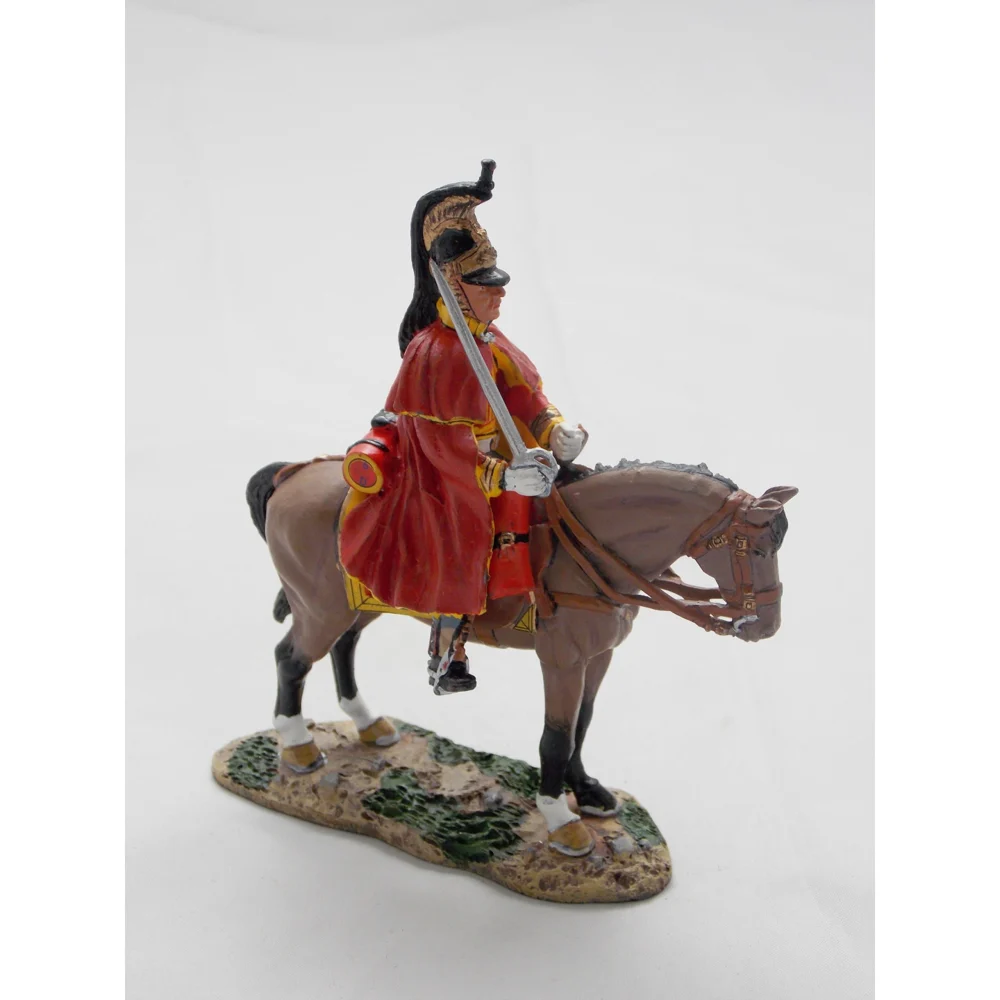
The red coat and crested helmet belong to a heavy cavalryman. At Waterloo, the Inniskillings rode in a brigade whose three regiments represented England, Scotland and Ireland—a detail that gives this mounted figure a particularly good companion story.
- Maker
- Del Prado
- Subject
- 6th Inniskilling Dragoon, 1815
- Setting
- Britain · Waterloo · 1815
- Type
- Painted metal mounted figure
The horse stands with its head lowered while the rider holds his sword upright. That calm arrangement is useful: the red saddlecloth, coat and helmet can be examined without the tangle of a charging pose. This is a regimental portrait, not an attempt to squeeze the whole of Waterloo onto one base.
Three regiments behind one name
The Union Brigade combined the 1st Royal Dragoons, the Scots Greys and the 6th Inniskilling Dragoons. The Inniskillings Museum places Waterloo within the regiment’s longer history. The brigade’s charge struck French infantry, but success carried its own danger: riders who continued too far became exposed and difficult to recall.
This distinction between breaking an enemy and recovering formation is central to cavalry warfare. A horseman moving forward was only useful while an officer could still direct him. The model’s composed pose can be read as the state before that order and movement broke everything into noise, speed and individual decisions.
The date also separates him from later Inniskilling appearances in the Crimea. The same regimental identity survived changes in uniform and equipment. A Balaklava figure and a Waterloo figure can tell that story together, but they should not be presented as wearing one timeless outfit.
Read the horse furniture
The broad red cloth is nearly as important to identification as the rider’s coat. Inspect its edges, the sword tip and the horse’s ears when comparing a loose example with the reference. A side photograph is especially useful for the sword, which may look straight from one direction while bending toward the camera.
The horse’s lowered head gives the piece a restful character among more animated cavalry. Its historical weight comes from the regiment and brigade behind it, not from a dramatic sculpted action.
References and further reading
- Inniskillings Museum — The Inniskilling Dragoons
- Waterloo Association — The British heavy cavalry charge
- Planète Légendaire — figure reference
- Génie Miniature — Del Prado identification index
The photograph identifies the model; condition and packaging vary between examples offered for sale.