

Del Prado · Anglo-Scottish Borders · 1585
This rider belongs to a frontier of farms, towers and family allegiances. The horse mattered because a raid depended on getting across difficult country—and getting home again.
- Maker
- Del Prado
- Subject
- Border Reiver, 1585
- Setting
- Anglo-Scottish Borders · 1585
- Type
- Painted metal mounted figure
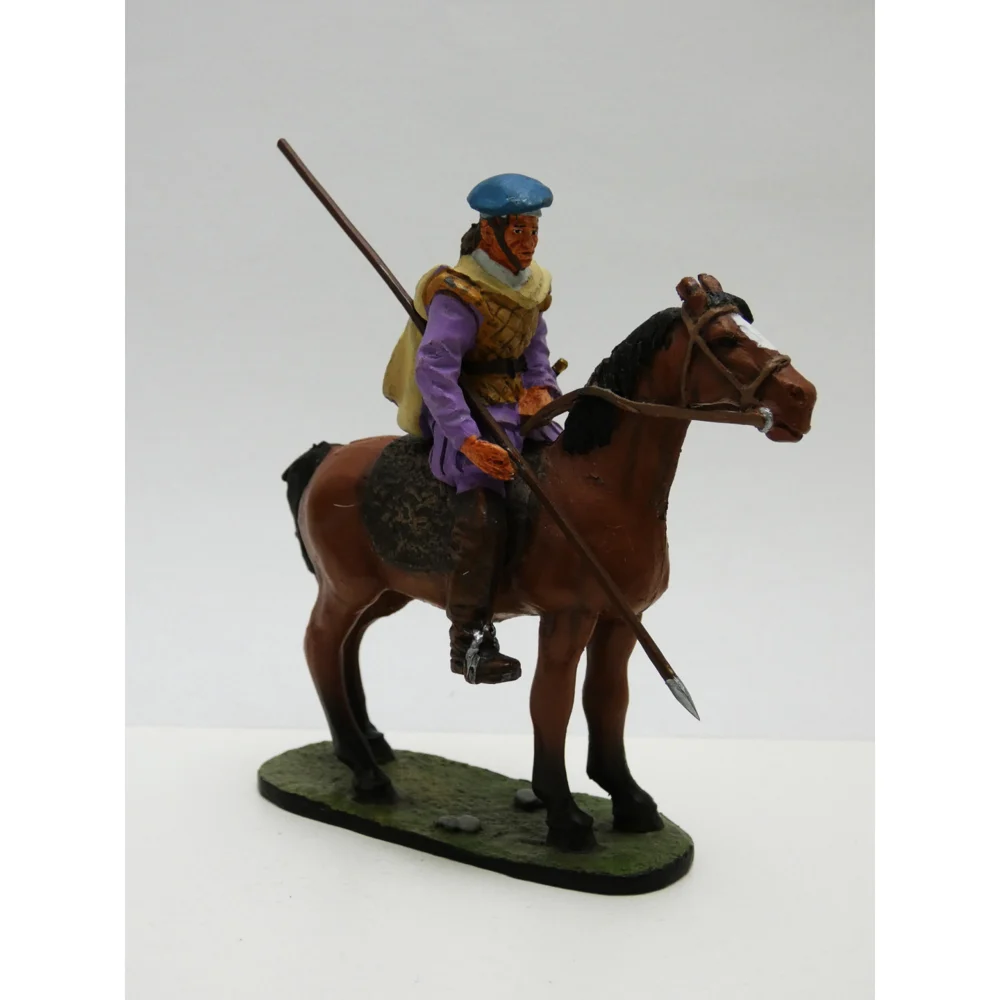
The brown horse stands beneath a rider in subdued clothing, with a long weapon rising behind him. The blue cap and leather-coloured upper garment give the figure a less ceremonial appearance than the regimented cavalry elsewhere in the catalog. That difference is appropriate to the subject.
A Border reiver was not simply a uniformed soldier of Scotland or England. Raiding on the frontier involved families and local loyalties that could cut across the political boundary. Livestock, retaliation and protection shaped the violence of the region alongside the larger disputes between kingdoms.
The landscape behind the rider
The fortified tower is as useful an image for this subject as the battlefield. Historic Environment Scotland’s account of Smailholm and the Border ballads connects that landscape with stories preserved and later reworked in song and literature.
Those stories are part of the reivers’ legacy, but they are not a neutral record of every event. The romantic rider remembered in a ballad can obscure the losses suffered by the households being raided. A display gains depth when it acknowledges both the appeal of the horseman and the insecurity of the people around him.
The 1585 date places the subject before the union of the English and Scottish crowns. It is worth retaining because the border’s political setting would change, even though the physical landscape of routes, valleys and towers remained.
The long weapon makes a strong diagonal over the compact horse. A simple base or a small suggestion of rough ground suits the figure better than a formal parade setting. It can stand almost as a character entering a story, with the landscape supplying what the miniature leaves unsaid.
For a second-hand purchase, check the length and straightness of that weapon and the horse’s ears. The clothing is comparatively plain, so rough repainting can alter its texture noticeably. This is a subject whose historical value lies in moving the cavalry shelf beyond regular armies and famous commanders.
References and further reading
- Historic Environment Scotland — Border ballads at Smailholm Tower
- Planète Légendaire — figure reference
- Génie Miniature — Del Prado identification index
The photograph identifies the model; condition and packaging vary between examples offered for sale.