
Del Prado Border Reiver, 1585: A Horseman Between Two Kingdoms
This rider belongs to a frontier of farms, towers and family allegiances. The horse mattered because a raid depended on getting across difficult country—and getting home again.

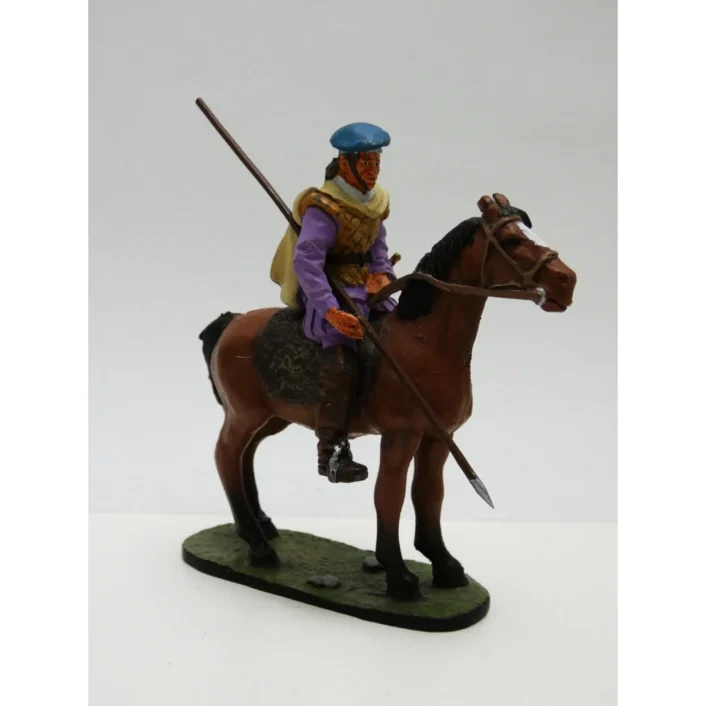
This rider belongs to a frontier of farms, towers and family allegiances. The horse mattered because a raid depended on getting across difficult country—and getting home again.
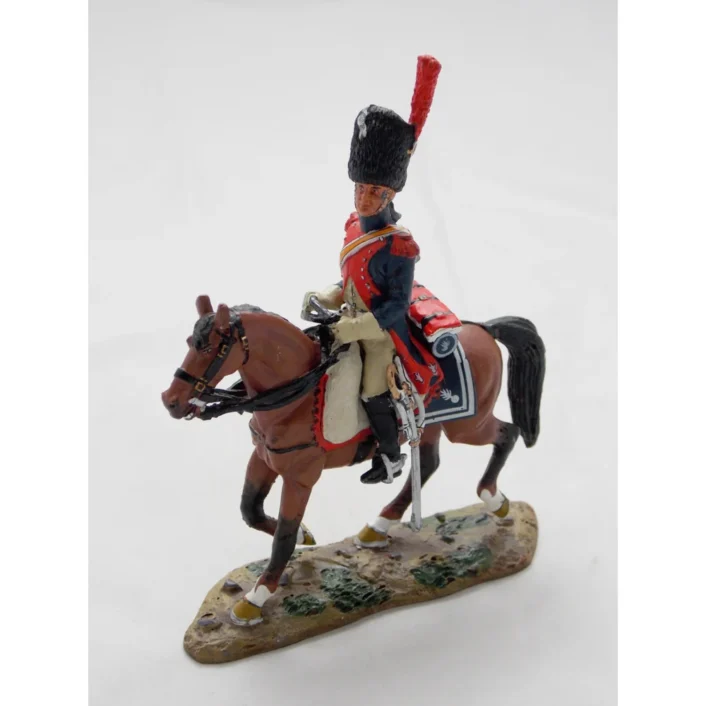
A blue coat and bearskin may seem unexpected for a French carabinier. The date explains the difference: this rider belongs to the corps before its famous armoured transformation.
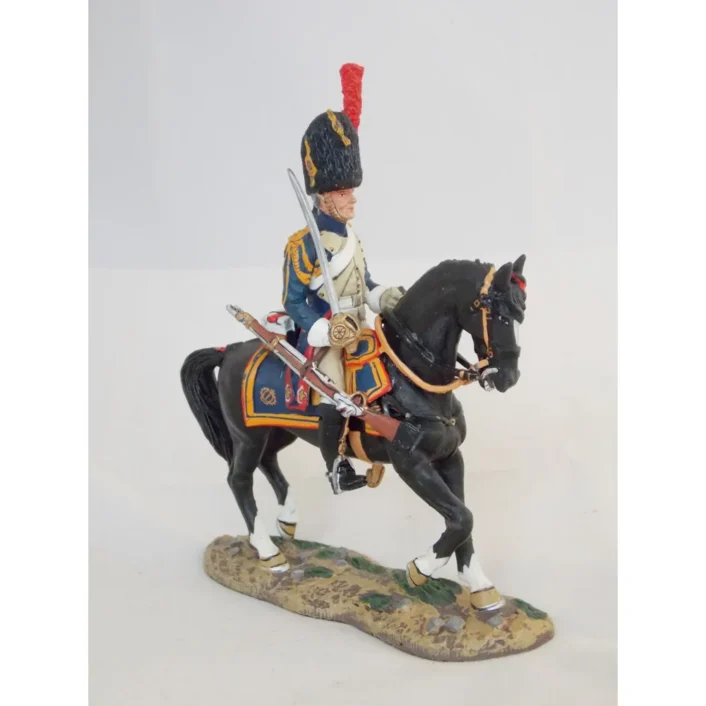
The bearskin, dark horse and blue coat convey weight without a shining breastplate. This Guard cavalryman is a reminder that heavy cavalry was not defined by armour alone.
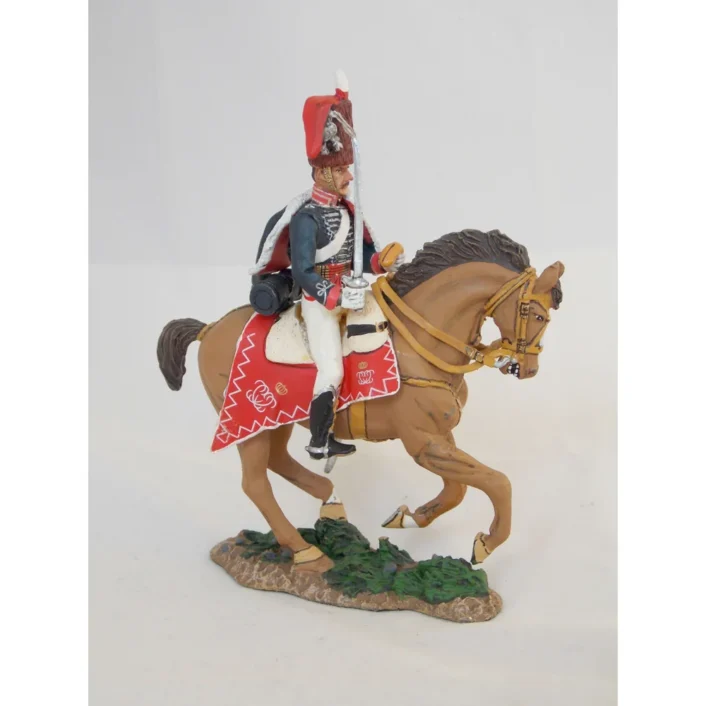
The red headgear and braided blue coat make this hussar conspicuous. His regiment’s Waterloo story offers something less obvious than a charge: the importance of bringing back the right news.
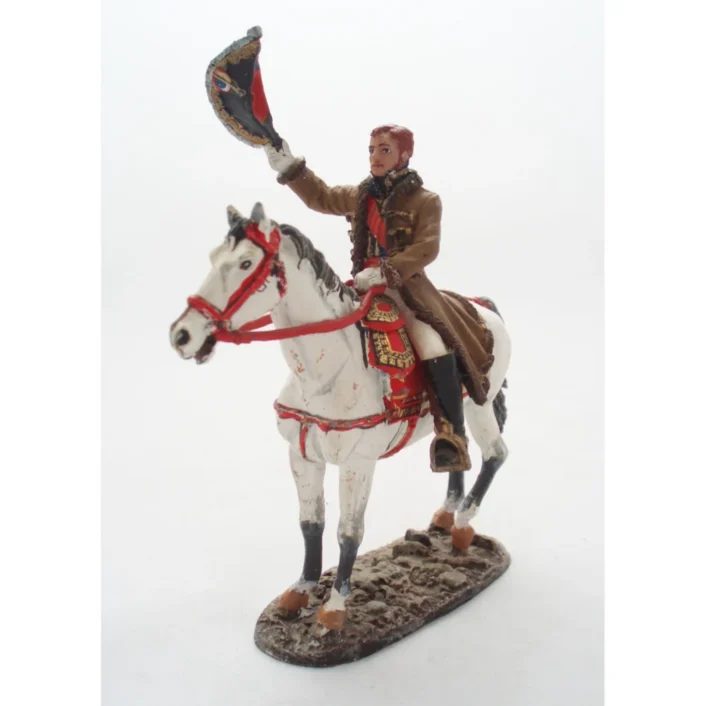
Ney lifts his hat above a pale horse, an open gesture in a portrait associated with one of the army’s hardest years. The 1812 date turns a marshal’s likeness into a story of endurance.
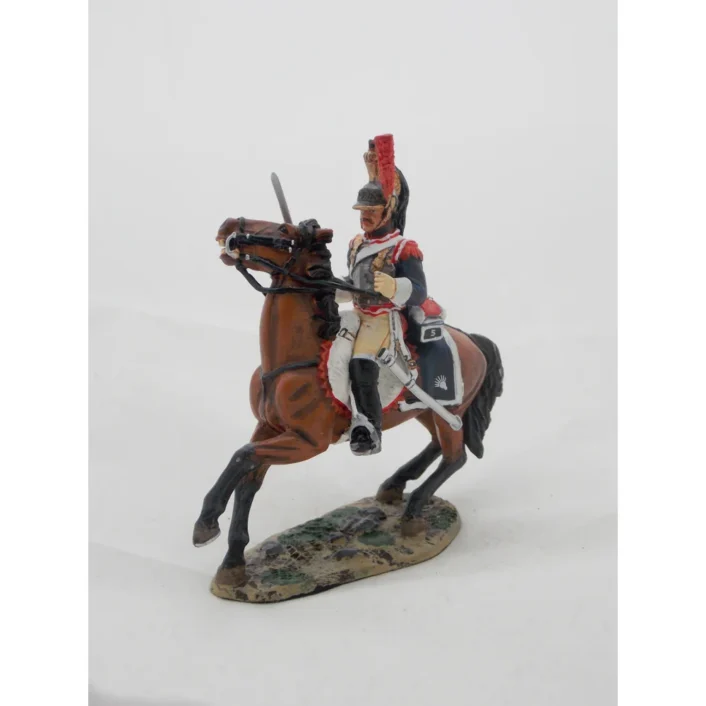
The rearing horse and shining breastplate make an immediate impression. The more interesting story lies behind the spectacle: heavy cavalry depended on control and cohesion as much as courage.
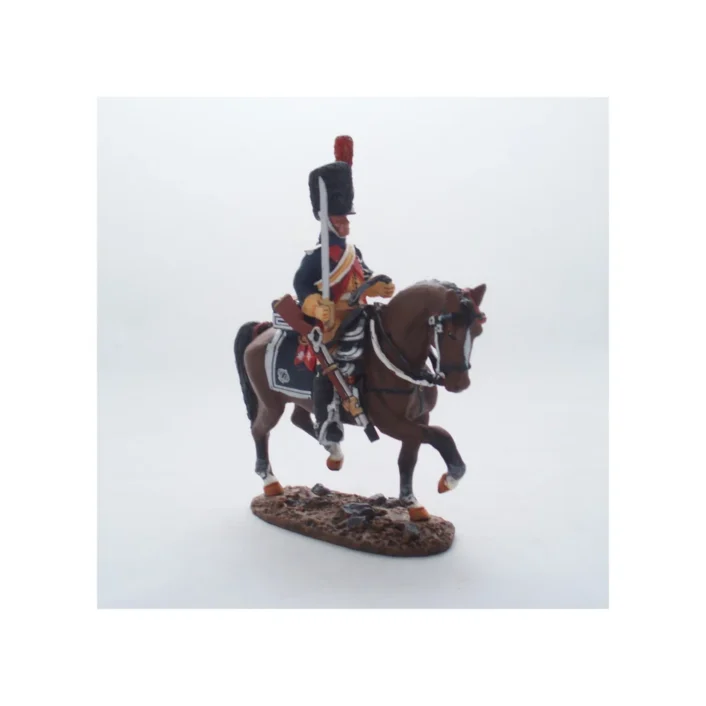
The sword and bearskin suggest battlefield prestige, but this guardsman also points to an essential, less glamorous duty: protecting headquarters, movements and the person of the ruler.
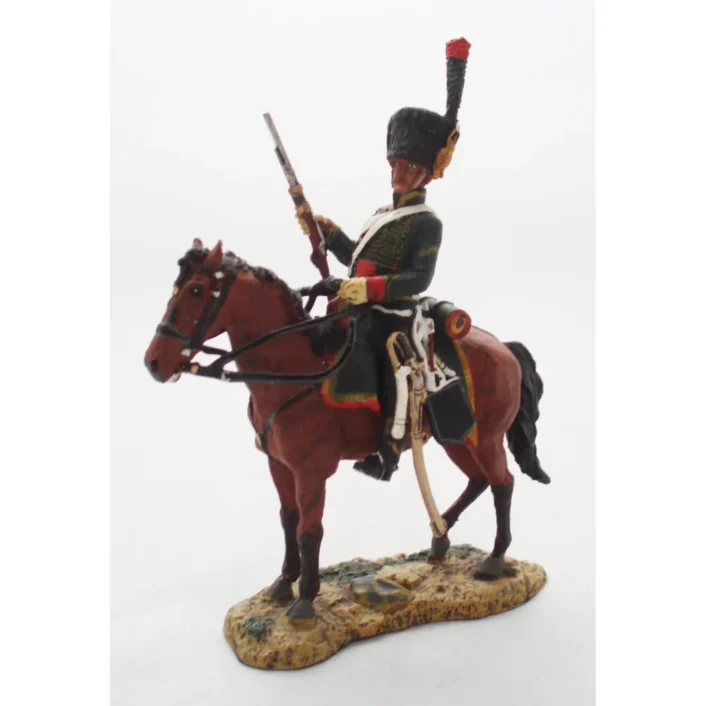
A dark green coat, bright red accents and fur headgear give this mounted guardsman a distinctive silhouette. His uniform belongs to the cavalry corps whose dress Napoleon himself made familiar.
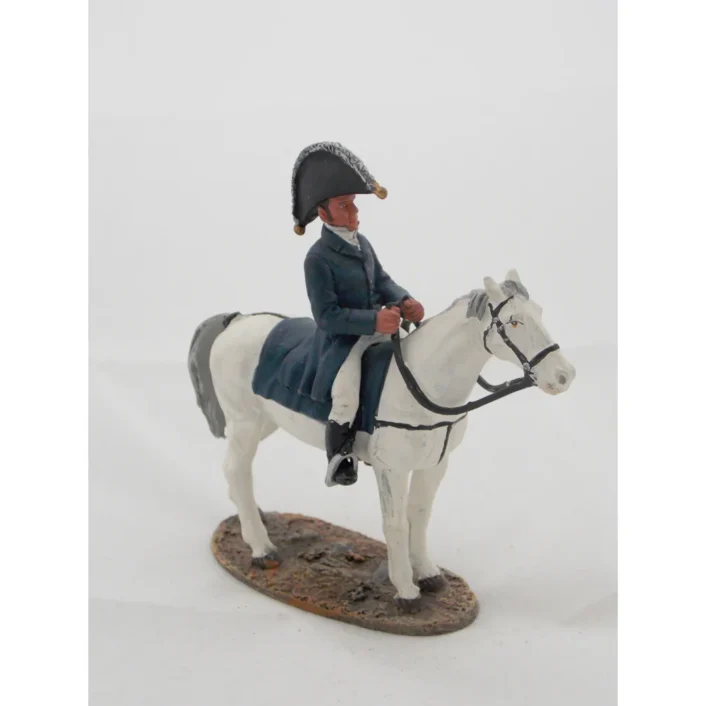
The plain coat and quiet grey horse make a restrained portrait of Wellington. The 1812 date points toward Salamanca, where he showed that patience could prepare the way for a sudden attack.
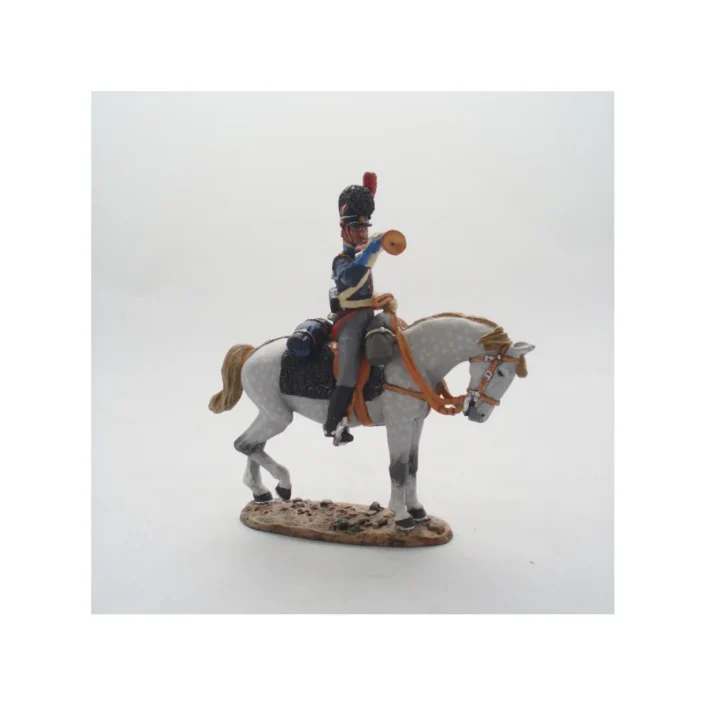
The trumpet and pale horse make this rider stand apart from a row of cavalrymen. His Portuguese identity matters just as much: the Peninsular army was never exclusively British.