

Del Prado · France · 1800
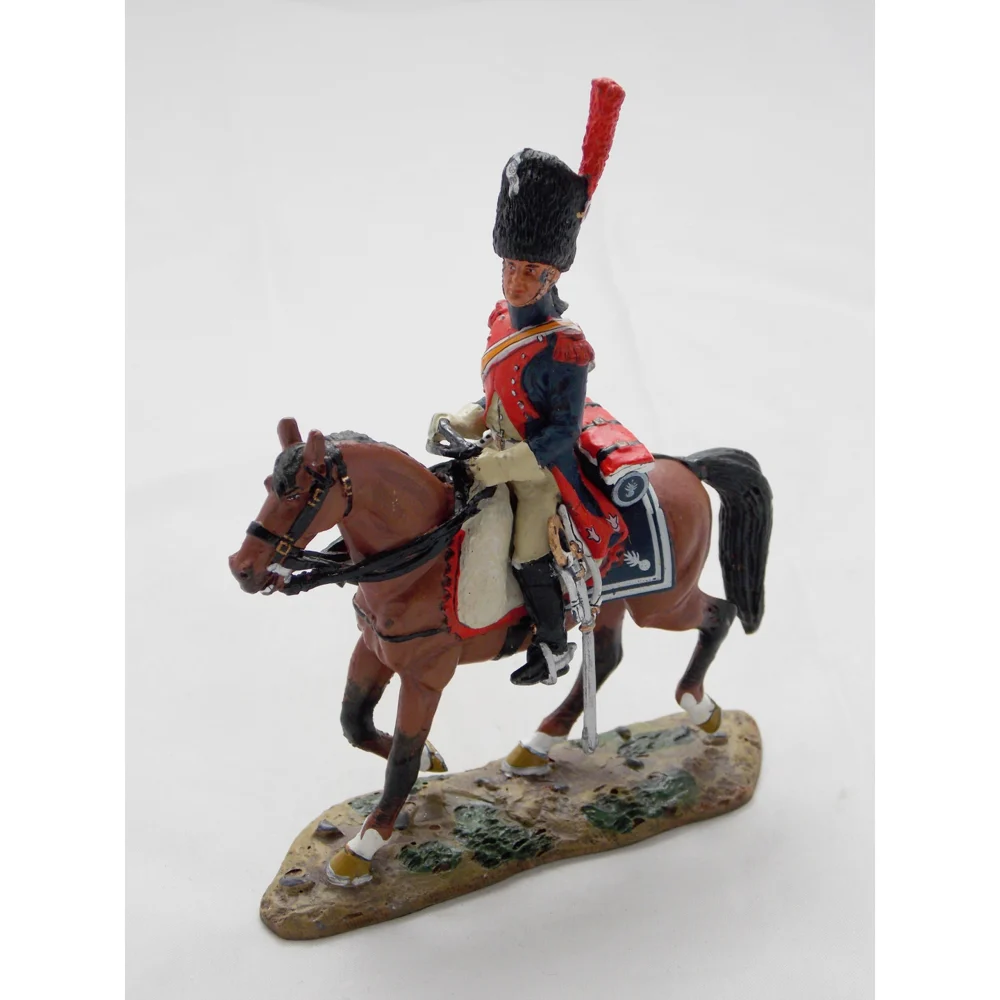
A blue coat and bearskin may seem unexpected for a French carabinier. The date explains the difference: this rider belongs to the corps before its famous armoured transformation.
- Maker
- Del Prado
- Subject
- French Carabinier, 1800
- Setting
- France · 1800
- Type
- Painted metal mounted figure
The bay horse carries a rider in dark blue with red accents and pale trousers. There is no breastplate, and the headgear is fur rather than the later imposing metal helmet. These are the features that make the miniature worth retaining as a dated subject instead of labelling it simply “Napoleonic cavalry”.
A uniform changed by experience
The later carabinier is often remembered through polished armour and a crested helmet. A decree of 24 December 1809 ordered the change to protective equipment. The Fondation Napoléon’s study of surviving carabinier armour connects that decision with the injuries suffered in the preceding campaign.
Del Prado’s 1800 subject therefore opens a useful before-and-after story. The earlier bearskin was not merely a less elaborate version of the later helmet. The adoption of armour changed the rider’s silhouette and reflected a response to combat experience.
The distinction also prevents a common catalog error. A photograph of a cuirassed carabinier at Waterloo is not an appropriate visual reference for every year in the corps’ history. Nor should the famous damaged cuirass preserved in Paris be used to identify this unarmoured miniature as its wearer.
Beside the 5th Cuirassier, the rider demonstrates why cavalry names cannot be inferred from armour alone. Beside a later carabinier, he would show change within one corps. Both comparisons are stronger than assembling every French horseman into an undated charge.
The relatively clear view of the coat makes the miniature useful for studying how belts, facings and headgear divide a uniform into recognisable shapes. A close photograph should show those boundaries without requiring the buyer to guess through reflections.
Inspect the plume, weapon and horse’s legs on a loose example. If the listing calls the figure a cuirassier, compare the actual photograph rather than relying on the heading. The blue-coated, bearskin-wearing appearance is the point of this particular release.
References and further reading
- Fondation Napoléon — Carabinier helmet and cuirass
- Musée de l’Armée — Carabinier armour object guide
- Planète Légendaire — figure reference
- Génie Miniature — Del Prado identification index
The photograph identifies the model; condition and packaging vary between examples offered for sale.