

Del Prado · Figure study
A netted helmet, loaded equipment and jump clothing identify this American airborne subject. The important story begins after the parachute has been discarded: finding other men, reaching an objective and fighting with what arrived on the ground.
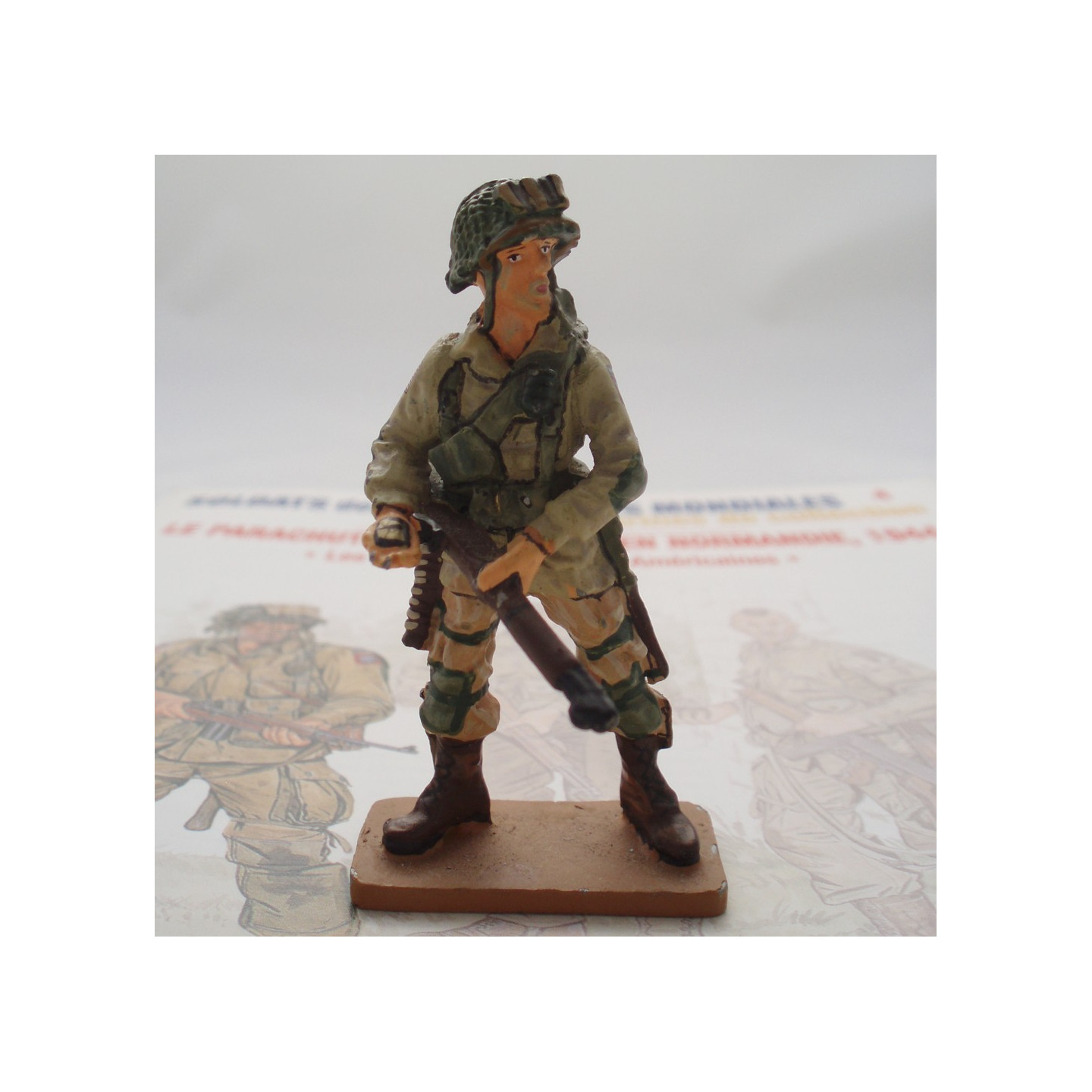
The drop did not produce a tidy formation
The National WWII Museum’s account of the airborne invasion describes American paratroopers scattered away from planned drop zones in the night operation. Men had to assemble and act amid confusion. That history gives a single standing figure a plausible narrative without surrounding him with a perfectly aligned company.
A useful scene has an objective
A lane, hedge gap or road sign can suggest the problem of orientation after a night landing. Two or three separated figures can tell that story more effectively than a large formation arranged as if it had stepped directly from a parade. Keep the equipment visible and the ground simple. The subject’s interest lies in the burden carried and the uncertainty of the situation as much as in the weapon.
Avoid the familiar identification traps
Check the helmet, hands and firearm against the reference, and ask for a rear photograph to see the carried kit. Several Del Prado American subjects share broad features, so “US soldier 1944” is not enough. A seller’s unverified division or famous character name should remain separate from the catalog identity. This figure is a useful starting point for a Normandy collection because it opens the airborne part of the invasion without pretending that the miniature alone establishes a precise unit or location.