
Del Prado Horse Grenadier, 1810: The Heavy Cavalry Without a Cuirass
The bearskin, dark horse and blue coat convey weight without a shining breastplate. This Guard cavalryman is a reminder that heavy cavalry was not defined by armour alone.

Step into the Napoleonic era with finely detailed model soldiers and miniatures. From Highland regiments to French infantry, these figures capture the epic battles and uniforms of the early 19th century, perfect for collectors and diorama builders.
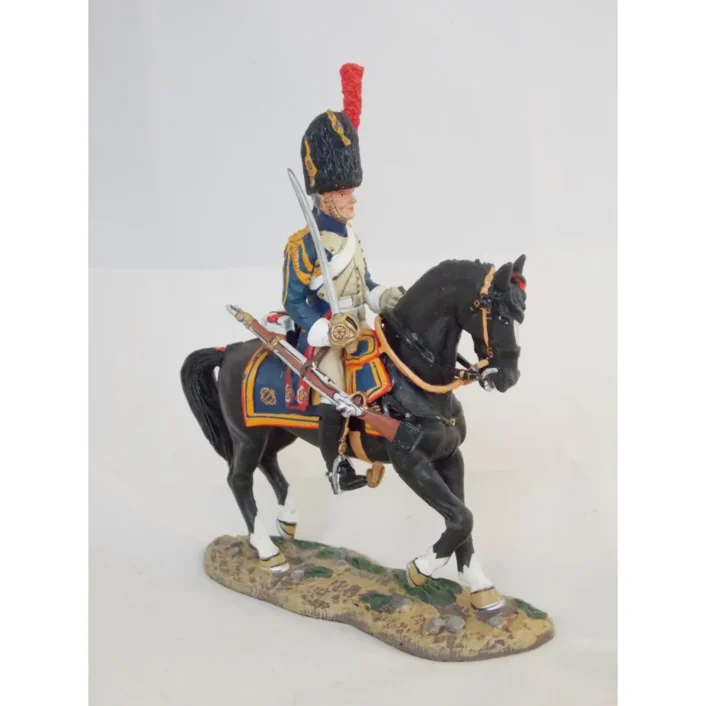
The bearskin, dark horse and blue coat convey weight without a shining breastplate. This Guard cavalryman is a reminder that heavy cavalry was not defined by armour alone.
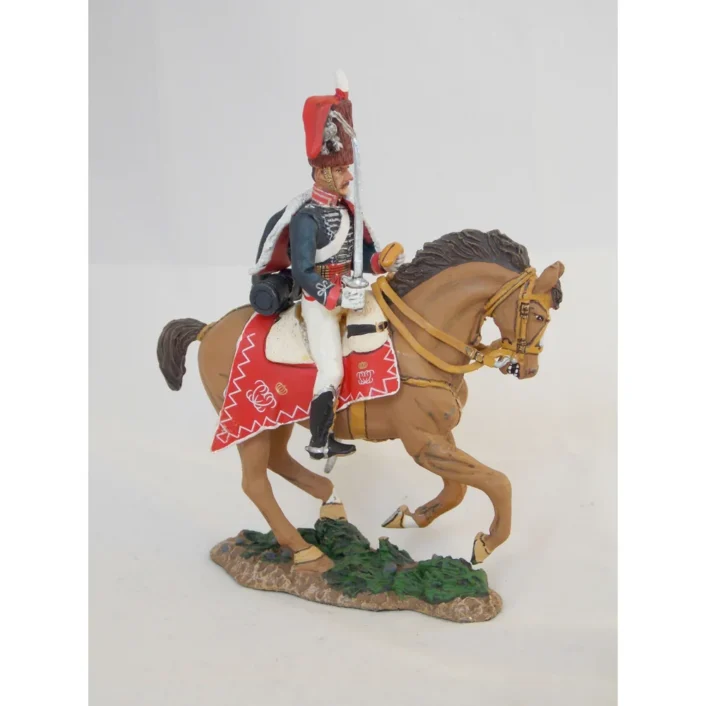
The red headgear and braided blue coat make this hussar conspicuous. His regiment’s Waterloo story offers something less obvious than a charge: the importance of bringing back the right news.
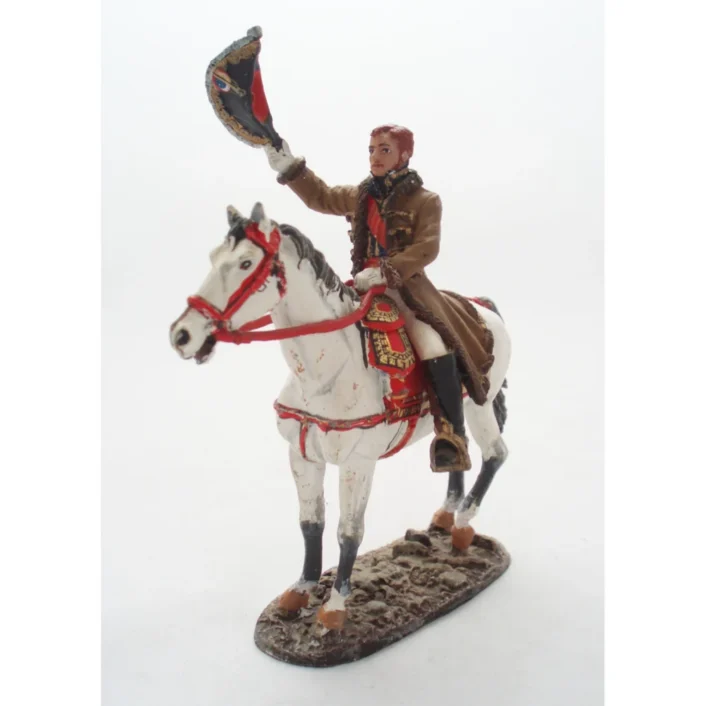
Ney lifts his hat above a pale horse, an open gesture in a portrait associated with one of the army’s hardest years. The 1812 date turns a marshal’s likeness into a story of endurance.
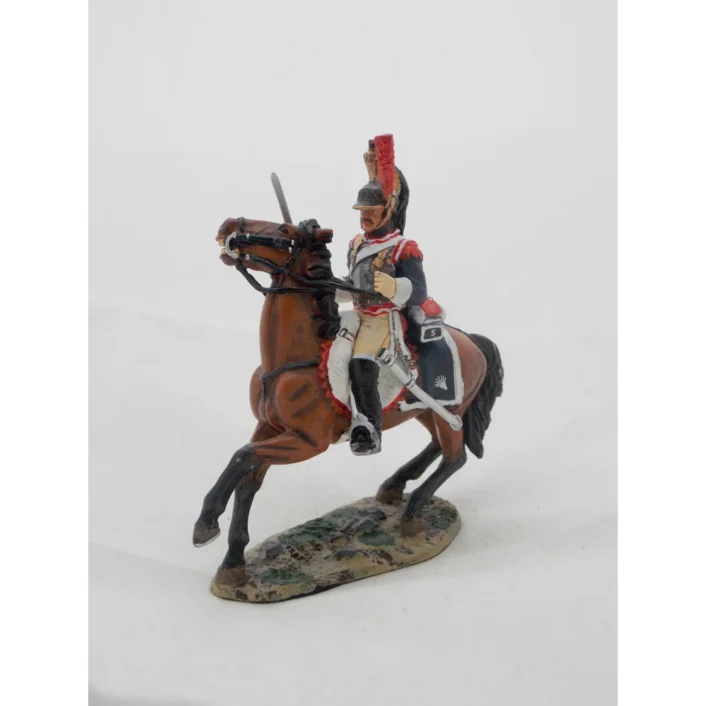
The rearing horse and shining breastplate make an immediate impression. The more interesting story lies behind the spectacle: heavy cavalry depended on control and cohesion as much as courage.
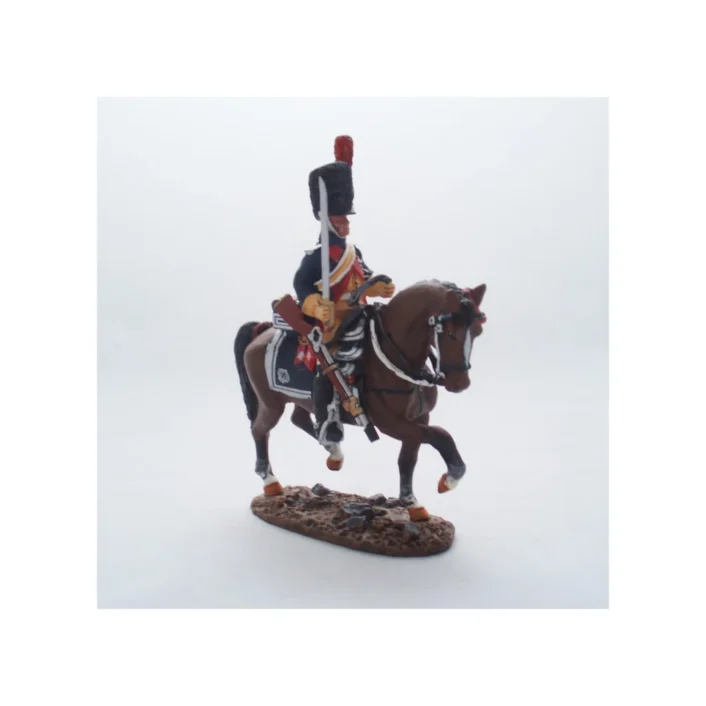
The sword and bearskin suggest battlefield prestige, but this guardsman also points to an essential, less glamorous duty: protecting headquarters, movements and the person of the ruler.
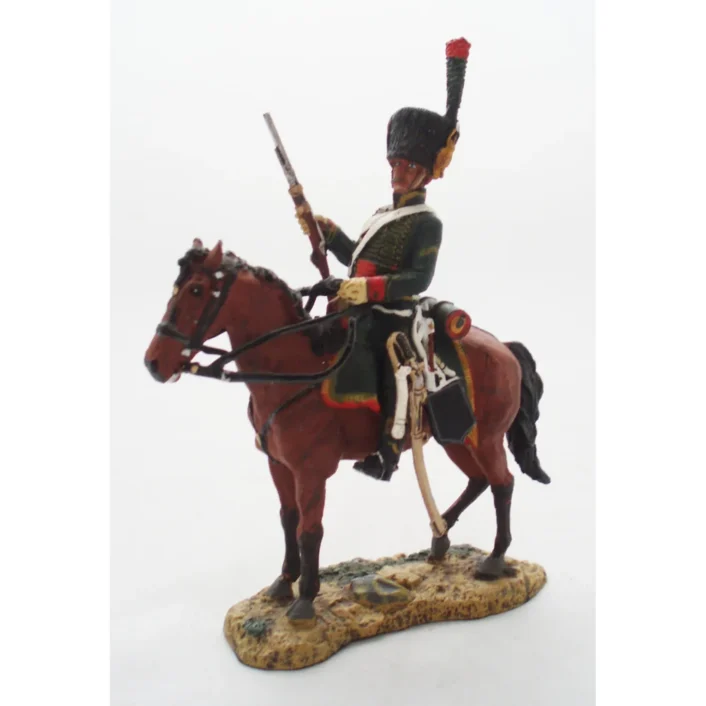
A dark green coat, bright red accents and fur headgear give this mounted guardsman a distinctive silhouette. His uniform belongs to the cavalry corps whose dress Napoleon himself made familiar.
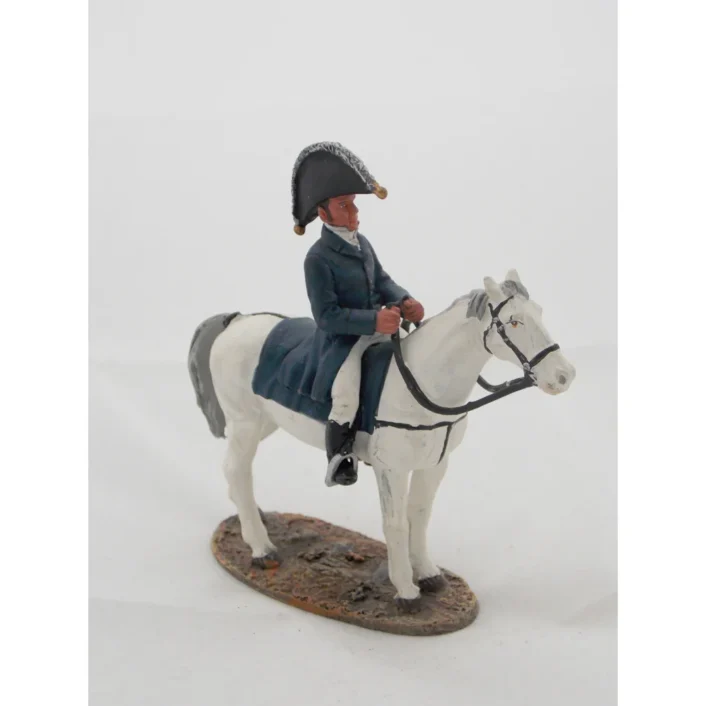
The plain coat and quiet grey horse make a restrained portrait of Wellington. The 1812 date points toward Salamanca, where he showed that patience could prepare the way for a sudden attack.
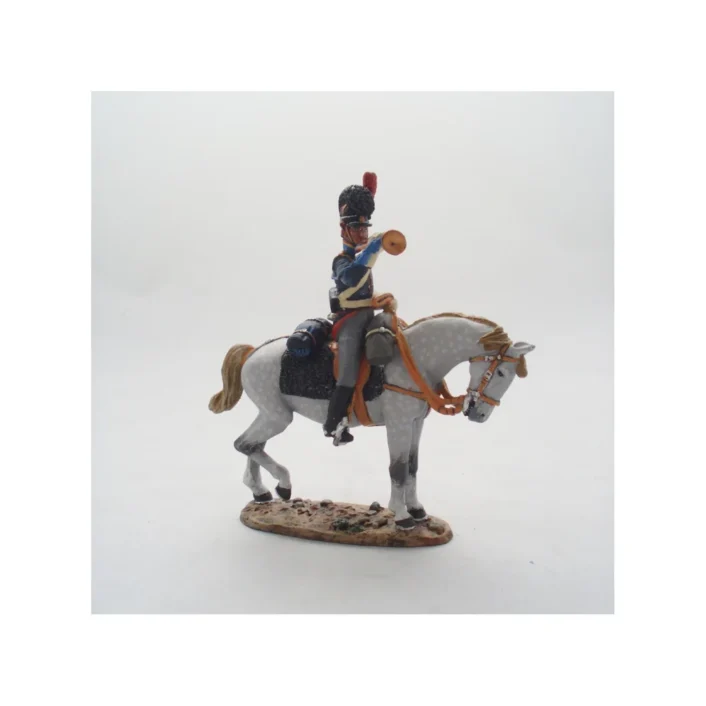
The trumpet and pale horse make this rider stand apart from a row of cavalrymen. His Portuguese identity matters just as much: the Peninsular army was never exclusively British.
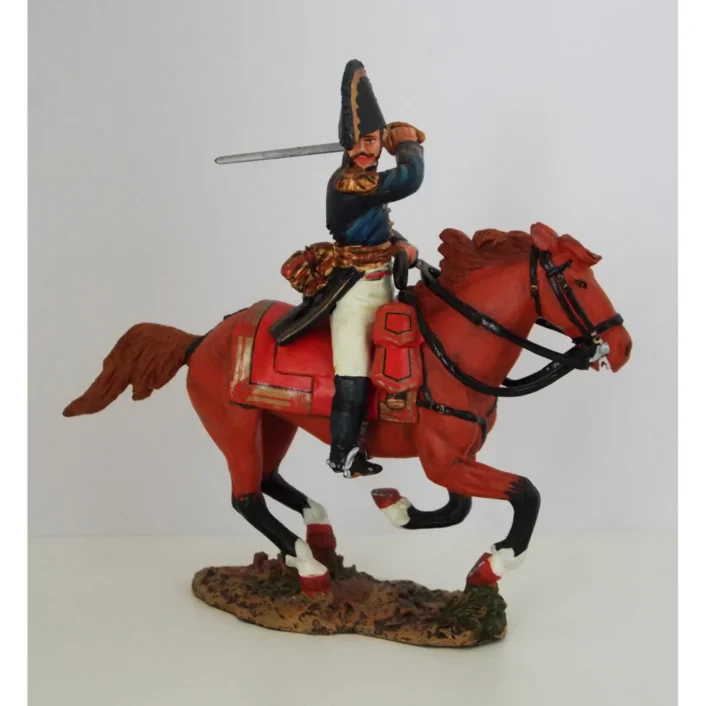
The forward-pointing sword and moving horse make Montbrun a forceful mounted portrait. His career supplies an equally direct story: a cavalryman who rose from the ranks to command a corps.
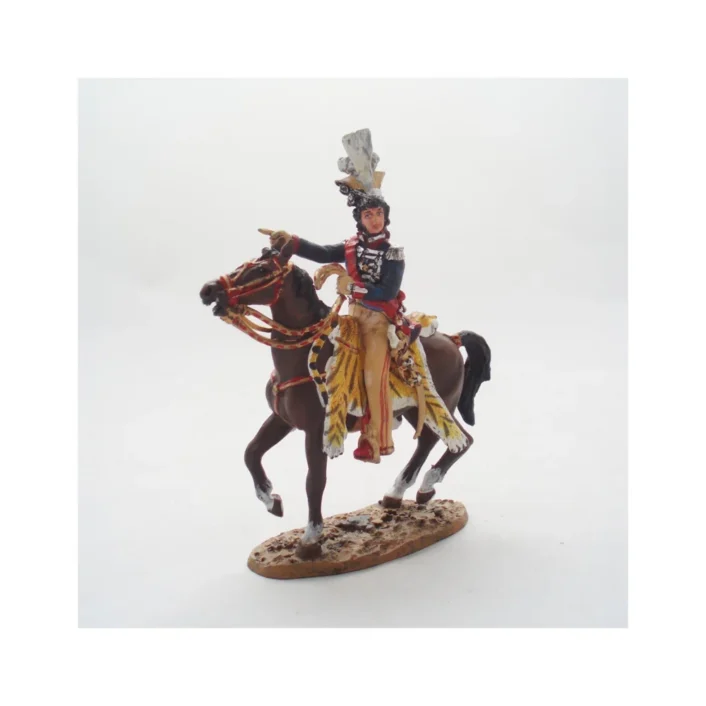
Murat’s spectacular clothing can overshadow the complicated career beneath it. This mounted portrait represents a cavalry leader who rose to a throne—and eventually tried to preserve that throne by breaking with Napoleon.