
King & Country NA041: Dragoon Charging with Sword
NA041 stretches a French dragoon and horse into a forward charge. The sword, crested helmet and streaming horsehair create a long silhouette that needs more room than the base alone suggests.

Cavalry unit.
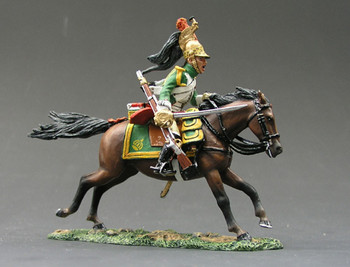
NA041 stretches a French dragoon and horse into a forward charge. The sword, crested helmet and streaming horsehair create a long silhouette that needs more room than the base alone suggests.

NA027 gives a mounted staff officer something unusually specific to do: attend to a sheet of paper. The figure turns attention from the spectacle of command to the written information that helped make it function.

NA025 presents a mounted chasseur holding a carbine while controlling the reins. The dark green uniform, decorated saddle equipment and tall headgear make a colorful subject whose role is more specific than a generic French cavalryman.
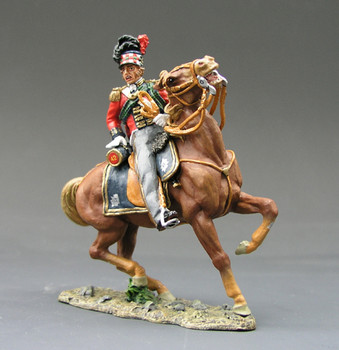
NA047 lifts a Black Watch officer above the foot figures on a rearing horse. The raised forelegs and the rider’s tall bonnet give the piece a much larger visual presence than the standing command subjects.
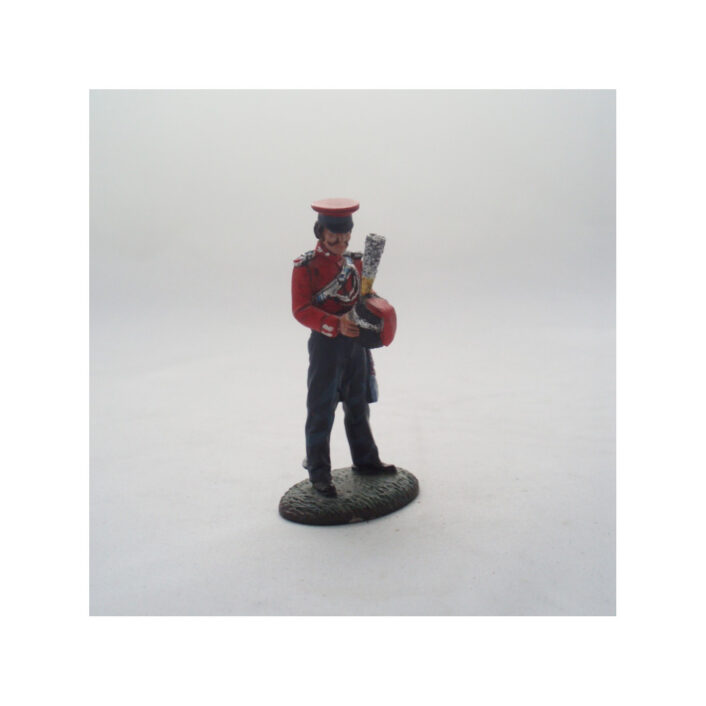
The red coat and silver-coloured braiding make this Cossack officer a formal portrait rather than a ragged raider. The Life Guard identification is essential: it places the figure in a particular institutional setting within Russian service.
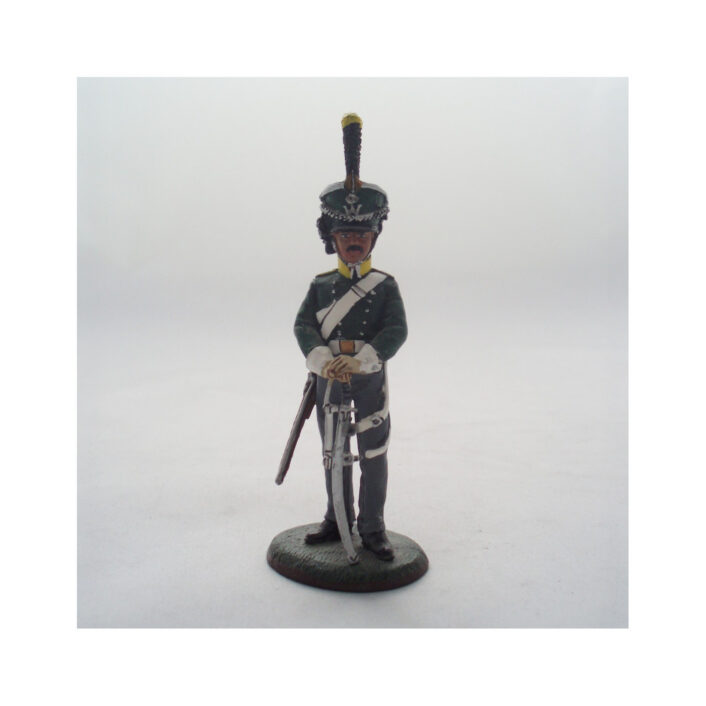
The green uniform and sabre identify a light-cavalry subject, but the date raises the most interesting question. In 1815, Belgian troops belonged to a political arrangement different from the independent Belgium of later history.
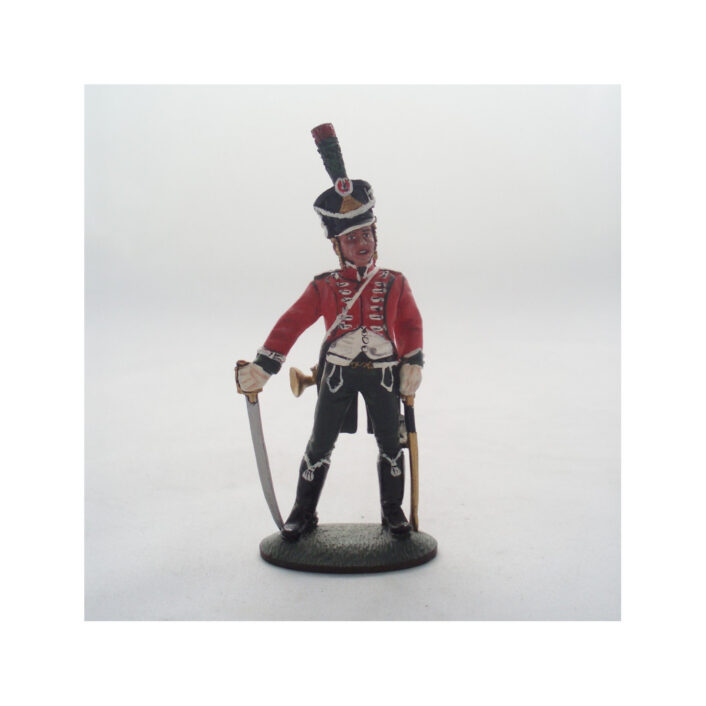
The red jacket, pale braiding and green trousers make this trumpeter stand out from ordinary French cavalry. Del Prado shows him on foot, allowing the clothing and instrument to be studied without a horse obscuring the lower body.
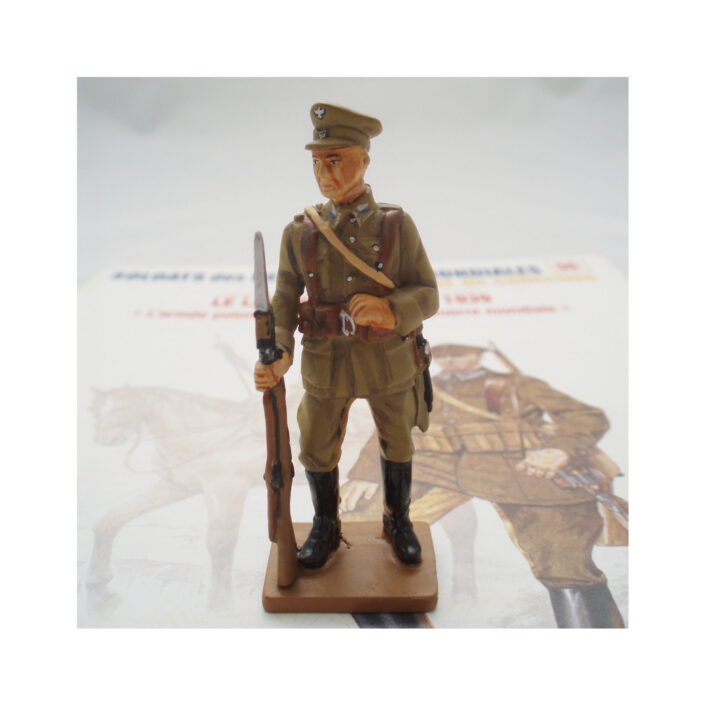
The square-topped cap, tall boots and upright rifle identify a Polish cavalry subject on foot. It is a useful starting point for correcting the persistent cartoon of lancers blindly charging tanks.
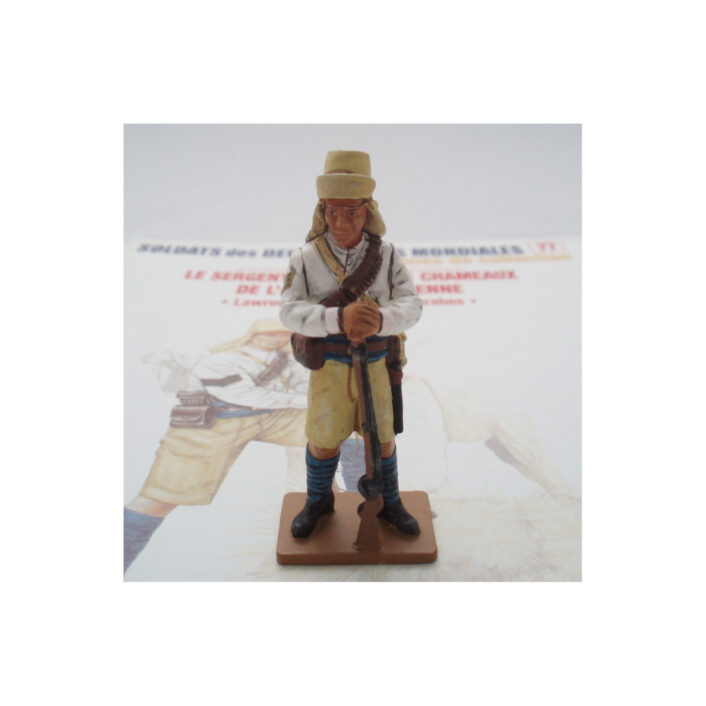
The covered fez, bandolier and blue puttees give this Egyptian sergeant a distinctive appearance. His standing pose is useful for studying a desert-service uniform without allowing the animal to dominate the subject.
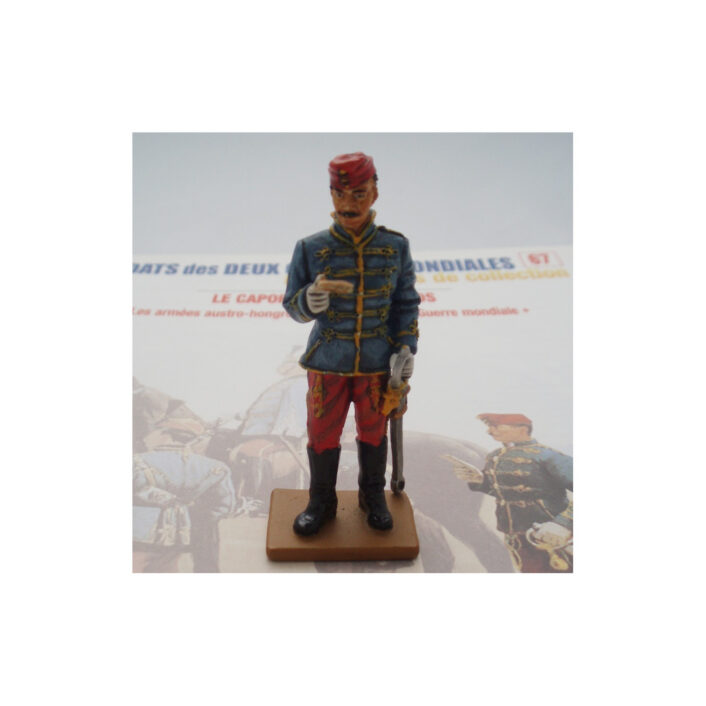
Blue braiding and red trousers make this hussar an arresting contrast to the field-grey and khaki soldiers nearby. The figure opens a route into Austria-Hungary’s army through a uniform that still carries the visual language of cavalry tradition.