

Del Prado · Figure study
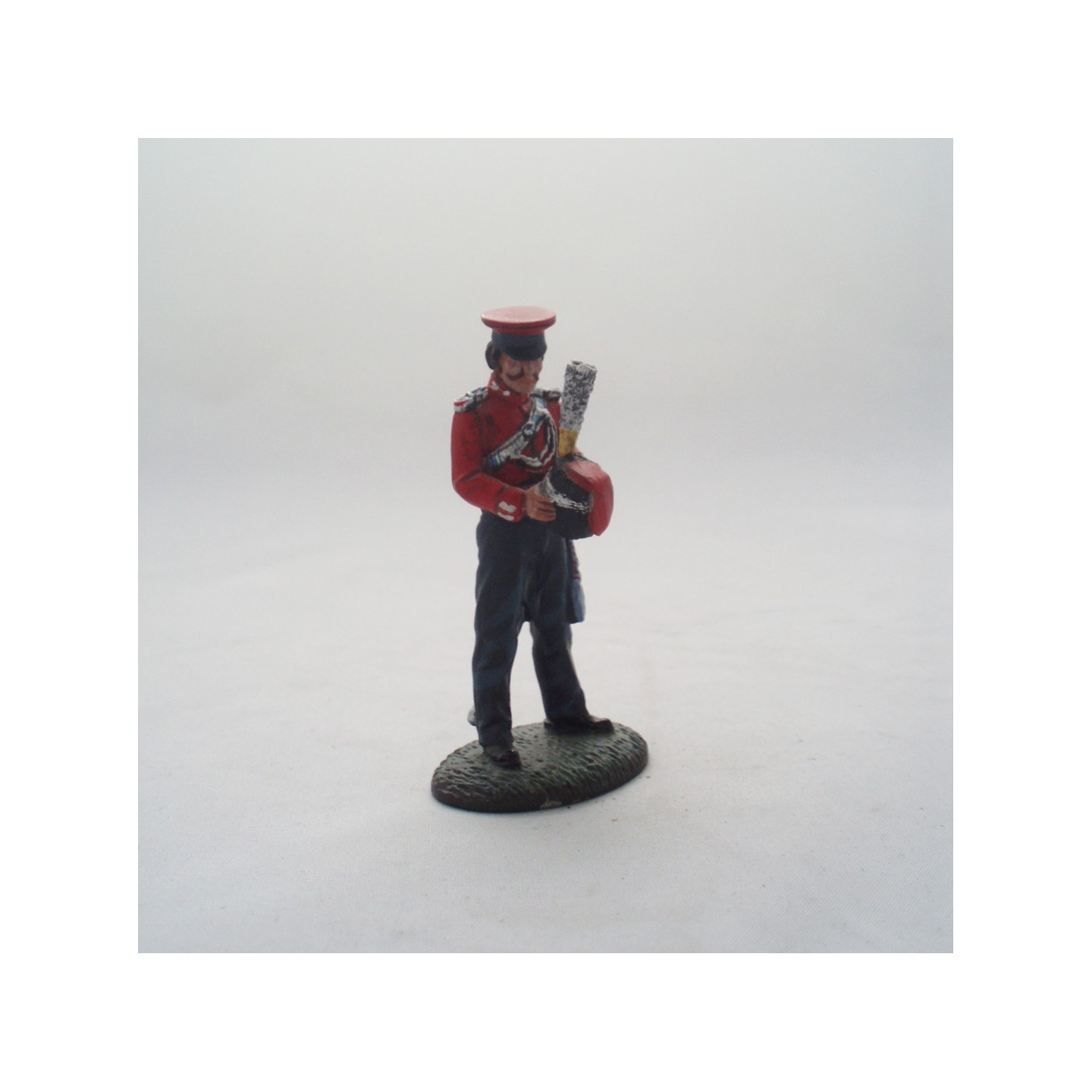
The red coat and silver-coloured braiding make this Cossack officer a formal portrait rather than a ragged raider. The Life Guard identification is essential: it places the figure in a particular institutional setting within Russian service.
Do not make every Cossack the same subject
The retailer identifies an officer of the Guard in 1812. The photograph’s elaborate clothing supports a more specific reading than a generic irregular cavalryman. Keep the Guard designation in collection notes. It does not establish a personal name, and it should not be used to assign every action attributed to Cossacks during the campaign to this one represented role.
The held headgear adds a second focal point
The red braided coat dominates the torso, while dark trousers and a cap give a quieter frame. The additional fur headgear and pale plume held beside the body create a distinctive lower detail. This is worth examining in a side photograph because it can disappear against the coat in a small image. The formal standing pose lets the collector study those elements without a horse or weapon masking them.
A comparison that preserves differences
Display the officer beside an ordinary Russian infantryman or a separately identified Cossack trooper and explain the distinction in role and presentation. A shared army does not imply a shared uniform. Inspect the braid, held headgear, plume and hands when buying. Avoid adding a named commander’s biography simply to make the article more dramatic. The release already has a useful story: the diversity of Russian military institutions and the contrast between a Guard portrait and the familiar popular image of Cossack warfare.