

Del Prado · Figure study
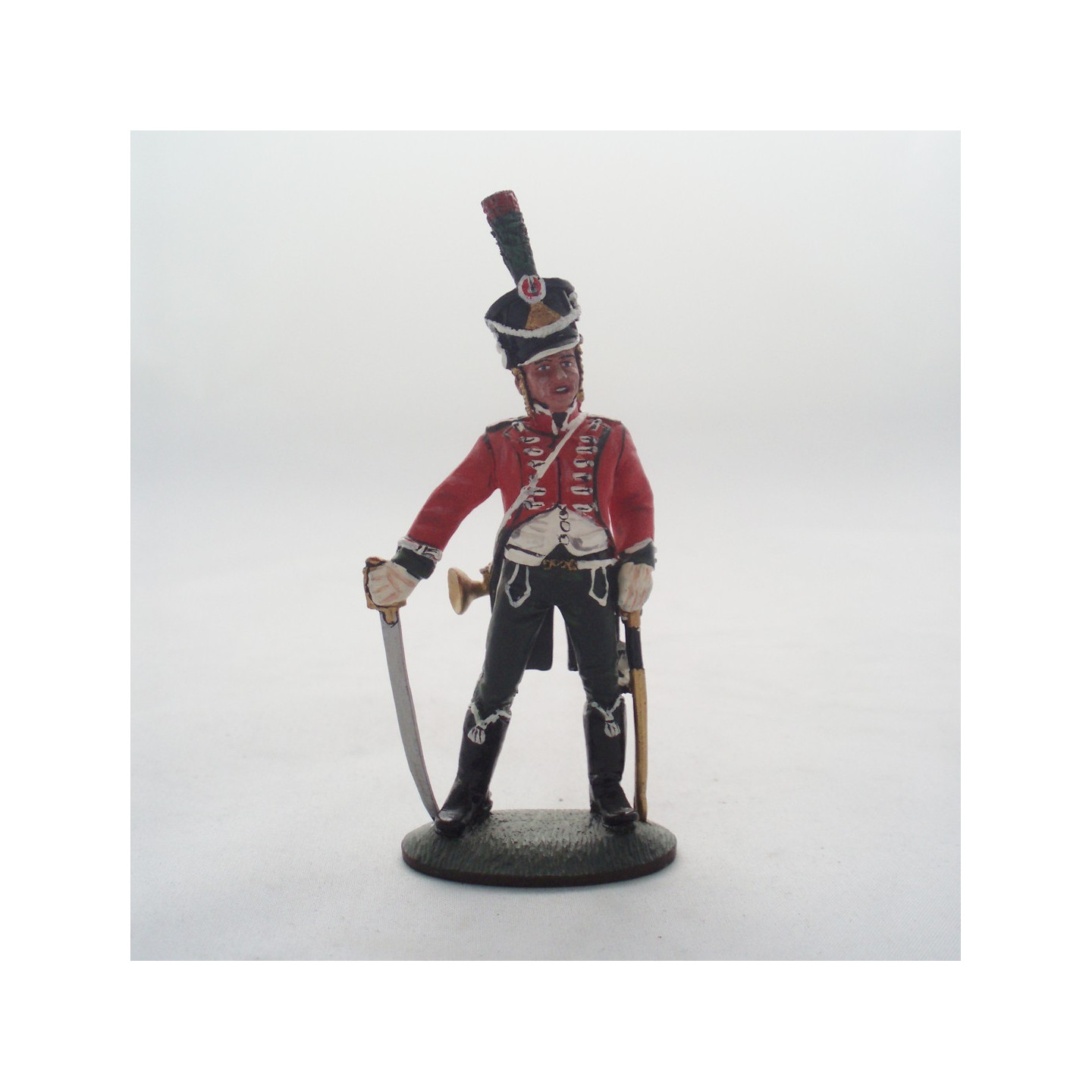
The red jacket, pale braiding and green trousers make this trumpeter stand out from ordinary French cavalry. Del Prado shows him on foot, allowing the clothing and instrument to be studied without a horse obscuring the lower body.
Translate the unit name with care
The retailer’s English title uses “11th Hunters,” a literal rendering of chasseurs. Retaining “11th Chasseurs” preserves the recognisable French military name. The subject is a trumpeter of 1810, and the standing figure should not be reclassified as ordinary infantry merely because the collection heading says foot soldiers. A cavalry musician could be depicted dismounted.
A musician is a military function
Signals had to be recognised within a moving, noisy body of men. The trumpeter gives that practical problem a visible representative. Compare him with a standard bearer: sound and a visible emblem performed different jobs, even when both could help hold a unit together. Avoid making the uniform into a universal rule that all musicians in all armies always wore reversed colours. The useful claim is the contrast shown by this specific model.
A comparison across manufacturers
K&C’s NA043 dragoon musician offers another French cavalry sound-and-signal subject, with a horse and a different uniform. Display them as separate studies rather than members of one regiment. Check the Del Prado horn, sabre, plume and fine braiding in a sale photograph. If an edition booklet is present, match its date and regiment before accepting the issue number. This release adds a distinct military role and a richly varied colour scheme without needing a large mounted set.