

Del Prado · Figure study
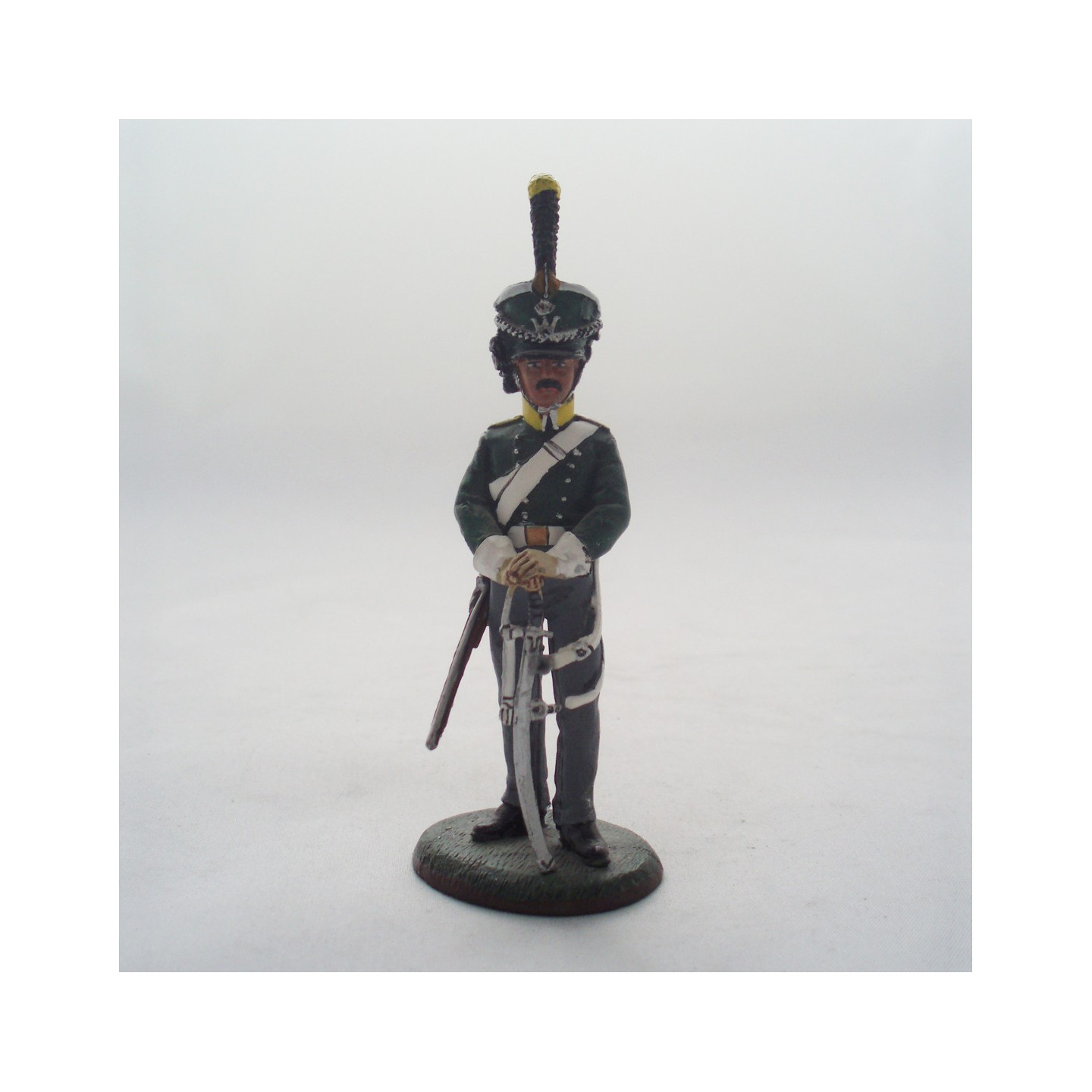
The green uniform and sabre identify a light-cavalry subject, but the date raises the most interesting question. In 1815, Belgian troops belonged to a political arrangement different from the independent Belgium of later history.
The national label needs a date
The Belgian government’s historical outline explains that the northern and southern Netherlands were joined in one state in 1815, with Belgian independence following in 1830. “Belgian” remains useful for the origin of this subject, but it should not imply an independent Belgian national army in the modern sense at Waterloo.
Coalition armies were not uniform national blocks
This subject can sit beside the King’s German Legion officer in a small display about the complexity of the armies opposing Napoleon. The connection is the wider coalition, not identical organisation or service history. Separate labels should explain each unit’s affiliation. The contrast makes a useful point that a shelf containing only British redcoats and French blue coats can conceal.
Use the details to keep the identity straight
The yellow collar, white belts and lowered sabre are especially useful when comparing a loose figure with the reference. Ask for a side view showing the weapon and scabbard, and inspect the shako ornament. A retailer may file the miniature under infantry because it is on foot, but the historical arm remains cavalry. The figure adds substance to an 1815 collection by linking a recognisable uniform with the changing political geography behind the familiar battle names.