

Del Prado · Figure study
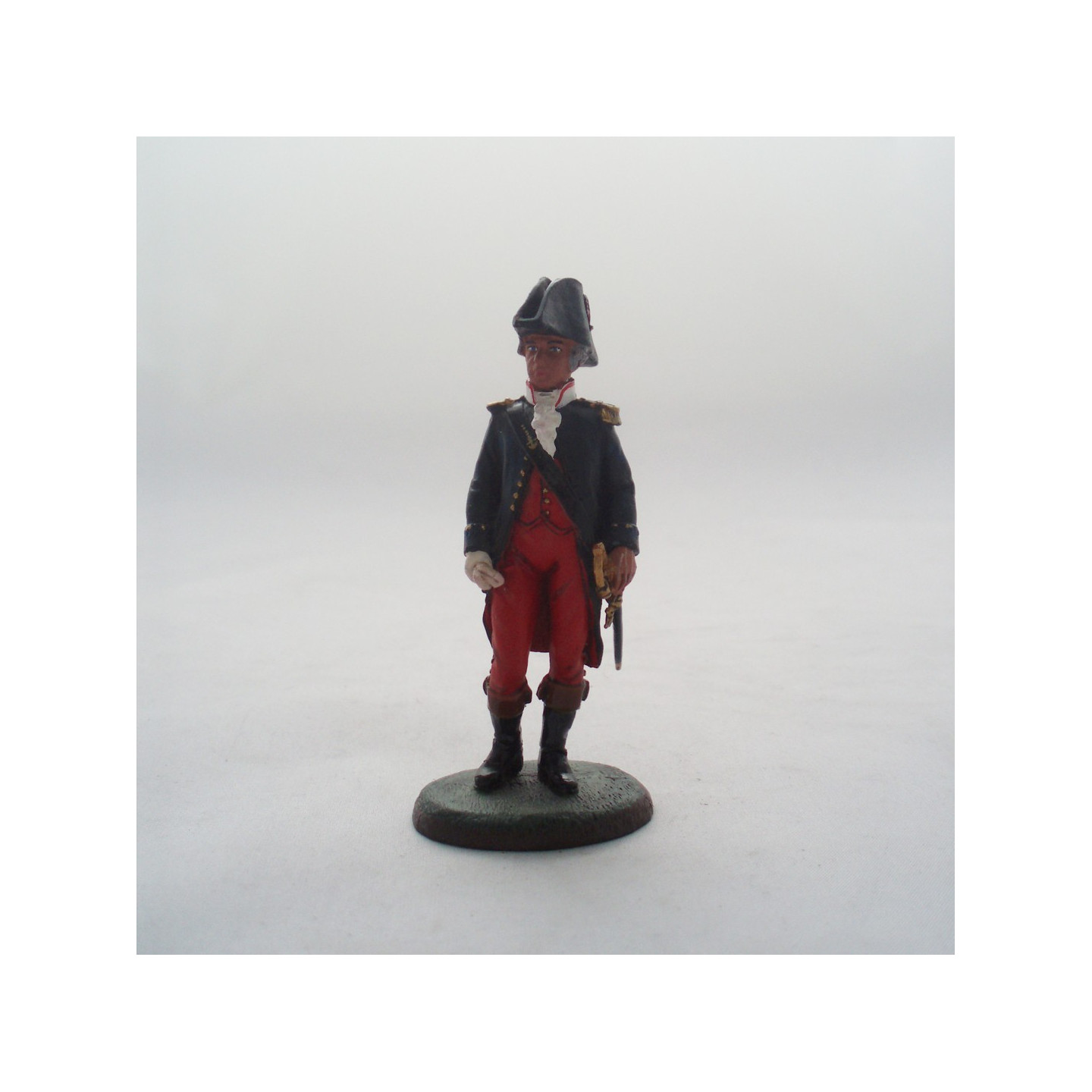
The dark blue coat, red waistcoat and trousers, and cocked hat give this naval officer a formal eighteenth-century appearance. He is a reminder that Del Prado’s Napoleonic collection also reaches into the revolutionary years that preceded Napoleon’s empire.
Keep the chronology honest
The reference retailer dates this naval-officer subject to 1790, while other edition labels may use nearby revolutionary dates. Napoleon did not become emperor until 1804. The figure can therefore belong in a broad Revolutionary and Napoleonic catalog without being described as an imperial officer at a later battle. Where the original booklet is missing, the broader period is more reliable than an unsupported exact year.
Naval service widens the catalog’s questions
Land figures usually lead readers toward formations, cavalry charges and artillery positions. A naval officer introduces command afloat, ports, crews and the movement of armies and supplies by sea. A small deck or quay setting can suggest that world without requiring a complete ship. The pose is better suited to a representative portrait than an invented moment during Trafalgar, which would also impose a later date.
A useful comparison across time
Beside the Canadian signals rating of 1943, this figure makes the difference between an officer’s formal presentation and a specialist’s working equipment immediately visible. Keep the periods separate and let the comparison concern role and clothing. Inspect the hat edges, shoulder ornaments, hands and sword fittings in a sale photograph. Del Prado’s translated collection headings should not override the subject’s actual period or turn every blue-coated naval officer into a famous historical personality.