

Del Prado · Figure study
The word vélite changes the reading of this miniature. Del Prado’s subject represents a young soldier within a system intended to develop future leaders, rather than simply another battle-hardened Old Guard grenadier.
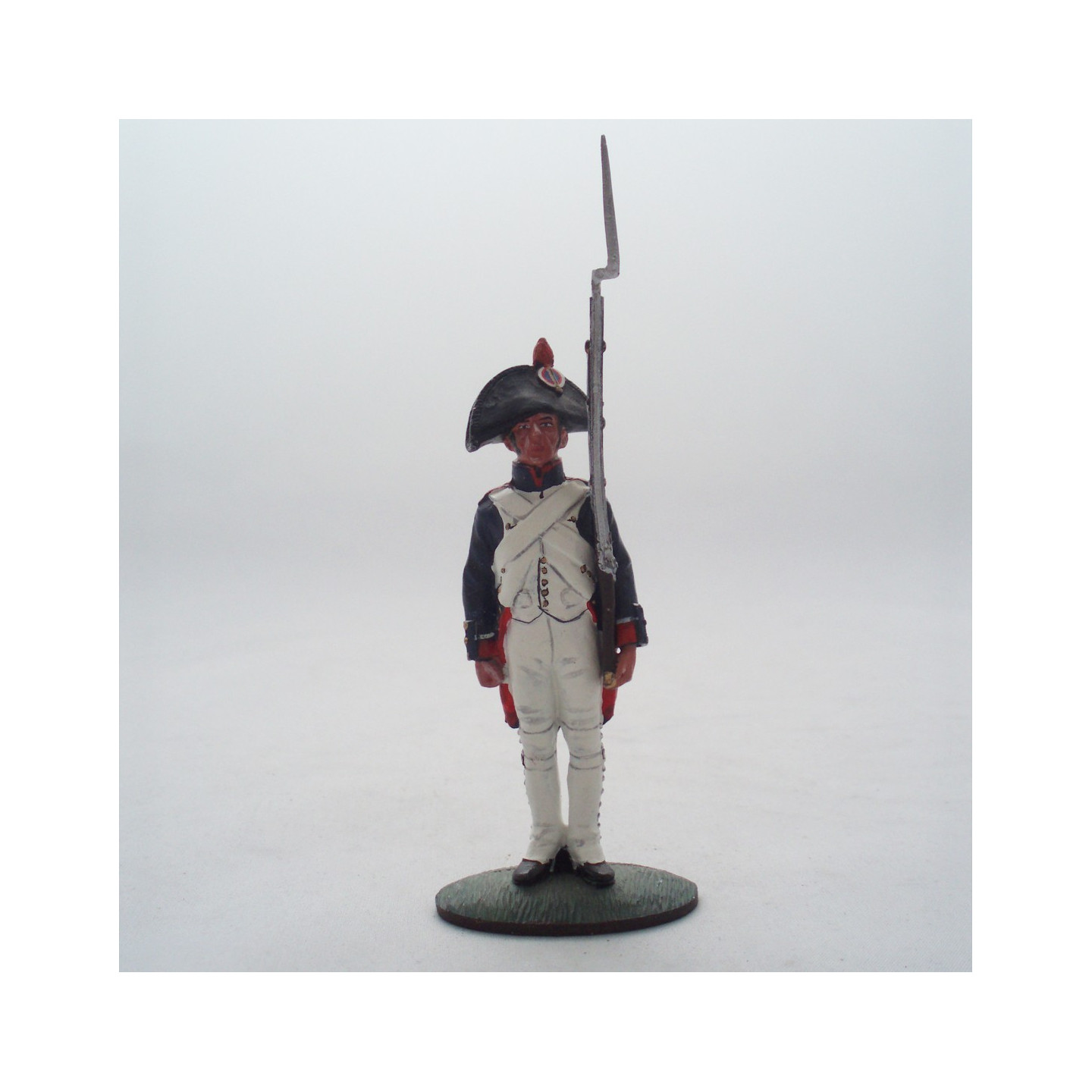
A documented addition to the Guard
The French defence ministry’s guide to Guard registers records the creation of two bodies of vélites in January 1804 and explains their purpose as young soldiers intended for future advancement. It also dates the Imperial Guard title to May 1804. The figure’s 1805 label sits just after those organisational changes.
A collection can explain recruitment as well as battle
Place the vélite beside a separately identified veteran Guard figure and use the pair to discuss how an elite institution reproduced itself. The point is not to claim that the two sculpts portray a specific instructor and pupil. It is to show that the Guard’s reputation depended on organisation, training and replacement as well as battlefield performance.
Why the exact name matters
Retail translations can turn vélite into unfamiliar spellings such as “vérite” or “vécite.” Searching those variants may locate listings, but the catalog should use the correct term. Check the hat, bayonet and hands, then compare the blue-and-white clothing with the reference. Keep the original booklet if available, since it helps resolve both the terminology and the edition number. This figure is an especially useful addition because one short label opens a less familiar part of the Imperial Guard’s history.