

Del Prado · Figure Study
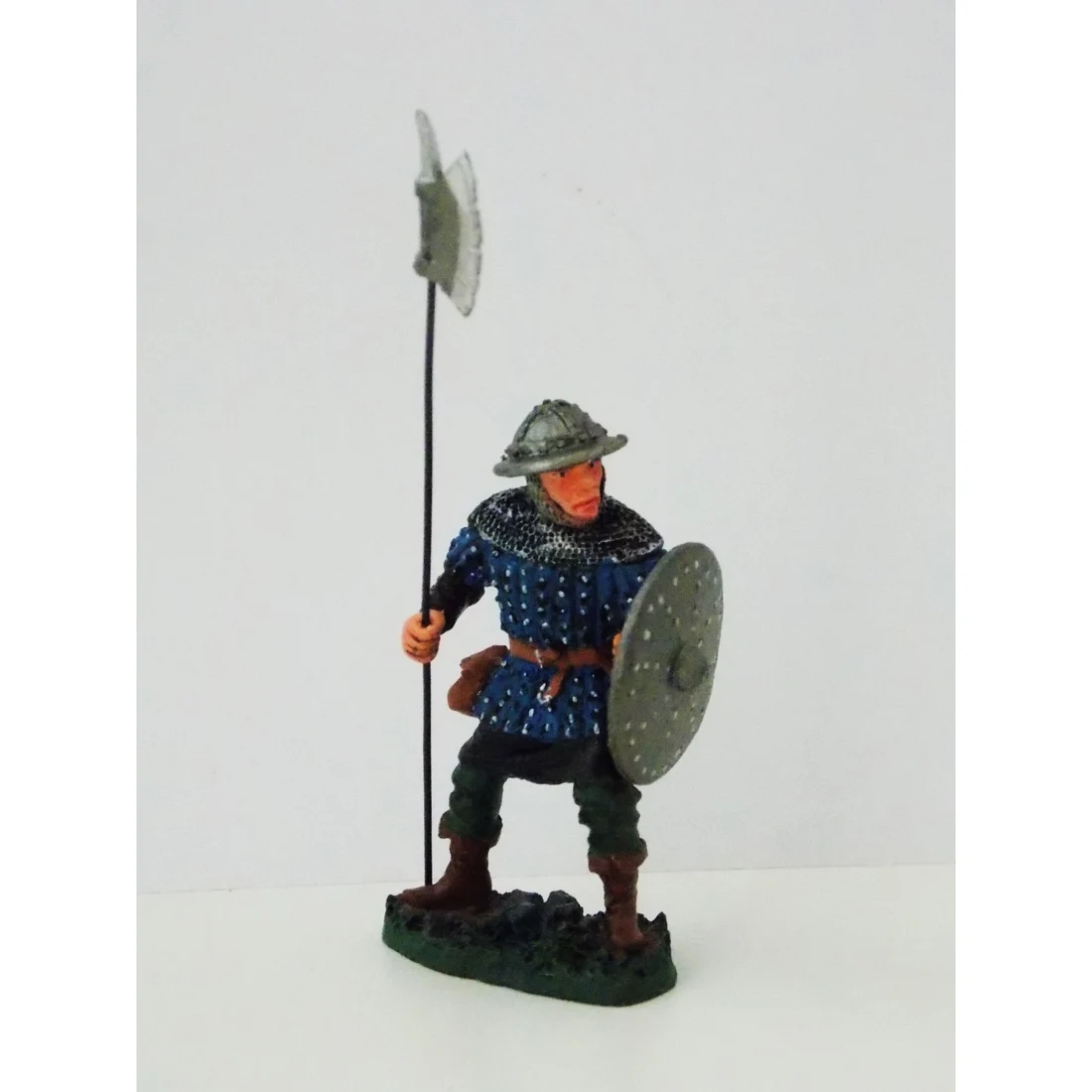
Del Prado’s Scottish infantryman carries a tall axe-headed polearm and a round shield. A brimmed metal helmet and blue, studded-looking coat distinguish him from mail-clad knights. The product reference places the subject at Stirling in 1297; the model is an unnamed infantry figure.
The historical setting
At Stirling Bridge on 11 September 1297, forces led by William Wallace and Andrew Moray defeated the English army. The crossing helped constrain the English deployment. Historic Environment Scotland notes that the battle’s bridge stood near the later stone bridge visible today. The setting is therefore as important to the story as the identity of the leaders.
Reading the reference photograph
The tall polearm and round shield give the figure a strong silhouette, and the blue coat adds variety to the medieval range. The weapon is visibly different from a plain spear, a useful distinction when comparing it with Del Prado’s Bannockburn spearman. The model’s appeal is as an individual infantry subject.
Identify this sculpt before trusting a listing title
The useful combination is the axe-headed polearm, the round shield, the brimmed helmet and the blue coat. A listing titled only “Scottish warrior” or “William Wallace soldier” supplies less information than the photograph. Start by matching the weapon and shield together, then compare the headgear and pose with the reference image. Colour alone is a weak identifier when a loose figure may have been repainted.
The supplier identifies the subject as a Scottish infantryman at Stirling in 1297. That is the product identification used here. It does not name the individual as Wallace or Moray, establish a personal biography, or prove that the sculpt reproduces one documented participant. If a seller supplies a different name, ask for the original label or base inscription supporting it.
What the long weapon changes when checking condition
The polearm is the figure’s most distinctive projecting component. Request a side-on photograph showing the full shaft and head, plus a close view of the hand that holds it. Look for a bend, an interrupted paint surface or a visible join. These are inspection points suggested by the shape, not a claim that this release has a known manufacturing fault.
Ask for the shield face, its edge and the reverse of the figure too. A frontal product image can identify the subject without showing the condition of a seller’s example. If a weapon or shield has been repaired, a sharp close-up is more useful than a distant photograph of the whole collection. Include an underside photograph when identification is uncertain; do not assume a number from a different Del Prado edition will identify this figure.
The battle label and the model answer different questions
Stirling gives the figure a historical setting, but the pose does not itself reconstruct the bridge fighting. The modern stone bridge is not the 1297 crossing. A collector using this figure in a battle display should therefore distinguish the miniature’s supplied subject from any chosen scenery. A photograph of the present bridge cannot establish the appearance of the medieval battlefield.
The tall, axe-headed weapon is also a reason to resist treating all Scottish infantry miniatures as interchangeable. Compare the shape of the head with a plain spear before assigning a role to the figure in a display. The photograph supports that visual distinction; it does not establish the exact construction, weight or historical accuracy of the represented weapon. Those would need separate evidence.
What this study can and cannot tell a buyer
This is a reference-photo study, not a report from handling a specimen. It can help separate this subject from other medieval figures and identify the photographs worth requesting. It cannot verify the material, dimensions, balance, paint finish or completeness of an individual listing. Those details should come from the actual object, its packaging or a reliable release record.
For a loose example, save the seller’s photographs and exact description alongside the purchase record. If the listing includes a magazine, box or plinth, establish whether those belong to the same issue instead of assuming every accessory shown is original. Compare the delivered cost of equivalent examples; a bare figure and a documented packaged example are different offers.
Reference: Del Prado product identification. This figure study is based on the product reference photograph, not a hands-on inspection.
Related figures: Norman Knight 1025 · Norwegian Viking Warrior 872.