

Del Prado · Iron Age · 2nd century BC
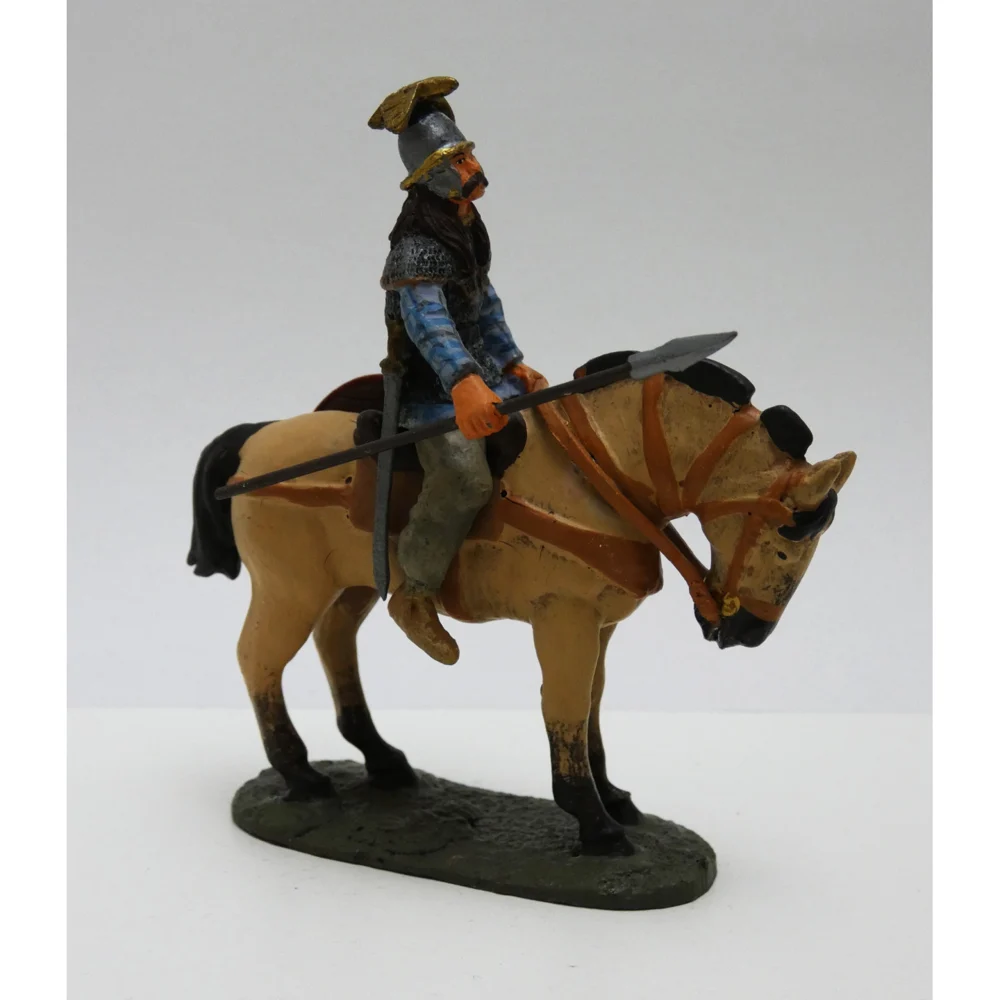
The crested helmet and patterned clothing make this rider vivid. His second-century BC setting is just as important: he belongs to a Celtic world earlier than Caesar’s conquest of Gaul.
- Maker
- Del Prado
- Subject
- Gallic Mounted Warrior, 2nd Century BC
- Setting
- Iron Age · 2nd century BC
- Type
- Painted metal mounted figure
The light-coloured horse provides a quiet background for a richly detailed rider. Mail covers the shoulders, a decorated helmet rises above the face, and blue patterned sleeves add colour beneath the armour. The long weapon crosses the saddle, extending the figure’s outline without the upright pose familiar from later lancers.
More than a rough warrior stereotype
Surviving Celtic metalwork complicates the image of an unrefined opponent to Rome. The Metropolitan Museum’s Celtic sword and scabbard displays carefully worked decoration and a human-shaped hilt. It is not the weapon carried by this model, but it demonstrates the skill that could be invested in military objects.
Mail also has an Iron Age history. The National Museum of Slovenia’s armour exhibition places its adoption by Celtic warriors and Roman armies near the beginning of a much longer European tradition. The textured shoulders on the miniature therefore invite a story about technology, not simply costume.
The date prevents another familiar shortcut. A second-century BC rider should not automatically become Vercingetorix or a participant in Caesar’s campaigns, which came later. The broad label “Gallic” does not establish a named tribe or individual either.
That distinction makes the figure more interesting rather than less. A modern miniature combines archaeological ideas, artistic choices and practical paintwork. Comparing it with a museum object allows the viewer to see where the evidence is strongest and where interpretation begins.
The horse also changes the figure’s presence. It lifts the decorated rider above the base and gives the long weapon room to extend. In a mixed cavalry display, this is a useful starting point before the regular regiments and standardised dress of later centuries.
Check the helmet crest and weapon ends in a sale photograph. These small projections carry much of the sculpt’s character. A close view of the shoulders should show the mail texture; thick repainting can flatten it into a plain surface.
The model offers a rewarding opening into ancient cavalry when its early date and interpretive nature remain visible.
References and further reading
- Metropolitan Museum of Art — Celtic sword and scabbard
- National Museum of Slovenia — Mail armour
- Planète Légendaire — figure reference
- Génie Miniature — Del Prado identification index
The photograph identifies the model; condition and packaging vary between examples offered for sale.