

Del Prado · French Army of Africa · 1939
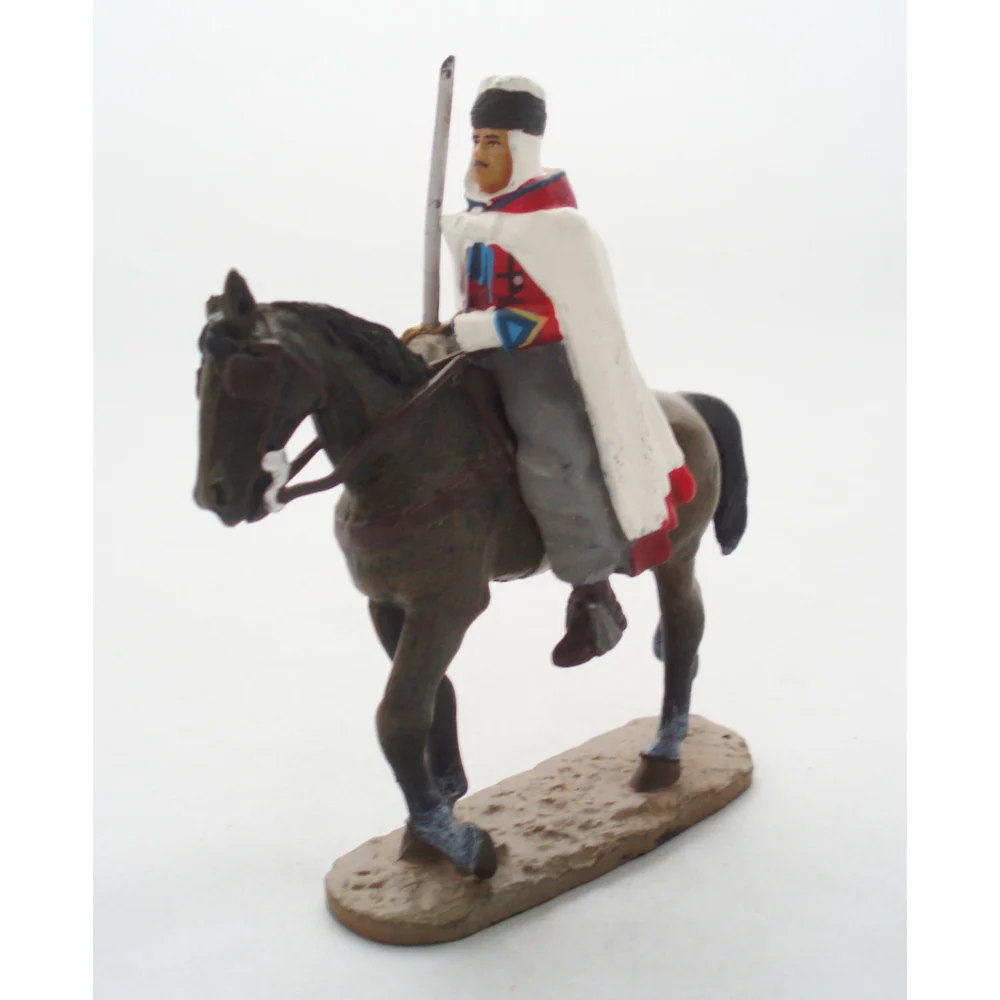
The sweeping pale cloak gives this rider an unusual presence. His setting is the French Army of Africa on the eve of the Second World War, not the desert war suggested by a much later German association.
- Maker
- Del Prado
- Subject
- Spahi of Oran, 1939
- Setting
- French Army of Africa · 1939
- Type
- Painted metal mounted figure
The dark horse sets off the rider’s light cloak and red accents. Much of the body is enclosed by the flowing garment, so the miniature reads first through broad areas of colour rather than the rows of buttons and braid found on many European cavalry uniforms.
What “Army of Africa” means here
Oran places the subject in Algeria. The French Army of Africa grew from France’s colonial presence in North Africa and included formations such as the spahis. It should not be confused with the German Afrika Korps, nor with every other category of French colonial troops.
The French Ministry of Defence’s historical material on mobilisation distinguishes these military structures. That institutional detail is useful because broad labels can conceal where soldiers came from and how they were organised.
The 1939 date places the figure at the opening of another European war in which France drew on its empire. The attractive uniform cannot tell that entire story. Colonial recruitment and service belonged to an unequal political system, and the rider’s appearance should not erase that setting.
Keeping that limit makes the entry more useful for identification. It prevents a generic title from accumulating details copied from a different spahi regiment simply because the clothing looks similar.
The cloak is the model’s central visual feature. From the side it separates the rider from the horse and gives the sculpt a sense of volume without a charging pose. A quiet grouping lets that shape remain visible; crowding it between raised swords diminishes the effect.
For a used example, request both sides. Pale garments show chips and touch-ups clearly in good light, while the dark horse can conceal repairs around the legs. The narrow upright equipment also deserves a close view rather than an assumption based on a distant photograph.
This figure brings the cavalry collection into 1939 while opening a distinct North African history. Its value lies in retaining that identity instead of folding it into a generic group of desert soldiers.
References and further reading
- French Ministry of Defence — Imperial forces and wartime mobilisation
- Service historique de la Défense — Spahi archival holdings
- Planète Légendaire — figure reference
- Génie Miniature — Del Prado identification index
The photograph identifies the model; condition and packaging vary between examples offered for sale.