

Del Prado · Figure study
The object held by this Canadian sailor is the key to the figure: a signal lamp. His cold-weather clothing and helmet frame a naval communications subject that is easy to misidentify in a small auction photograph.
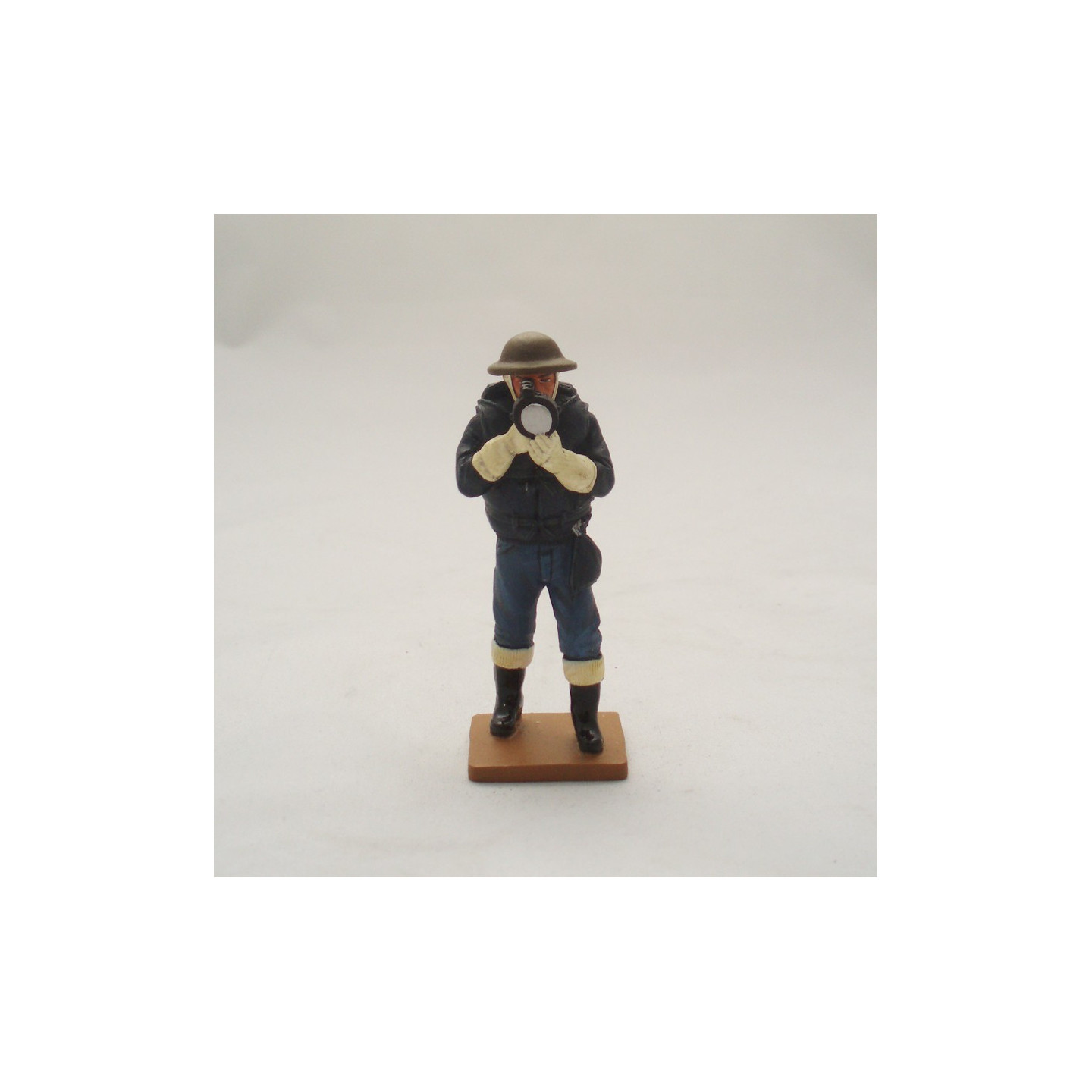
Light carried a message
The Canadian War Museum’s signal-lamp record explains the use of visual communications during the Battle of the Atlantic. Unlike radio signals, these messages could not be detected at long range in the same way. The lamp therefore represents a practical communications choice, not an obsolete prop placed beside modern equipment.
Canada’s naval role depended on coordination
The Royal Canadian Navy’s Battle of the Atlantic history describes convoy defence and the demands placed on Canadian ships and crews. Communications connected vessels moving together under difficult conditions. A signals rating gives that large operational story a human scale: one sailor, one instrument and a message that another ship must read.
A naval display without a whole ship
A short deck section or rail is enough to explain the stance, provided the lamp faces into open space. Keep the figure separate from army signalers while using the two roles for comparison. Inspect the lamp, hands, gloves and helmet rim before buying. If the instrument is damaged, the identity becomes much less clear. This release expands the catalog beyond land warfare and rewards the reader who looks closely at an object that initially resembles something more familiar.