

Del Prado · Iberian Peninsula · 2nd century BC
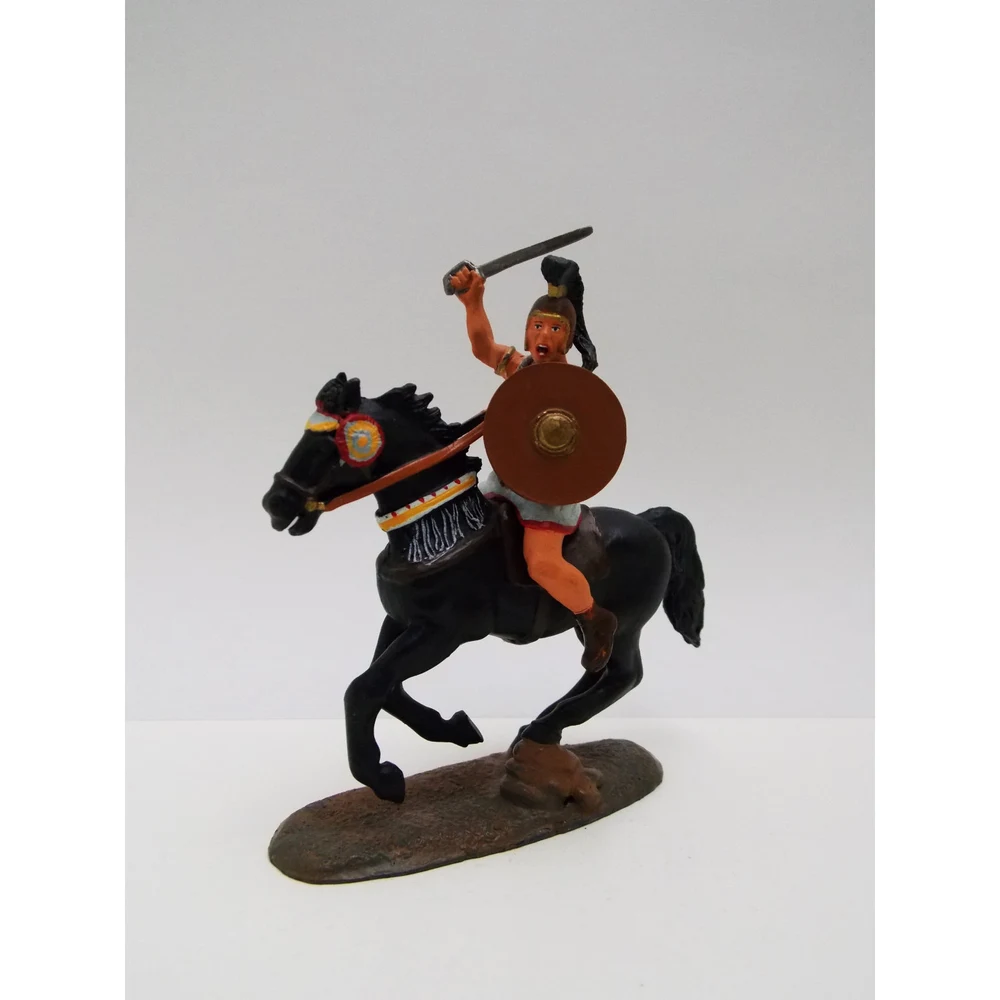
A raised weapon, round shield and dark moving horse make this Iberian rider an energetic Del Prado subject. Red and earth-toned clothing gives the figure a warmer palette than many later cavalry uniforms.
- Maker
- Del Prado
- Subject
- Iberian Horseman, 2nd Century BC
- Setting
- Iberian Peninsula · 2nd century BC
- Type
- Painted metal mounted figure
The shield forms a strong circular shape beside the rider. The raised arm adds height, while the horse’s extended motion carries the eye forward. The result is a compact action figure whose identity depends on several features together rather than on a single recognisable uniform.
Iberia was not one regiment
The second century BC belongs to the long period of Roman expansion across the Iberian Peninsula. “Iberian” covers a broad geographical and cultural subject; it does not name a single army with a standard uniform. Local peoples, alliances and military relationships varied.
The Museo Arqueológico Nacional’s collections include small bronze horsemen among Iberian votive figures. Such objects help establish the importance of the mounted image, but their interpretation and dating can be difficult. A modern painted figure should not be presented as a direct copy of one particular ancient object unless that connection is documented.
Check the moving outline
The raised weapon and arm are the most obvious fragile areas. Look at the shield’s attachment and the horse’s legs as well. A repaired arm can preserve the general idea of the pose while changing its angle enough to make the model difficult to match.
Request a photograph from behind. It can reveal the rider’s seating, the underside of the shield and repairs concealed in the standard side view. Ask for dimensions before mixing the figure closely with ancient horsemen from another range.
In a display, an Athenian horseman provides a geographical comparison, while the officer from Caesar’s army supplies a later Roman connection. Neither pairing should imply that the figures depict the same battle. A short timeline makes the relationship clear without requiring a crowded diorama.
This model is particularly effective near the front of a shelf, where the circular shield remains visible. Its value lies in introducing the varied mounted peoples of the ancient Mediterranean world rather than supplying a generic opponent for every Roman scene.
References and further reading
- Museo Arqueológico Nacional — Iberian and Roman collections guide
- Planète Légendaire — figure reference
- Génie Miniature — Del Prado identification index
The photograph identifies the model; condition and packaging vary between examples offered for sale.