

Del Prado · France · circa 1670
A broad hat, decorated outer garment and dark horse give this captain the recognisable character of a royal musketeer. Del Prado’s mounted pose points towards the real military role behind the literary image.
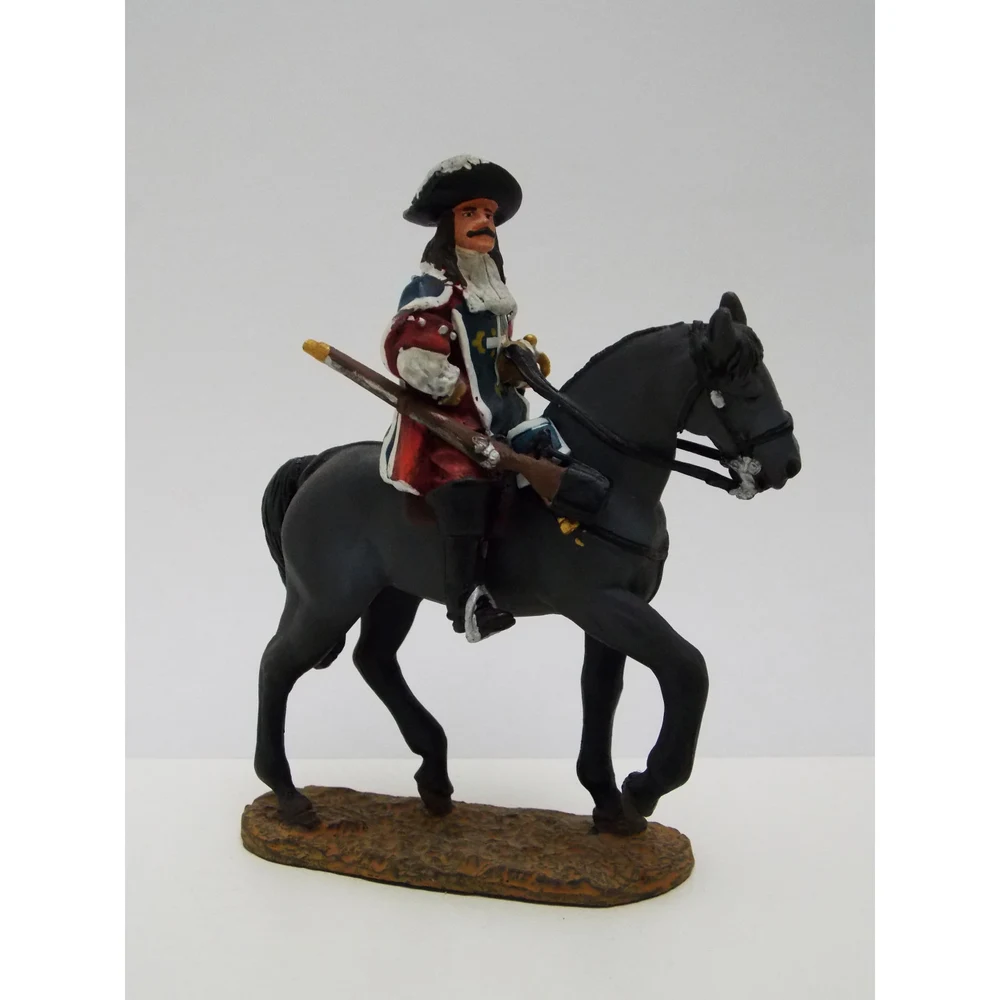
- Maker
- Del Prado
- Subject
- French Musketeers Captain, circa 1670
- Setting
- France · circa 1670
- Type
- Painted metal mounted figure
The officer’s upper clothing is the main point of interest, with contrasting decoration standing out against the darker horse. The rider is composed rather than lunging into a duel. That choice makes the figure useful for examining dress and rank, instead of relying entirely on a theatrical gesture.
The real musketeers rode
The French Musketeers of the Guard originated in 1622, when Louis XIII formed a separate unit from men of his light cavalry. They travelled on horseback but used the heavy musket on foot. Their duties could include royal escort, policing and dangerous work in wartime.
The Musée de l’Armée’s study distinguishes these soldiers from the immensely influential fictional image created by Alexandre Dumas. The famous tabard marked membership of the royal household. It was an institutional identity, not simply a costume worn by a handful of adventurers.
A different kind of cavalry comparison
The mounted pose makes a useful contrast with the earlier Swabian League lancer. Both are horsemen, but the clothing, weapons and intended dates open very different military worlds. Keep the chronological gap visible so that the comparison explains change rather than creating an accidental mixed-period scene.
Check the hat brim, reins and projecting weapon details on a loose example. The dark mount can conceal damage in an underexposed photograph. A side view with even lighting is better than a dramatic picture in which the horse merges into shadow.
The decorated outer garment deserves a close view too. Raised edges are vulnerable to rubbing, and small repairs may alter the pattern enough to matter in an identification study. Ask for the underside inscription or label if it survives.
Leave room around the horse’s head and the officer’s upper body. The restrained composition works well on its own, with a caption explaining that a musketeer could be a mounted soldier even though his main firearm was used on foot. That simple fact often changes how the familiar subject is understood.
References and further reading
- Musée de l’Armée — The real musketeers
- Planète Légendaire — figure reference
- Génie Miniature — Del Prado identification index
The photograph identifies the model; condition and packaging vary between examples offered for sale.