

Del Prado · Classical Greece · circa 450 BC
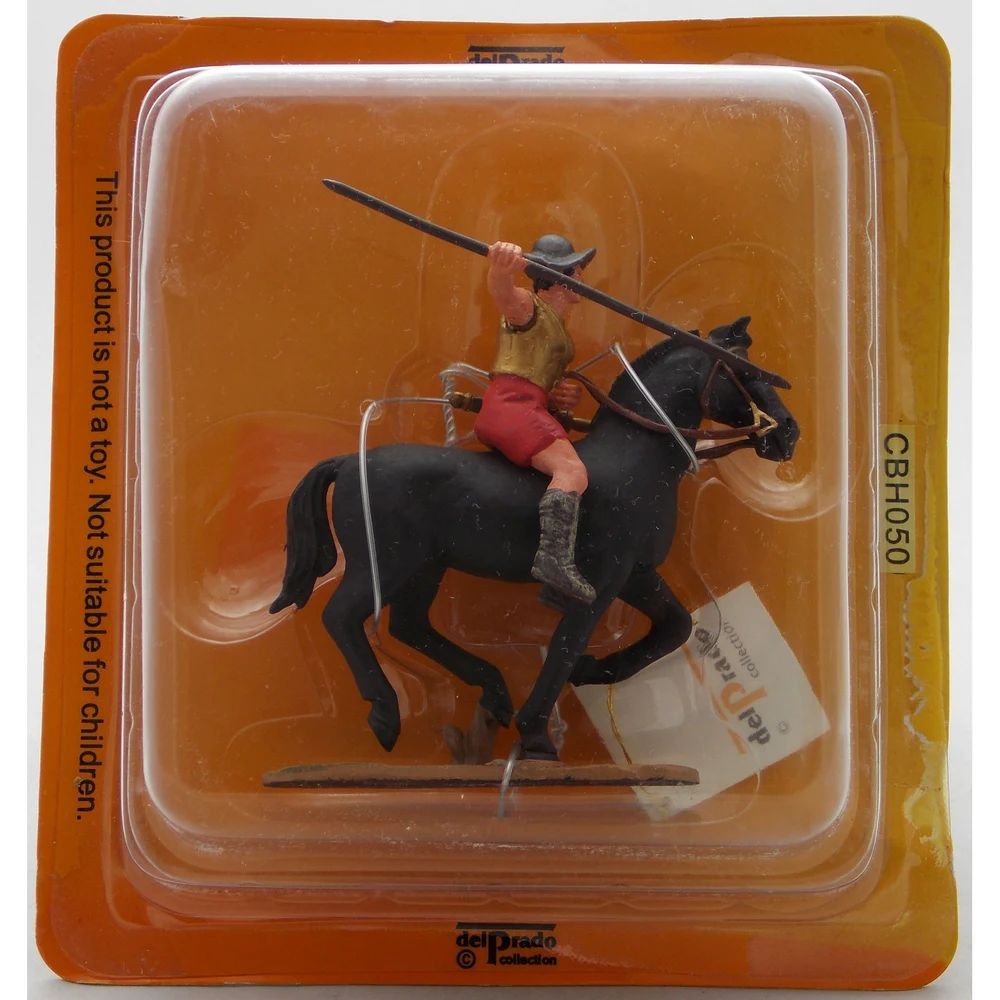
The dark horse, round shield and raised weapon give this Del Prado horseman a compact ancient silhouette. The reference photograph preserves the figure in its original-style blister, including a printed subject label.
- Maker
- Del Prado
- Subject
- Athenian Horseman, circa 450 BC
- Setting
- Classical Greece · circa 450 BC
- Type
- Painted metal mounted figure
The packaging frames the model tightly, so the side view is more informative than the small details of the face. The horse is dark, the rider’s clothing warmer in tone, and the round shield creates a clear shape beside the torso. Those large features are the safest points of comparison in a photograph taken through plastic.
Athens beyond the hoplite
Classical Greek warfare is often pictured as a line of heavily equipped infantry. A mounted Athenian opens a different subject: the horse, the resources needed to keep it and the people whose lives included riding. Horse ownership and care formed part of the social world behind cavalry.
The Metropolitan Museum’s study of horse care on Greek vases examines the visual evidence rather than treating ancient art as a simple equipment catalogue. That approach suits a miniature collection. Painted and sculpted representations provide clues, but their date, purpose and conventions need attention.
Packaging helps, and conceals
The blister can preserve a label and protect delicate projections, but reflections make small paint faults difficult to judge. Ask for close photographs of the actual package, including the weapon, horse’s legs and any loose material inside. A sealed appearance alone cannot prove that every small part is undamaged.
If the model is already loose, retain an image of the packaging with the collection record. Check the shield attachment and the raised arm, then compare the horse-and-rider pairing with the reference. These records become especially useful when several ancient figures have been mixed together.
Place the horseman beside the Iberian rider for a comparison of ancient mounted subjects. Their broad dates and geographical labels should stay visible. The group can illustrate different reconstructions without suggesting a shared unit, campaign or uniform standard.
A low plinth and uncluttered background let the round shield and raised weapon remain distinct. That simple arrangement gives a small figure enough space to prompt a larger conversation about horses in the ancient world.
References and further reading
- The Metropolitan Museum of Art — Horse Care Depicted on Greek Vases before 400 B.C.
- Planète Légendaire — figure reference
- Génie Miniature — Del Prado identification index
The photograph identifies the model; condition and packaging vary between examples offered for sale.