

Del Prado · North Africa · 1941
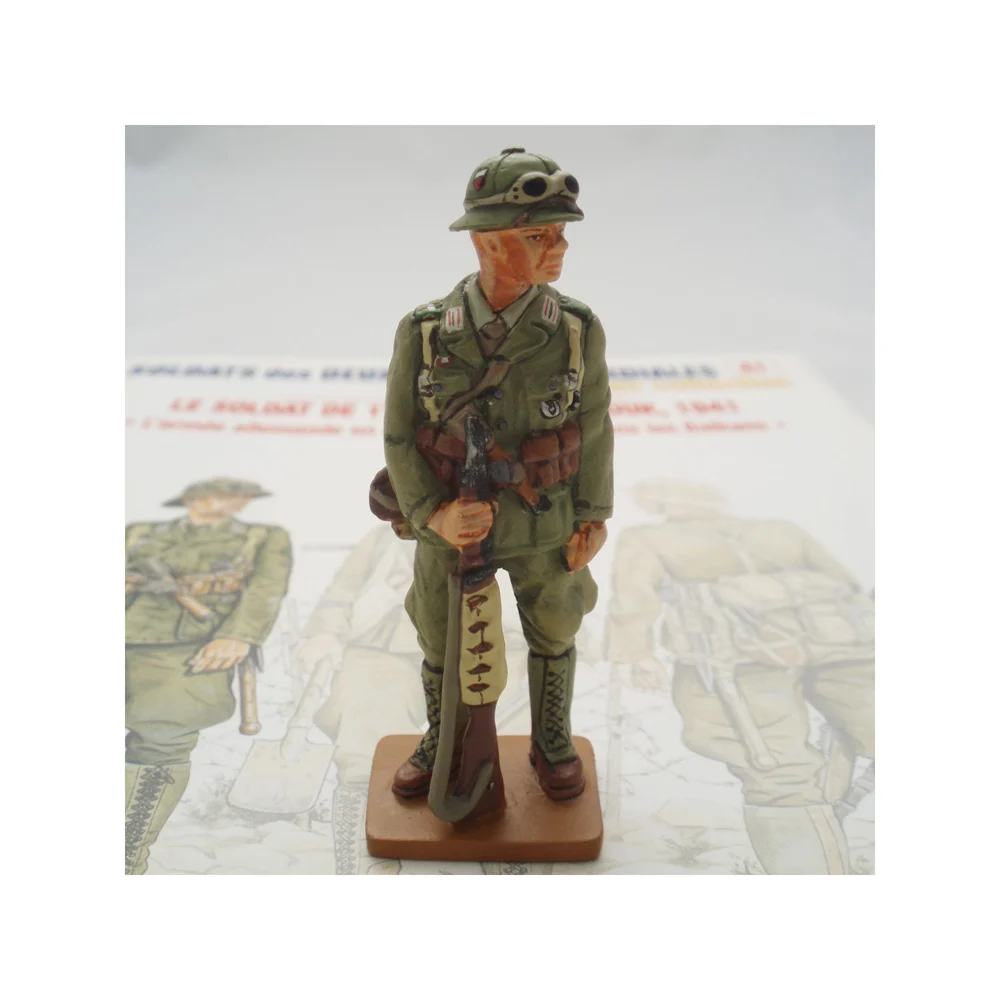
The pith helmet promises a desert campaign; the date supplies the more interesting story. This Del Prado infantryman belongs to the year when Tobruk held out, forcing the war in North Africa to revolve around a stubbornly defended port.
- Maker
- Del Prado
- Subject
- German Soldier, Tobruk 1941
- Setting
- North Africa · 1941
- Type
- Painted metal figure
Look past the goggles and tropical clothing and the figure becomes surprisingly workmanlike. The rifle is held upright, the equipment is close to the body, and there is none of the sweeping movement associated with a tank advance. It is a useful way into Tobruk: a battle remembered through commanders and armoured formations, but sustained by soldiers occupying positions, carrying supplies and waiting for the next attempt to break the perimeter.
A harbour changes the map
Tobruk mattered because an army in the desert could not live on manoeuvre alone. A usable port shortened the journey between ships and fighting troops. In 1941 the Axis advance left an Allied garrison holding Tobruk, with supplies arriving by sea. The siege lasted from April into December. Australian troops formed a major part of the defence, alongside British and other Allied forces; the garrison’s composition changed as the months passed. The Australian War Memorial’s account makes that long duration particularly clear.
That is the distinction worth carrying onto the display shelf. This is not a miniature of the German victory at Tobruk in June 1942. The 1941 label places the soldier outside a port that had resisted capture. A single year changes the whole interpretation of an otherwise familiar desert uniform.
The light helmet makes a strong visual counterpoint to the greener clothing. Goggles sit high on the helmet; the long rifle forms a second vertical line down the front. Those are better identification clues than the changing wording of second-hand listings, which may call the subject a German soldier, private or Afrika Korps infantryman.
What to look for in an example
Ask for a photograph that shows the complete rifle and the helmet from the side. The projecting barrel is more vulnerable than the compact torso, while wear along the helmet rim is easy to miss in an overhead photograph. Check the rectangular base as well: a repainted edge can look immaculate while concealing a knock.
This figure works especially well opposite an Allied Tobruk subject, with the date prominent between them. The comparison turns two individual uniforms into a story about a contested port, rather than an anonymous row of desert soldiers.
References and further reading
- Australian War Memorial — Siege of Tobruk
- Planète Légendaire — figure reference
- Génie Miniature — Del Prado identification index
The photograph identifies the model; condition and packaging vary between examples offered for sale.