

Del Prado · Second World War · German paratroops, 1942
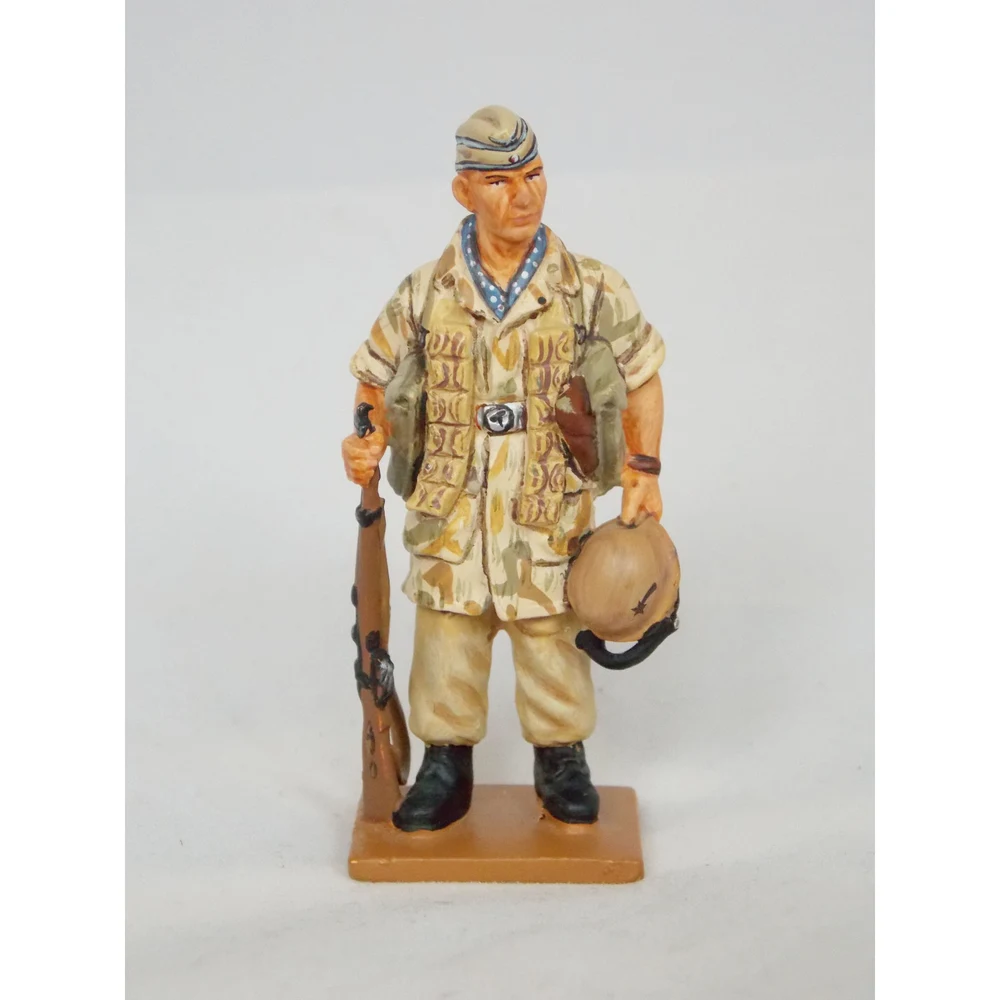
Light clothing, rolled sleeves and a helmet carried in the hand give this German paratrooper a relaxed standing outline. The 1942 subject is distinct from the darker-clothed late-war airborne figures already in the catalog.
- Maker
- Del Prado
- Subject
- German Paratrooper in Tropical Dress 1942
- Setting
- Second World War · German paratroops, 1942
- Type
- Painted metal figure
Airborne troops beyond the landing
German paratroops had already undertaken the major airborne assault on Crete in May 1941. Their identity as airborne soldiers did not mean that every later moment of service involved a parachute landing. A standing figure in light field clothing represents the soldier apart from the aircraft and jumping equipment.
The dealer names a German paratrooper, or Jäger, in 1942, while the Men at War identification list connects its airborne Jäger subject with Tunisia. That provides a North African setting beyond the clothing alone. It still does not identify an individual soldier or a particular action within the campaign.
Helmet in hand
The photo shows a soft cap, pale clothing with numerous dark equipment lines, rolled sleeves and tall boots. A long firearm is held at one side; a rounded helmet is carried at the other. The bare forearms and separate helmet give the upper body a more open outline than a fully equipped marching pose.
The carried helmet is especially useful when matching the sculpt. Compare its position relative to the leg and the angle of the weapon. Those features remain recognisable even when the uniform’s colour appears warmer or cooler in another photograph.
Checking the loose figure
Inspect the weapon’s upper end, both wrists and the connection between the helmet and hand. The helmet can look complete from the front while hiding damage behind its rim. Look for chipped paint around the cap, sleeves and raised equipment details.
Ask for a rear photograph if the listing shows only the strong front view. It can reveal equipment, seams and repairs that the arms conceal. Check the boots and rectangular base for stability as well.
A later German paratrooper makes a useful comparison in clothing and pose, provided both dates remain clear. Keep enough lateral space around this figure for the helmet and weapon to stand out. The subject does not need a parachute or aircraft model to communicate its identity; a precise label and unobstructed view of the actual equipment are enough.
References and further reading
- New Zealand Ministry for Culture and Heritage — The battle for Crete
- Partworks Collectables — Del Prado Men at War identification list
- Planète Légendaire — figure reference
- Génie Miniature — Del Prado identification index
The photograph identifies the model; condition and packaging vary between examples offered for sale.