

Del Prado · Figure study
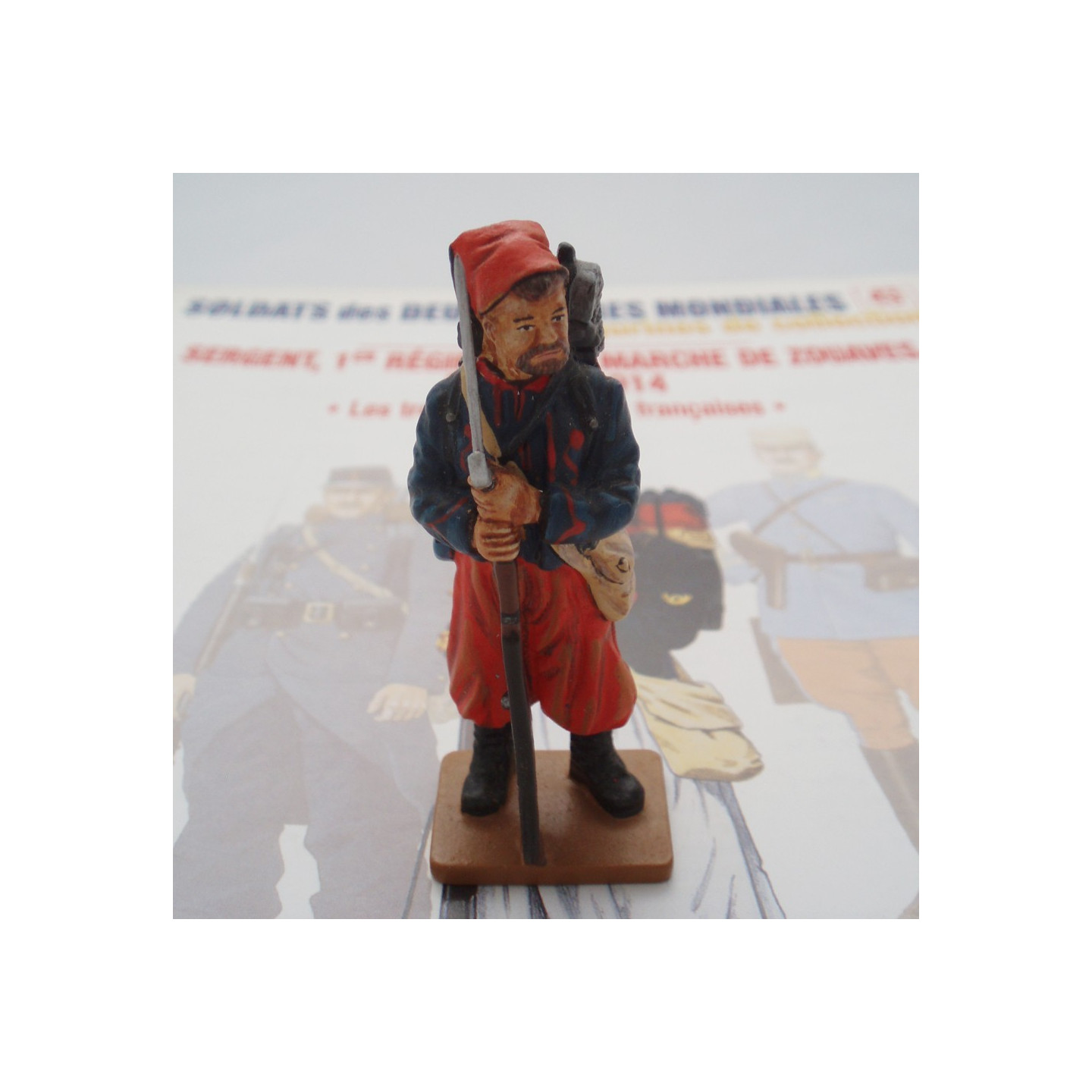
A red fez, voluminous trousers and a short decorated jacket make the Zouave one of Del Prado’s most distinctive 1914 subjects. The silhouette introduces the North African connections of the French Army as well as the changing appearance of soldiers in industrial war.
Start with the unit, not a costume label
The figure is identified as a Zouave in the reference record. That term belongs to a specific French military tradition connected with North Africa; it should not be applied to every soldier wearing a fez. The French defence ministry’s account of the army in 1914 includes Zouave formations within the army that mobilised for the European conflict.
Tradition met a changing battlefield
The Musée de l’Armée’s discussion of First World War weapons describes the devastating effect of machine guns and rapid-firing artillery on exposed troops. A 1914 uniform figure can lead into that story without suggesting that colour alone explains battlefield losses. Firepower, deployment, protection and supply all belong in the discussion.
Pair it with a later French infantryman
The Del Prado Verdun corporal of 1916 offers a particularly clear comparison in head protection and clothing. Keep each subject’s identity distinct and let the visible change support the caption. Inspect the fez, rifle and bayonet, and the lower trouser folds for chips. Avoid assigning a precise regiment or personal background from the clothing alone when the surviving retail record gives only the broader Zouave subject. The value here is a recognisable military tradition placed within the transformations of the war.