

Del Prado · English Civil War · 1642
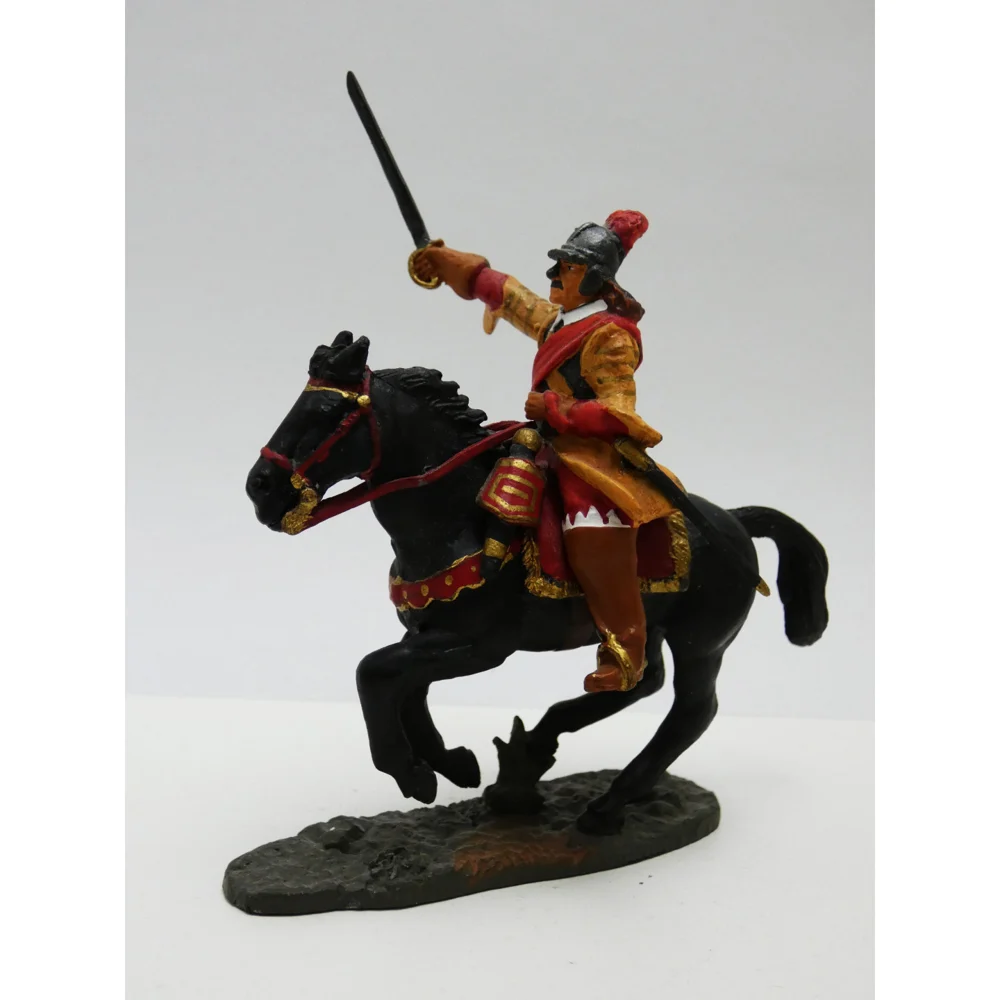
The raised blade and animated horse give Rupert the confidence of a cavalry commander. The date places him at the beginning of a war whose outcome was still far from decided.
- Maker
- Del Prado
- Subject
- Prince Rupert on Horseback, 1642
- Setting
- English Civil War · 1642
- Type
- Painted metal mounted figure
Armour, warm-coloured clothing and long hair give this mounted portrait a rich surface. The black horse lifts the front of the composition, while the sword carries its movement upward. It is a theatrical image of command, quite different from the more contained Parliamentarian horseman elsewhere in the range.
Before the later reputation
In 1642, the conflict between Charles I and Parliament became open war. Edgehill, fought on 23 October, did not deliver a decisive conclusion. The National Army Museum’s overview of the British Civil Wars places it at the start of a prolonged struggle that spread beyond a single English battlefield.
Rupert’s name would become closely associated with Royalist cavalry. The miniature’s date is therefore useful: it asks us to see the commander at the opening of that story, rather than reading every later defeat backward into his first campaign.
A mounted commander had to make his own men act together, recognise an opportunity and judge how far to pursue it. The sculpt shows the visible part—the raised sword and the impressive horse. The harder work of control is absent, as it is from many heroic military portraits.
A pair with a purpose
Placed opposite the Ironside, Rupert can introduce the two sides without turning dress into a simple political code. Armour and practical equipment were not exclusive to one allegiance. The identity comes from the subject, not merely from whether a rider wears a helmet or a broad hat.
The scene should also stay in its proper year. A label for Edgehill can introduce the opening campaign; a label claiming that the miniature depicts Rupert at Naseby would require a different evidential basis. A pose alone cannot supply that information.
The red and metallic areas benefit from a clear side view. Check the weapon, horse’s raised limbs and the detail around the head. On a portrait figure, heavy repainting of the face can remove more of the subject’s identity than a small chip in a less conspicuous area.
This model works best as an invitation into the early Civil War: a confident commander, a cavalry arm full of promise, and a conflict that neither side had yet learned how to end.
References and further reading
- National Army Museum — The British Civil Wars
- Planète Légendaire — figure reference
- Génie Miniature — Del Prado identification index
The photograph identifies the model; condition and packaging vary between examples offered for sale.