

Del Prado · Napoleonic Wars · France, 1809
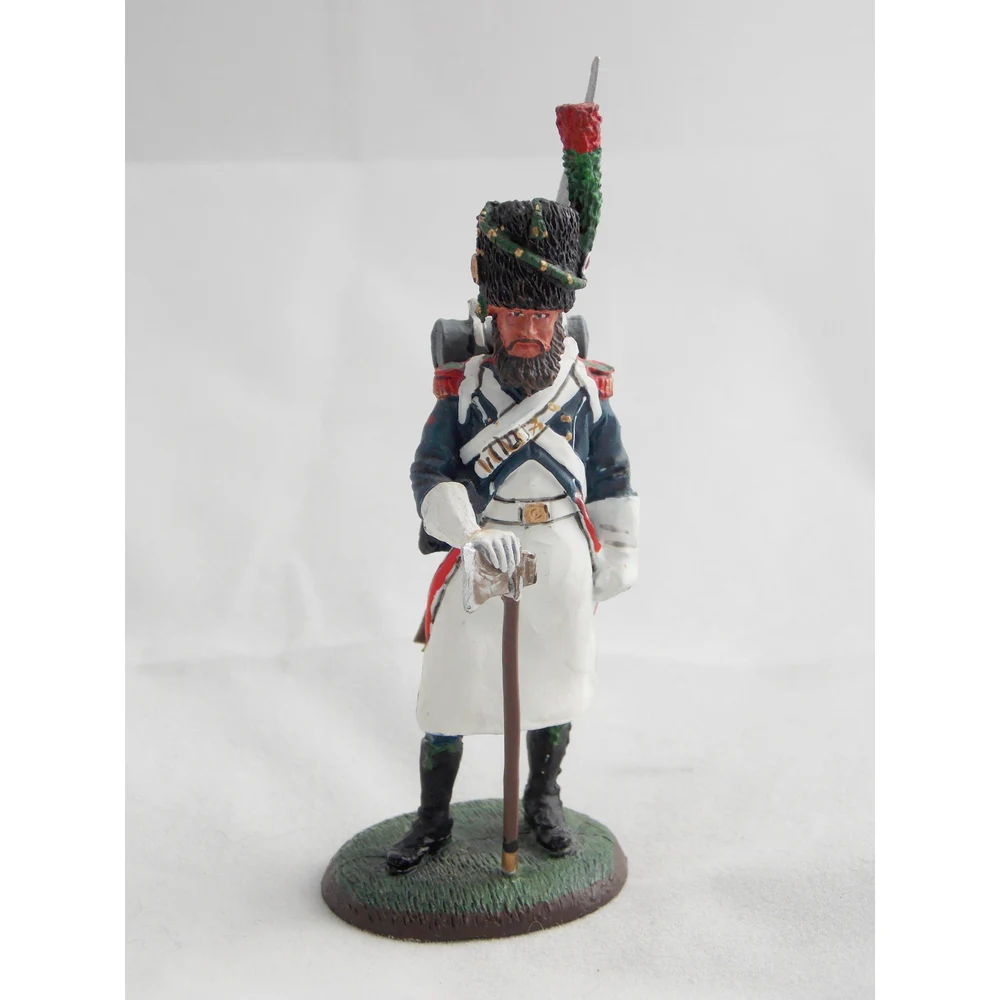
An apron and axe give this Young Guard sapper a working identity beneath an ornate military appearance. Del Prado combines practical equipment with tall headgear, making the figure an easy focal point in an infantry group.
- Maker
- Del Prado
- Subject
- Young Guard Sapper 1809
- Setting
- Napoleonic Wars · France, 1809
- Type
- Painted metal figure
A specialist among the infantry
Infantry pioneers and sappers are a useful reminder that foot soldiers had practical tasks beyond firing a musket. Tools could be needed to deal with obstacles and prepare the way for a unit. The model’s apron and axe make that working association visible before the viewer reads its label.
The Young Guard emerged in 1809 and developed rapidly in the later campaigns. Keep that title distinct from the better-known Old Guard. A shared imperial connection did not make all its units identical in organisation or service history.
Equipment worn across the front
The reference figure has tall textured headgear with a coloured plume, a beard, crossed straps and a broad pale apron. A long axe runs beside the shoulder. The light lower clothing and apron produce a large bright area underneath the dark coat and cap.
Here the apron is more than a patch of paint: its outline changes the shape of the torso and legs. Follow that edge when matching the sculpt. The axe, beard and apron together are stronger identification cues than a single plume colour.
Where wear will show
The apron’s pale surface makes chips and uneven repainting relatively easy to see. Examine the beard and headgear texture as well: heavy touch-ups can fill fine recesses. The tall plume needs enough clearance above the figure when it is boxed or placed in a cabinet.
A sapper works well near a bugler and standard bearer in a group devoted to infantry specialists. Keep the axe away from adjacent flagstaffs and muskets. A slightly turned position reveals the tool without hiding the apron, allowing both parts of the subject’s identity to remain visible.
An inventory photograph should include the front of the apron as well as the axe side. These record different aspects of the figure: the apron shows the broad painted surface, while the profile records the thin working tool. Keeping both views makes it easier to notice changes in condition after packing or moving the collection.
References and further reading
- Fondation Napoléon — The Imperial Guard as a fighting force
- Fondation Napoléon — The Napoleonic infantryman’s equipment
- Planète Légendaire — figure reference
- Génie Miniature — Del Prado identification index
The photograph identifies the model; condition and packaging vary between examples offered for sale.