

Del Prado · Figure study
The wing badge and officer’s clothing identify an aviator even without flying goggles or an aircraft. This standing Del Prado subject belongs to the American air service of the First World War, an organisation still within the Army.
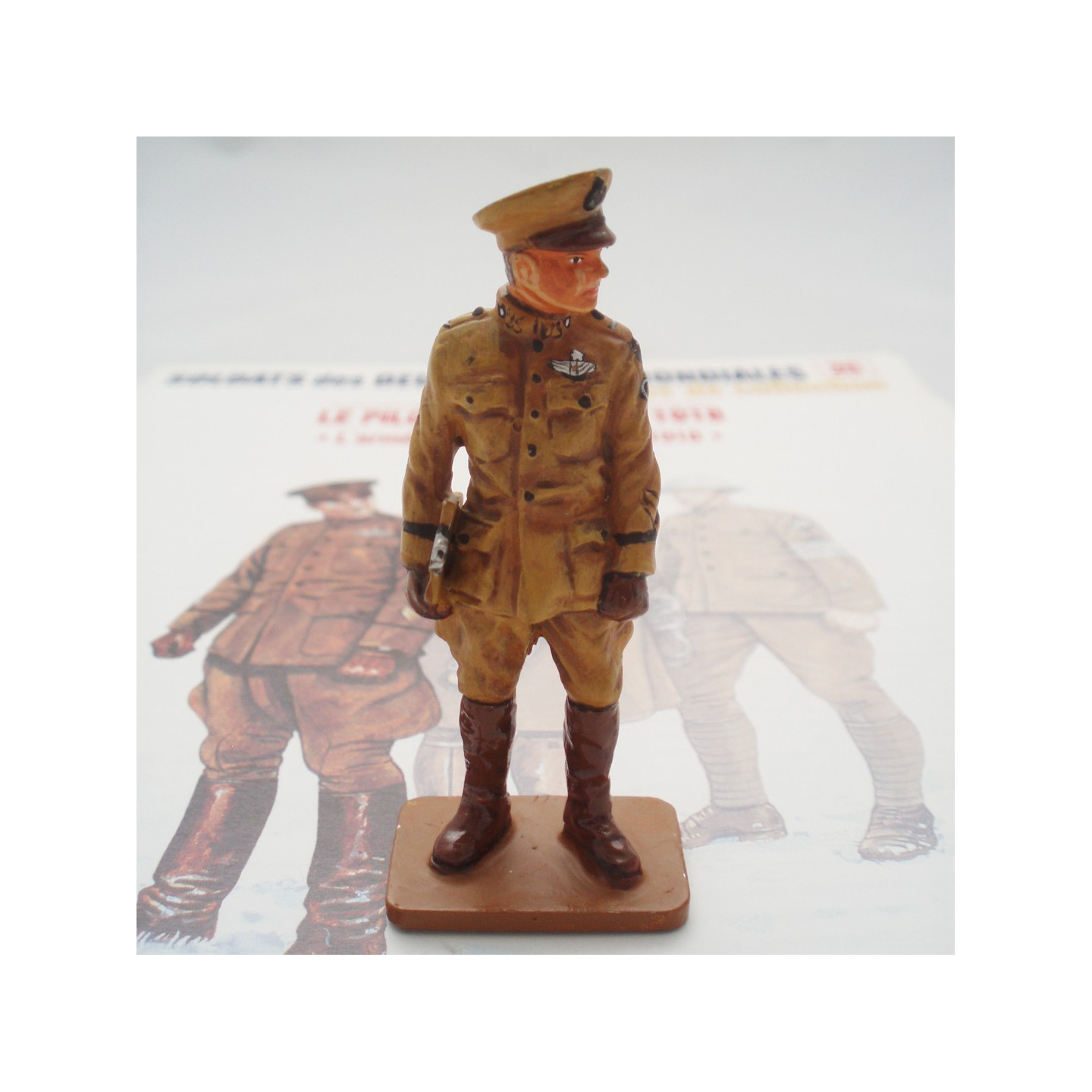
Use the period service name
The US Air Force’s institutional history describes the Air Service’s combat record in 1918 and the much later creation of an independent Air Force. Calling this figure “USAF 1918” would import a later organisation into the wrong period. “US military aviator” preserves the subject without that mistake.
The international machinery behind American flying
The National Museum of the US Air Force describes the transition of American Lafayette personnel into the 103rd Aero Squadron in February 1918. That example shows how American combat aviation drew on experience developed with the Allies. It supplies wider context rather than identifying this unnamed miniature as one of those particular pilots.
A useful aviation timeline
Place the figure beside the 1944 P-51 pilot to compare the formal service clothing with later flight equipment. Keep the dates and organisations explicit. The comparison explains change without requiring two large aircraft. Inspect the cap brim, face, chest badge and hands for damage or thick repainting. A figure with intact small insignia is easier to identify than one accompanied by an impressive but mismatched booklet. The subject’s value lies in showing American military aviation at an earlier stage of its development.