

Del Prado · Figure study
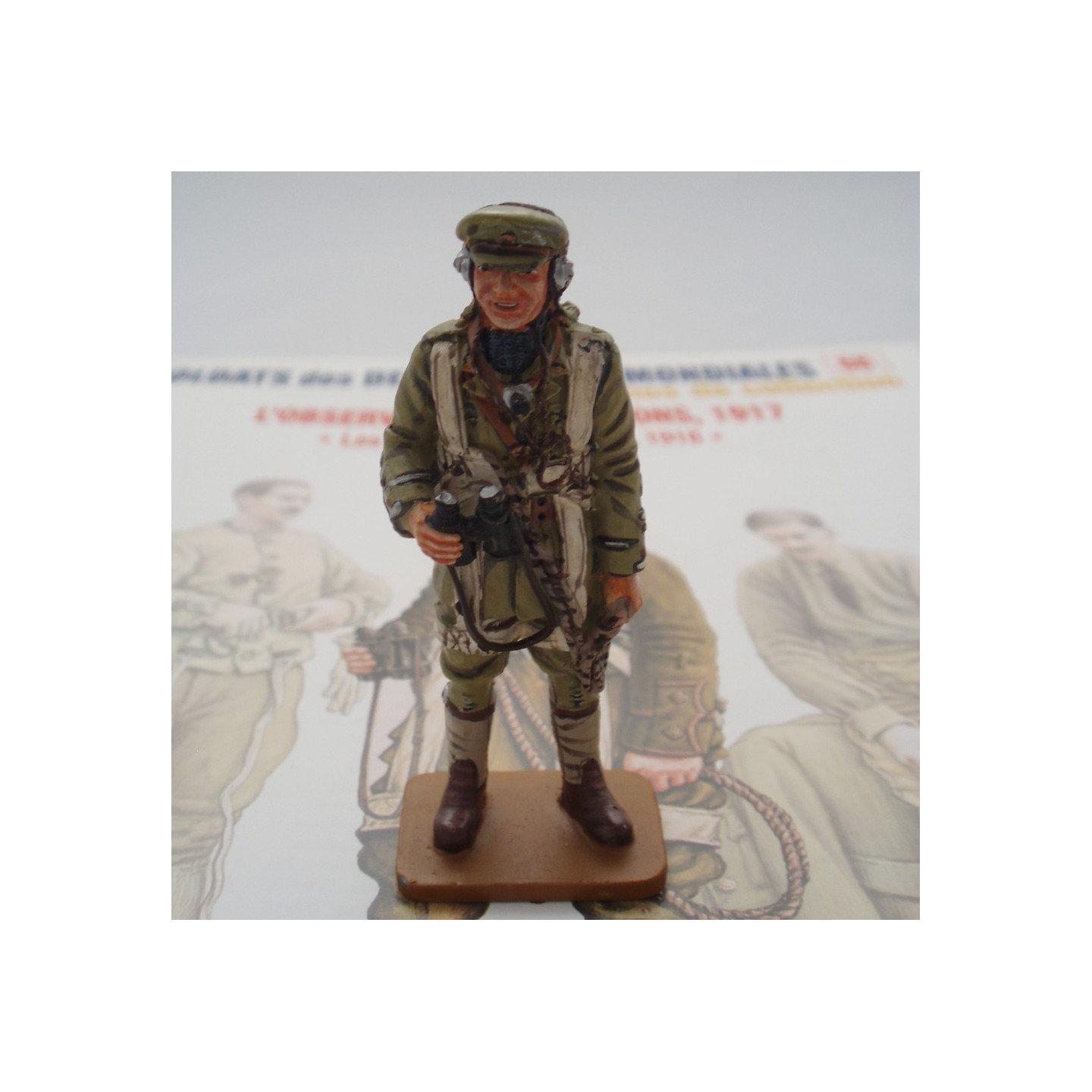
Harness straps and observation equipment make this figure an aviation subject without an aeroplane. The balloon observer represents one of the practical links between flight, reconnaissance and the guns on the ground.
First correct the service name
The retailer’s English title calls him an RAF observer in 1917. The RAF Museum dates the Royal Air Force’s formation to 1 April 1918, when the RFC and RNAS combined. For a British Army balloon observer in 1917, Royal Flying Corps is the appropriate period identification. This small correction prevents a familiar modern name from obscuring the organisation that actually existed.
Equipment makes the pose readable
The photographed figure wears a cap and puttees, with straps across the body and observation equipment at the chest and head. The harness gives the silhouette a working character. A close view is more informative than a distant display photograph because the smaller fittings distinguish him from an ordinary ground officer. Avoid identifying every strap or fitting beyond what the image clearly shows.
Display the connection to the battery
A small observation-themed group can pair him with a map reader or an artillery crew on separate labelled bases. There is no need to build an enormous balloon to explain the role. Keep the figure’s service and year prominent, and inspect the binoculars, hands and projecting equipment when buying. A listing that repeats “RAF 1917” may still contain the right miniature, but the collection record should preserve the corrected historical identification.