

Del Prado · Figure study
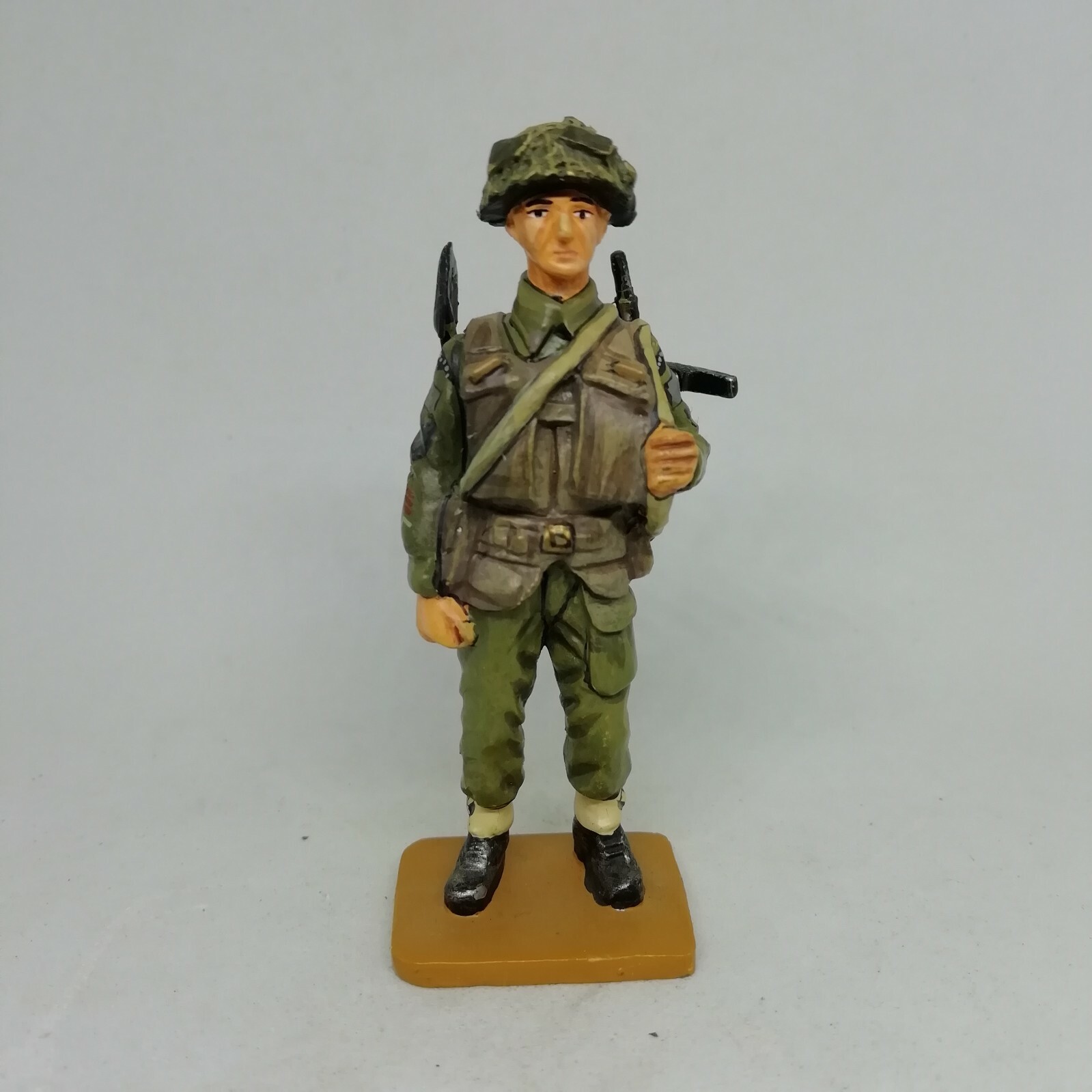
The useful detail in this figure is the load. A netted helmet, crossed straps and bulky pouches turn a standing pose into a study of an infantryman carrying his equipment ashore. Del Prado identifies the subject as a sergeant of the Royal Winnipeg Rifles in 1944.
Read the figure before the label
The saved photograph shows the weapon carried over a shoulder, one hand holding the strap, pale gaiters above dark boots and a plain ochre base. The body is almost frontal; the face and uneven arrangement of the equipment keep it from looking like a parade figure. These are better identification clues than an auction title that says only “Canadian soldier.”
The photograph does not show the underside of the base. Ask for that view when matching an issue number or buying a loose example. This subject is also advertised as number 049, but a number on its own is not a substitute for the regiment, year and matching pose.
Juno was several different fights
The Royal Winnipeg Rifles were part of the Canadian force landing on 6 June 1944. Veterans Affairs Canada’s Normandy account places them in the assault on the Mike sector of Juno Beach. It also describes how the effectiveness of supporting fire varied across the landing front. There was no single experience shared by every company coming ashore.
That distinction matters in a display. The miniature represents a regimental subject, not a documented photograph of a particular sergeant at a precise minute. A beach scene, a move through a coastal village or an infantry group further inland can all introduce the Normandy setting, provided the accompanying label makes clear what is interpretation.
Three photographs to request from a seller
- Shoulder and weapon: check the projecting weapon and its connection to the body; a straight-on photograph can conceal damage behind the head.
- Helmet and hands: look for chips on the rim and knuckles. Separate paint wear from deliberately sculpted texture in the helmet covering.
- Base and packaging: match the underside inscription to the figure. If a booklet is included, ask for its cover rather than assuming any Canadian issue belongs with it.
Where it earns its place
Use the sergeant to give a Normandy collection a specifically Canadian identity. Place him beside figures with compatible proportions and compare head size and equipment bulk, not just advertised scale. A small nameplate reading “Royal Winnipeg Rifles, Normandy, 1944” explains more than adding another generic beach obstacle.
The King & Country D-Day catalog provides a separate manufacturer’s view of the campaign. Comparing the two ranges is useful, but their figures should not automatically be treated as identical in size or finish.