

Del Prado · Figure study · NC007 reference
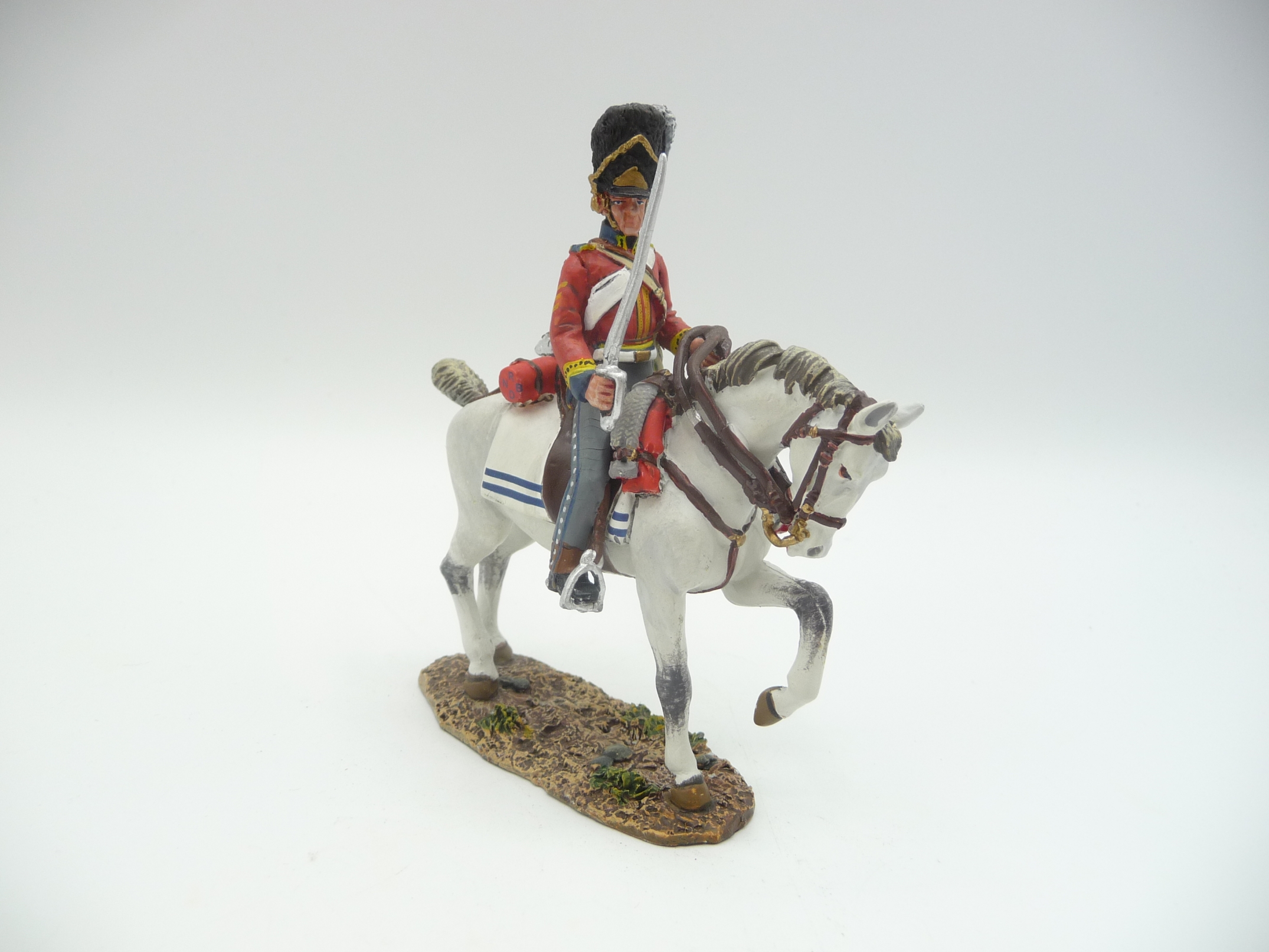
The eagle made Charles Ewart famous, but it is absent from this miniature. Del Prado presents the Scots Greys sergeant mounted, sword raised, before a trophy has turned a cavalryman into a regimental legend.
A cavalry portrait with room around the sword
The reference photograph shows a red-coated rider with white crossbelts, a tall black bearskin and grey trousers on a pale grey horse. The near foreleg is raised; the horse lowers its head while the rider holds his blade almost vertically beside his face. Blue stripes on the light saddlecloth and the red roll behind the rider add useful recognition marks.
This is a controlled, readable pose. The sword, head and horse’s raised leg form three separate points of attention. From the side, the reins and saddle equipment become much clearer. A front-only auction photograph can make the model look narrower and less detailed than it is.
What Ewart actually captured
An eagle was a regimental emblem, so its loss carried significance beyond the metal object itself. For a display label, retain the number 45: the eagle of the 105th Regiment, also captured at Waterloo, belongs to a different episode. Ewart’s name should not become a catch-all caption for every British cavalry trophy.
One subject, several catalog numbers
LastDodo’s Cavalry of the Napoleonic Wars index uses NC007 for Ewart. The photographed Figurenschnapp listing calls its example number 021. These are reference labels from different records, not proof of different sculpts. Match the rider, horse, equipment and base inscription before deciding that a number difference means you have found a variant.
Inspect the parts that project
- Sword: compare the blade from both sides and look closely at the hand and hilt for repairs.
- Horse: inspect the raised foreleg, ears, tail and the hooves attached to the base. Check that the base sits flat.
- Tack: follow the reins from the rider’s hand to the bridle; dark paint can conceal a break or a glued joint.
The reference model has no captured standard. Do not assume a loose example is incomplete merely because the historical Ewart is associated with an eagle. For a small Waterloo grouping, angle him toward the action and keep the sword’s outline clear of a tall backdrop.