

Del Prado · Figure study
The feather bonnet, tartan and bagpipes make this one of the most elaborate silhouettes in the Del Prado First World War group. It is a musician’s portrait, with the instrument and clothing carrying a story different from that of a rifleman.
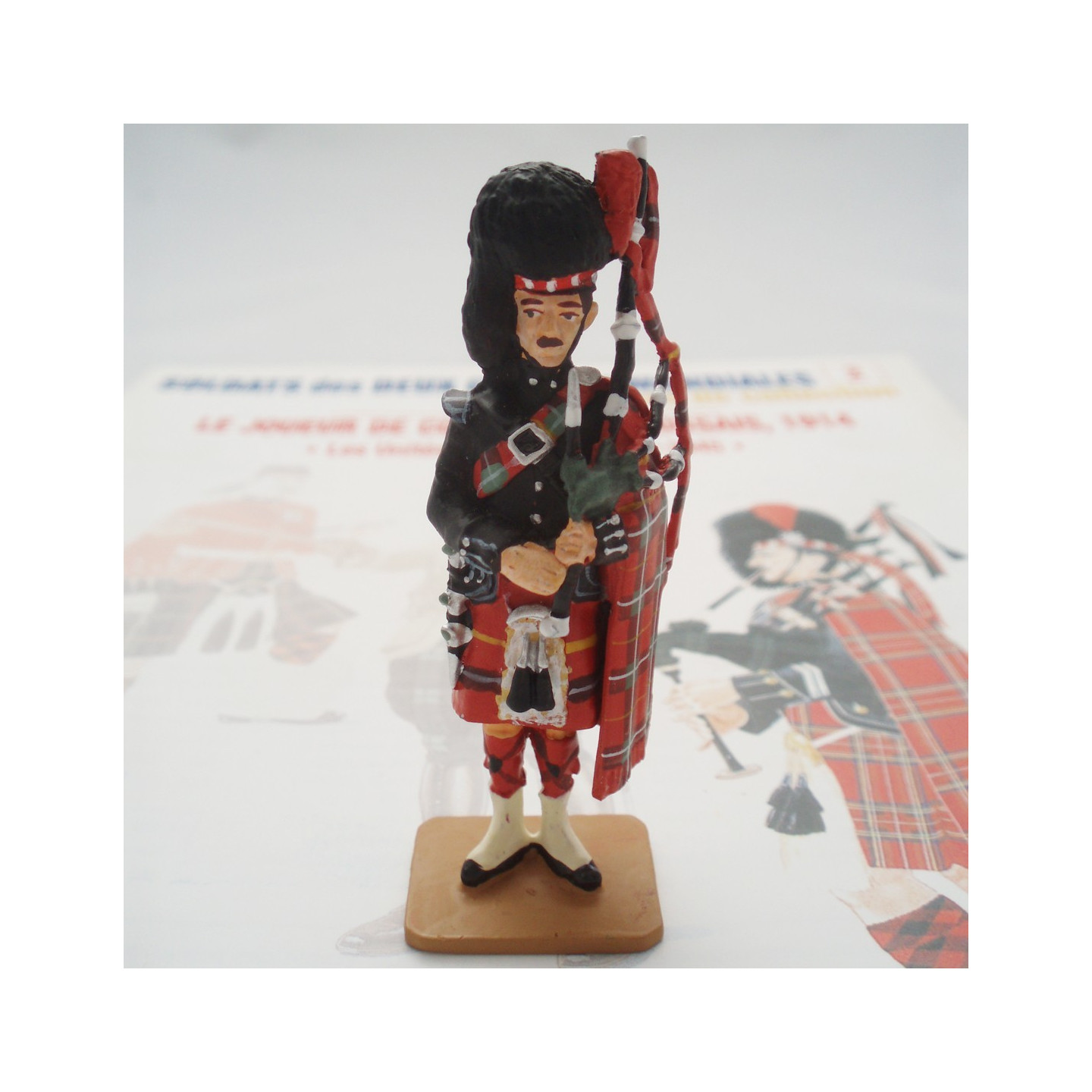
The instrument creates its own architecture
The pipe drones rise above the shoulder while the bag sits beneath the arm and the hands work lower down. The figure’s red tartan and dark jacket produce strong blocks of colour, with the feather bonnet adding height. A three-quarter view is especially useful because it separates the pipes from the headgear. Straight-on lighting can merge those dark elements into one mass.
The musician’s place in a military collection
Music helps express collective identity and mark movement, ceremony and memory. A piper therefore contributes a military function even when no weapon is held. The National Army Museum’s 71st history includes the earlier regimental memory of a piper at Vimeiro, illustrating the longevity of such associations. That earlier example is a comparison in tradition, not the event represented by this 1914 miniature.
Display and completeness go together
Give the pipes clearance above and behind the figure. A nearby infantryman can establish the difference in role without crowding the instrument. Ask for photographs of every visible drone, the mouthpiece and both hands before buying; a missing pipe can be hidden against the bonnet. The figure rewards close inspection of fabric and equipment, and works particularly well as a break between rows of otherwise similar armed infantry.