

Del Prado · Saxony · 1806
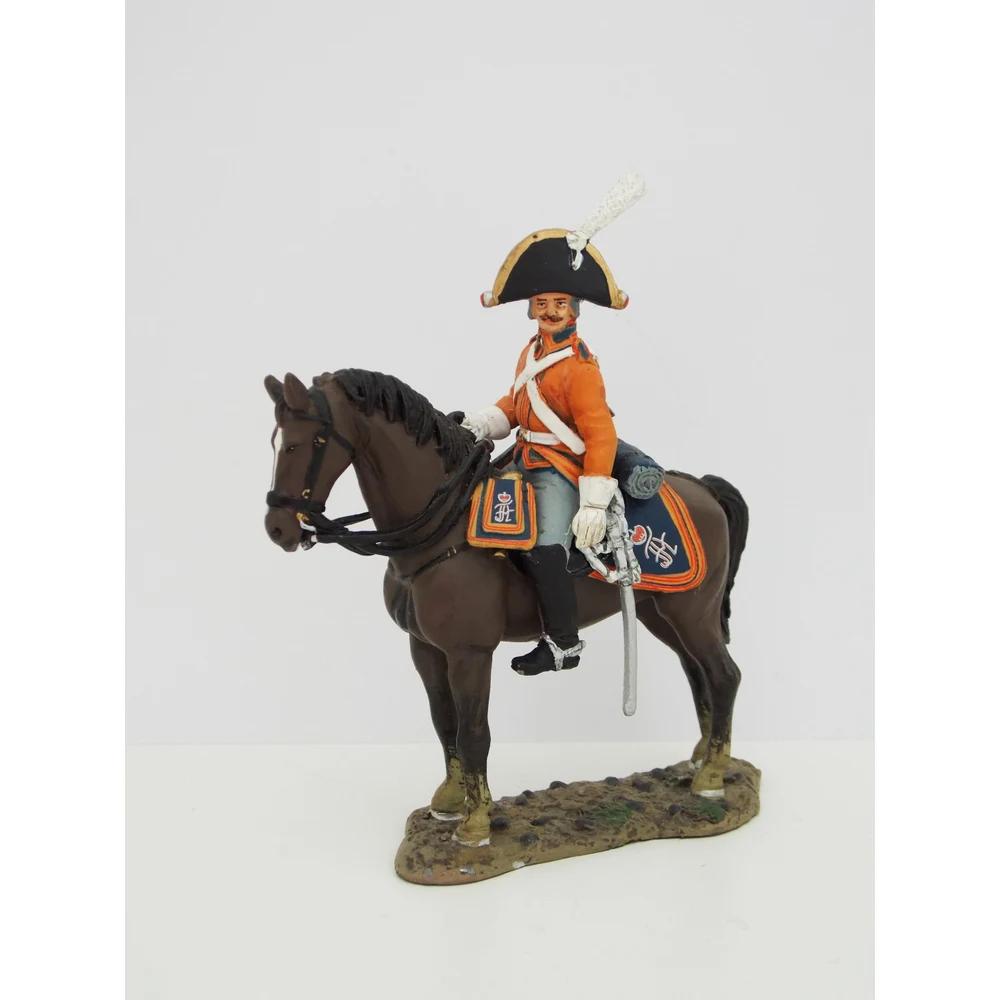
The pale yellow coat and broad black bicorne give this Saxon trooper an appearance far removed from the later crested-helmet stereotype. The model’s 1806 date is essential to understanding what Del Prado has represented.
- Maker
- Del Prado
- Subject
- Saxon Garde du Corps Trooper, 1806
- Setting
- Saxony · 1806
- Type
- Painted metal mounted figure
The rider sits on a dark horse with a blue saddle covering edged in a warm contrasting colour. The coat forms the brightest area of the composition. At a glance, the hat is just as important as the colour scheme: it anchors the figure in a particular stage of cavalry dress.
A German state with its own army
The Garde du Corps was a bodyguard formation of Saxony. “German cavalry” is a convenient modern grouping for a catalog, but it should not erase the separate states and armies of the period. Saxon and Prussian soldiers were not simply two branches of a single national army.
The wars of 1806 transformed the German political landscape. The Holy Roman Empire came to an end, Napoleon’s influence expanded, and the military relationships of the German states changed. Saxony’s transition into Napoleon’s camp makes the date especially significant for a collector arranging opposing armies.
The value of a precise caption
A short label reading “Saxon Garde du Corps, 1806” prevents several easy mistakes. It keeps the state distinct from Prussia, preserves the date and explains the bodyguard title. That is more useful than a broad “Napoleonic cuirassier” caption.
Inspect the hat corners, reins and horse’s ears on a loose example. Look for paint wear around the light coat and the edges of the saddle covering. A side and rear view together will reveal more about the rider’s fit than a single attractive front photograph.
Placed near the Prussian dragoon of 1806, this subject creates a comparison within the same year. A second grouping with later French-allied cavalry can show how political alignments changed. Keep the two ideas separate in the captions: similarity of date is not the same thing as permanent alliance.
References and further reading
- German Historical Museum — Revolution and the transformation of Germany
- Planète Légendaire — figure reference
- Génie Miniature — Del Prado identification index
The photograph identifies the model; condition and packaging vary between examples offered for sale.