

Del Prado · Figure study
A steel helmet and grenade-laden equipment identify a different phase of the First World War from the marching Pickelhaube figures. This stormtrooper subject makes the development of specialised assault methods visible in one standing miniature.
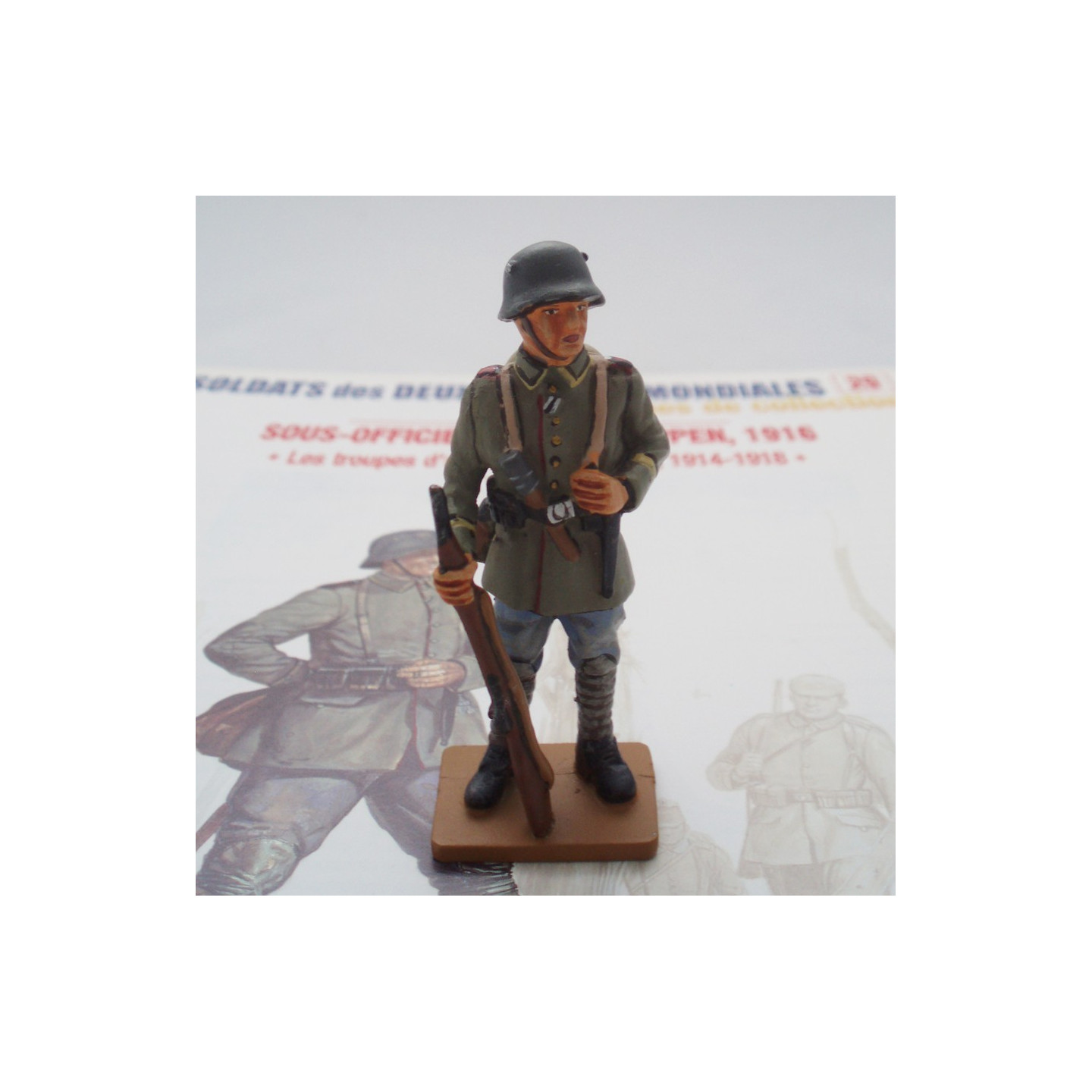
The term belongs to this war first
The scholarly 1914–1918 Online entry on stormtroopers places the subject within specialised infantry assault units and the development of new tactics during the war. Here the label refers to that military role, not to later Nazi political organisations. Keeping the 1916 date prominent prevents the word from carrying the wrong historical meaning.
The figure suggests a tactical problem
A defended position could not always be approached as an open-field advance. Cover, short distances and the need to overcome individual strongpoints shaped assault work. The miniature can introduce that problem without pretending that a single man operated independently of artillery, other infantry and supply. A trench entrance or low ruined wall is enough to give the equipment a setting; a crowded battle scene may hide it.
Compare 1914 with 1916
A side-by-side display with an early-war German infantryman makes the changes in head protection and carried equipment more informative than a long list of uniform terms. Check the helmet rim, rifle and grenade handles for damage before buying. A seller may describe any steel-helmeted German as a Second World War figure, so the original subject and complete silhouette matter. This release belongs in the First World War section and adds a useful study of adaptation during the conflict.