

Del Prado · First Carlist War · Spain, 1834–39
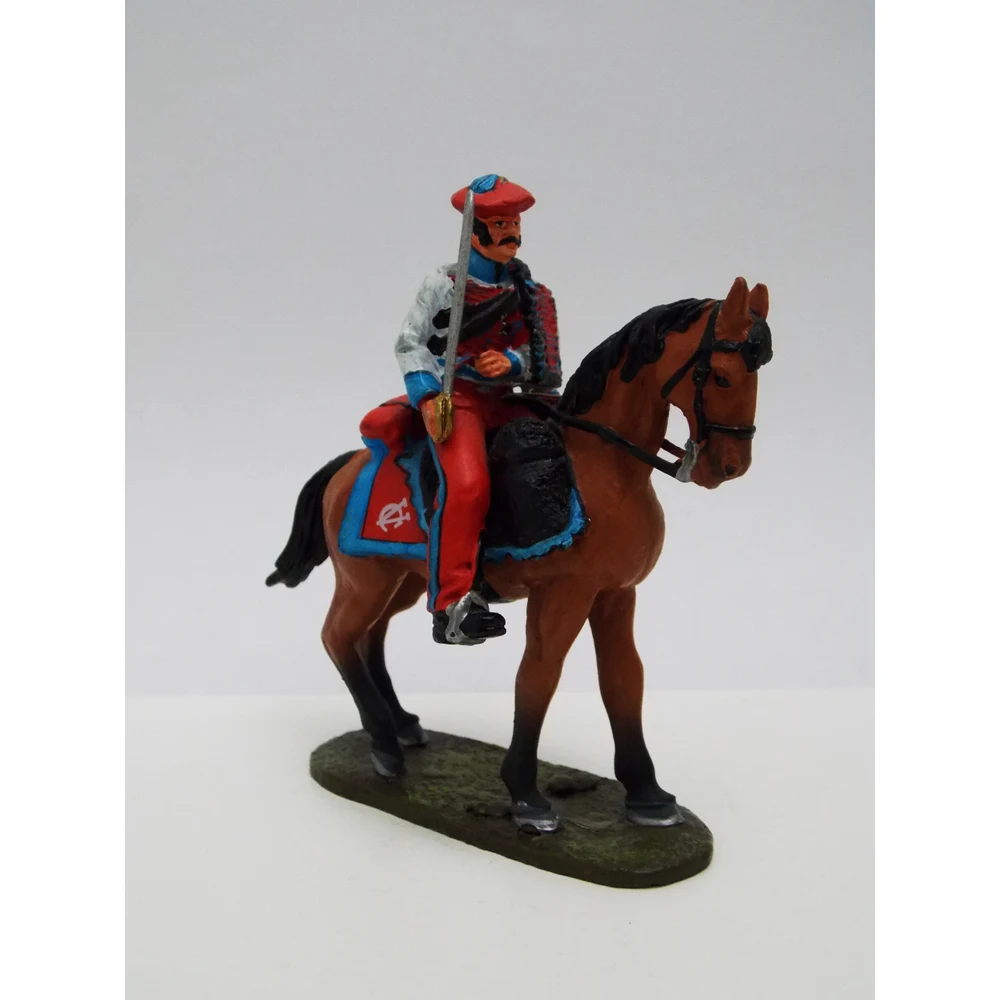
Blue and red clothing, a patterned shoulder garment and a brown horse give this Arlabán hussar a vivid appearance. The figure adds nineteenth-century Spain to a cavalry shelf that can otherwise be dominated by Napoleonic subjects.
- Maker
- Del Prado
- Subject
- Arlaban Hussar 1834-39
- Setting
- First Carlist War · Spain, 1834–39
- Type
- Painted metal mounted figure
A different Spanish war
The First Carlist War began after Ferdinand VII’s death in 1833, amid the succession dispute between the supporters of his daughter Isabella and those of his brother Carlos. It combined dynastic conflict with wider political and regional divisions. The model’s 1834–39 range sits within that war’s main years.
The Arlabán title should therefore not be confused with a Spanish hussar in Napoleon’s campaigns. The name and date together provide the useful identification. They do not, by themselves, establish the rider’s participation in one specific engagement.
A colourful mounted silhouette
The reference photograph shows red lower clothing, a dark blue coat and a contrasting patterned garment over one shoulder. Red-topped headgear rises above the face. The brown horse is presented with its head lifted and a foreleg raised, while blue-and-red saddle furniture repeats the rider’s colours.
The repeated colours give horse and rider a coherent appearance. When comparing a loose example, check the pattern and outline of the shoulder garment as well as the hat. A similar colour scheme on another hussar is not enough to establish a match.
Condition across the whole model
Ask for photographs of both sides, including the saddlecloth edges, stirrups and the horse’s lifted leg. Inspect the ears and reins closely. Bright red paint can show small chips, while darker blue areas may hide repairs until seen under even lighting.
Place the figure at a slight angle so the shoulder garment and saddle furniture remain visible together. A crowded straight row of horses can conceal the detail that makes this particular hussar attractive.
For a broad cavalry timeline, the figure bridges the Napoleonic era and the later nineteenth century. A date label between groups will do more to explain that progression than elaborate scenery. Keep an unobstructed view of the horse’s feet when photographing the model, since stance and base condition are important when evaluating a mounted figure offered without its packaging.
References and further reading
- Spanish Ministry of Education — The First Carlist War
- Mokarex — Del Prado History of Cavalry identification index
- Planète Légendaire — figure reference
- Génie Miniature — Del Prado identification index
The photograph identifies the model; condition and packaging vary between examples offered for sale.