

Del Prado · Denmark · 1813
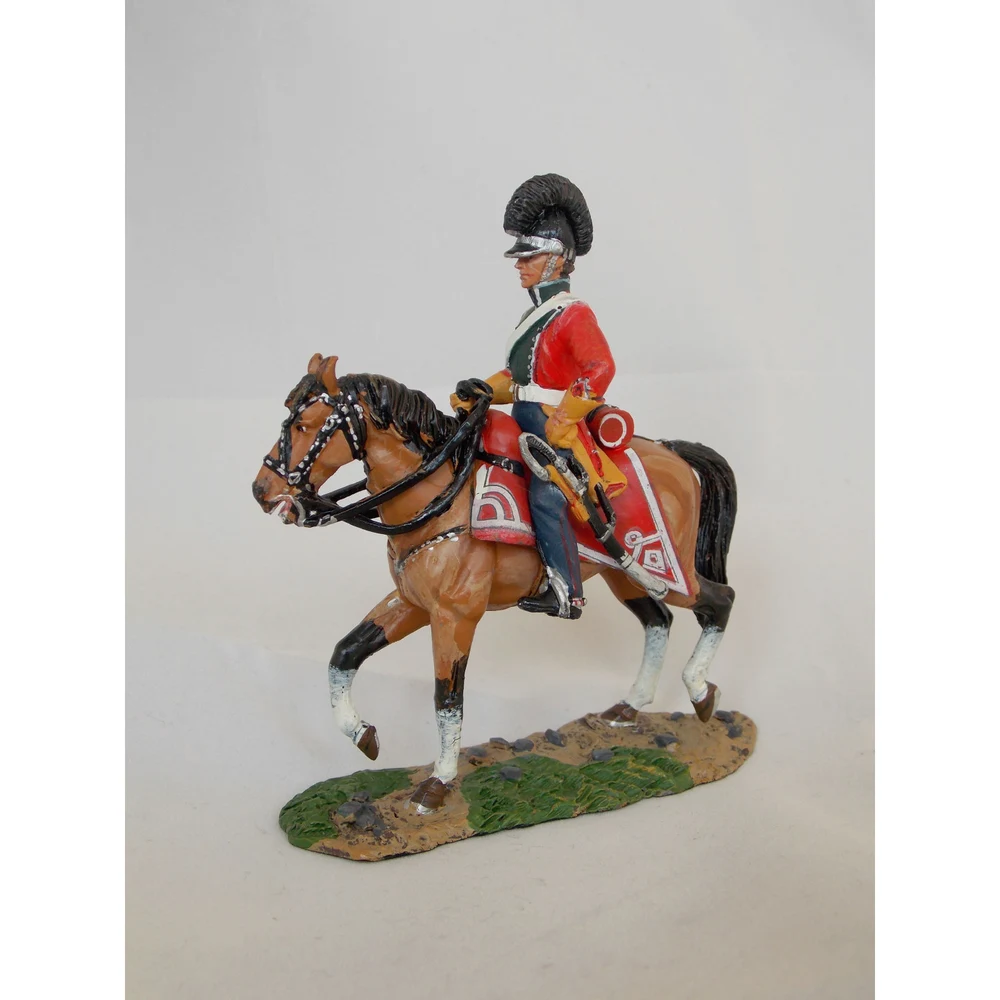
A red coat, pale breeches and a dark crested helmet give this Danish dragoon a striking profile. His 1813 setting leads away from the usual French and British cavalry subjects and into Schleswig-Holstein.
- Maker
- Del Prado
- Subject
- Jutland Light Dragoon, Denmark 1813
- Setting
- Denmark · 1813
- Type
- Painted metal mounted figure
The rider sits on a brown horse with an alert, raised head. The bright coat is framed by darker equipment, and the helmet adds height without the very long plume seen on some hussars. From the side, rider and mount remain easy to read as a pair. That makes this a useful figure for a display built around national differences.
The war in the north
Denmark’s alignment with Napoleon followed the conflicts with Britain in 1801 and 1807. In 1813, Danish troops fought in Schleswig-Holstein while Napoleon’s wider position in Germany deteriorated. The Danish Armed Forces’ account of the campaign connects dragoon traditions with actions including Rosengarten, Alt Rahlstedt and Sehested.
The fighting at Sehested on 10 December 1813 allowed the Danish force to break through, but tactical success could not reverse the wider political situation. An armistice followed, and the subsequent peace settlement brought major territorial consequences for Denmark. The village museum’s account usefully includes the local population alongside the military memorial.
Reading and keeping the details
Preserve the Danish identification when cataloguing the model. The dealer uses “Judske”; Jutland is the familiar English geographical form. Similar red coats in other armies are not enough to establish a match. Compare the helmet, saddle covering, equipment and horse pose together.
On a loose example, inspect the helmet crest, horse’s ears, reins and sword fittings. A side photograph is particularly useful because it reveals the relationship between the rider’s boots and the saddle. An underside photograph can retain identification evidence that a display photograph leaves out.
Place the dragoon near coalition and French subjects with a short regional caption. A map of northern Germany would make a fitting backdrop: it reminds visitors that the campaigns of 1813 extended well beyond Leipzig.
References and further reading
- Danish Armed Forces — Remembering the campaign of 1813
- Sehestedt Village Museum — The battle of 1813
- Planète Légendaire — figure reference
- Génie Miniature — Del Prado identification index
The photograph identifies the model; condition and packaging vary between examples offered for sale.