

Del Prado · France · 1810–1812
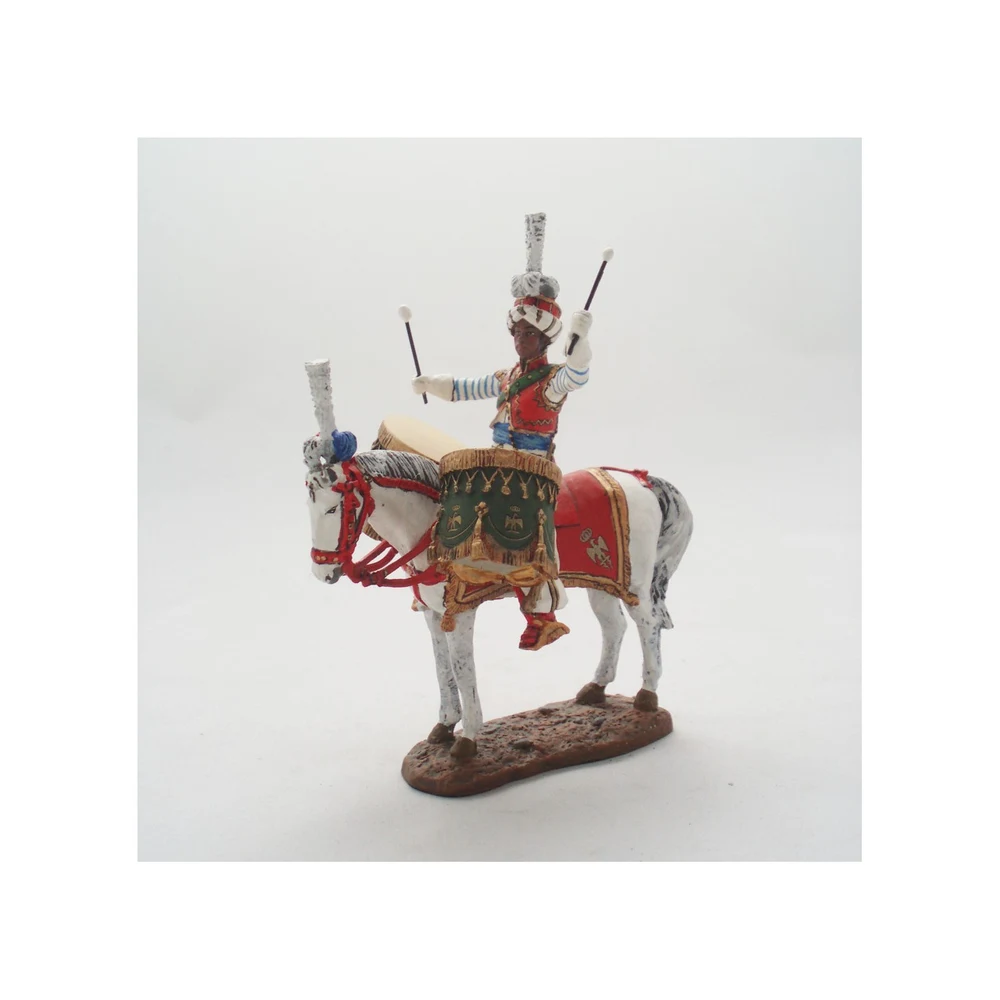
Two large drums transform the outline of this mounted Mameluke. The pale horse, patterned drum coverings and raised sticks give the Del Prado figure a ceremonial character that stands apart from sabre-wielding cavalry.
- Maker
- Del Prado
- Subject
- Imperial Guard Mameluke Drummer, 1810–1812
- Setting
- France · 1810–1812
- Type
- Painted metal mounted figure
The drums spread across the front of the saddle, making the horse appear wider than it would beneath an ordinary rider. Their decorated coverings are central to the model’s identity. The sticks repeat the upward movement of the headgear, while the pale mount keeps the darker drum surfaces easy to see.
Egypt in the imperial imagination
Napoleon’s Egyptian expedition brought French soldiers into contact with Mamluk cavalry and its richly decorated equipment. The Musée de l’Armée harness discussed by the Fondation Napoléon preserves that material world: elaborate textiles and metal fittings were part of a horseman’s public appearance as well as his equipment.
Egyptian and Syrian soldiers subsequently served in formations connected with the French armies. Their stories involved migration, military employment and the upheaval that followed the expedition. This drummer belongs to Del Prado’s representation of the Imperial Guard in Europe; he should not be treated as a generic rider from the battle of the Pyramids.
The fragile parts are the defining parts
Check both sticks, the drum rims and the attachments around the front of the saddle. Missing pieces can turn an unusual musician into a puzzling figure whose hands seem to have no purpose. Photographs taken from slightly above help show whether the two drums remain aligned.
The seller’s full description gives the setting as 1810–1812, although the shorter heading uses 1810. Keeping the range avoids presenting an unnecessarily exact date. The decorations in the photograph can be compared directly; a claim about a precise performance or parade would require separate evidence.
Give the figure an open position beside Guard cavalry rather than burying it among charging horses. The width of the drums and the contrast with ordinary saddlery make a strong comparison. A quieter arrangement also suits the deliberate, readable character of this sculpt.
References and further reading
- Fondation Napoléon — A Mamluk’s harness
- Fondation Napoléon — Egyptian and Syrian auxiliaries
- Planète Légendaire — figure reference
- Génie Miniature — Del Prado identification index
The photograph identifies the model; condition and packaging vary between examples offered for sale.